Showing posts with label Rioja. Show all posts

Monday, July 22, 2024

Rioja and Ribera del Duero

 In a tasting of 20  mid-level wines from the two major Tempranillo regions of Rioja and Ribera del Duero, four wines stood out. A number of the other wines were a bit out of balance with tannins performing strong, but fruit less so.


My favorite wine was the 2019 Alejandro Fernandez Pesquera Tinto Reserva. Robert Parker once called a Pesquera wine the Petrus of Spain. Well, this obviously was not this wine. This wine impressed with its beautiful fruit, its elegance and its long finish. It is a slightly bigger wine than the following three, but it is in perfect harmony.
Score: 93/++ 

The second wine, a little lighter, but with similar characteristics, was the 2020 Los Tres Dones Tinto Fino. It had quite a generous feel of dark fruit and soft tannins.

Score: 92/++ 


The third Ribera del Duero wine in this 'finals' list was the 2020 Protos '27 Tinto. This wine spent 24 months in American oak, but despite this, the wine had a delicate texture, some minerality and a light finish.

Score: 91/++

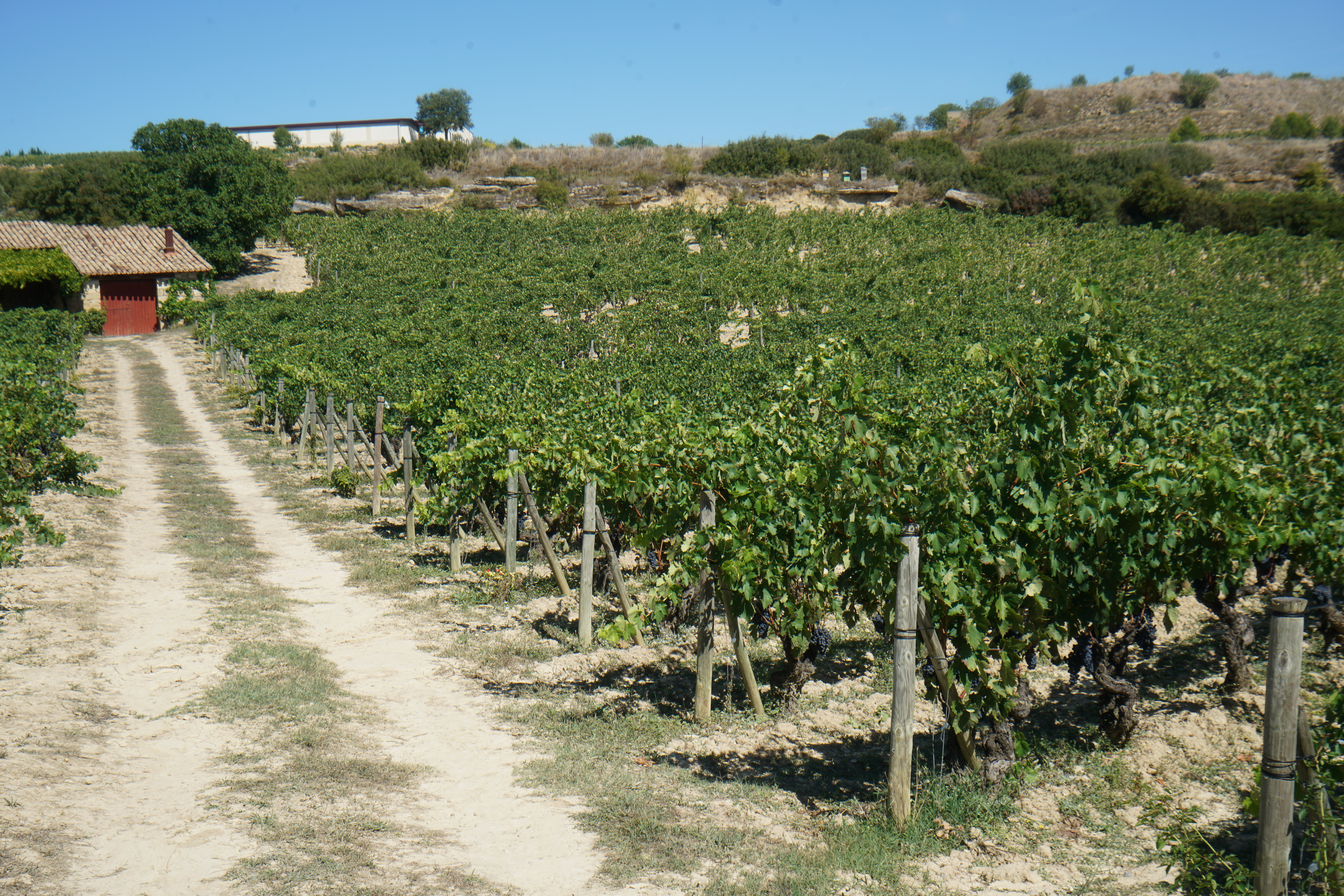
The one wine from Rioja which made the list was the 2018 Valenciso Rioja Reserva. The grapes come from Rioja Alta, from vines at least 60 years old, and organically farmed. There is minimal oak influence, showcasing the beautiful fruit. Some earthy flavours add to complexity.

Score: 91/++

Overall, Ribera del Duero wines did a little better with a more rounded profile from the warmer region. Rioja wines can soar very high, but they need to be the very best (and expensive), in my experience. 


Saturday, April 30, 2022

Valenciso Tasting

 Valenciso is a favourite producer from Rioja Alta. In Rioja, most Tempranillo is doused in American oak. The thoughtful couple from Valenciso wants the fruit to shine, and when oak is used, it is French. Yesterday, I had the opportunity to attend a rare tasting of a number of their wines. 

White wines from Rioja are underestimated. The 2020 Valenciso Blanco is a blend of 70% Viura and 30% Grenache Blanc. After a wild ferment, the wine is aged in untoasted Russian oak barrels for nine months. It is very fresh, but has depth in its balanced mouthfeel. There are subtle spices on the palate, and the zesty acidity leads to a focused finish. This is quite a serious and flavoured wine (93 points).

The first red is a new wine, the 2018 Valenciso Cemento. The fruit comes from 55 year old vines, grown at 550m altitude. As the name suggests, and the picture below shows, this wine is fermented and matured for 30 months in concrete tanks. It sees no oak. The wine is very fresh, with great purity, and red plum and blueberry flavours. It is a wine of medium intensity, with fine tannins and a medium finish (92 points).

I then tasted four Reserva wines. These are the Valenciso flagship wines. The vines come from a number of estate owned vineyards, with a minimum of 60 years old. They all are managed organically. The winery treatment is interesting: fermentation in concrete, then matured 18 months in low-toasted French oak (20% new). Then, the wine is transferred back to concrete tanks for 12 to 24 months. Because the wine clarifies so well in concrete, it is neither fined nor filtered before bottling.


I tasted from old to newer. The first wine is the 2001 Reserva. From a great vintage, this is now a beautiful mature and mellow wine. The concentrated fruit, mainly of dark plum, is still very present. Smoky flavours add to complexity. The mouthfeel is soft and silky, leading to a smooth and long finish. This is a beauty (96 points). 

The 2008 Reserva has a much younger feel. Cherry and subtle spice flavours are supported by fine tannins, but this wine does not have the depth or length of the earlier and later wines (92 points).

The 2011 Reserva from a warm year is a standout. Many Rioja wines from this year were very ripe, but this wine is perfectly balanced. It is deeply flavoured, with more volume than the 2008. Dark cherry and plum flavours are elegant and lead to a long and satisfying finish (95 points).

The 2014 Reserva does not have the same depth, but it delivers pure and beautiful fruit flavours of raspberry and black cherry. Minerality develops on the back palate, giving away the calcareous and limestone soils of the vineyards. The finish is not quite as penetrating as the 2011 (94 points).

If you are interested in drinking fresh and pure Tempranillo, Valenciso should be on your list.


Sunday, January 17, 2021

Two Spanish Beauties


Spanish wines have never received the accolades of Italian wines. However, they can be very delicious and unique. I recently tasted two impressive examples.

The 2004 Cune Gran Reserva Imperial would be difficult to source now, but if it is on offer somewhere, do not hesitate. This Rioja Tempranillo is intense on the nose. It is dark fruited, with some herbal overtones. This is a smooth and balanced wine, full bodied, yet with a certain lightness on the palate. This is an elegant wine, at peace with itself.

Score: 95/+++

The 2014 Clos Mogador Manyetes from Priorat is a blend of predominantly Grenache, Carignan and Shiraz. This is quite a different style from the Rioja. This wine is still quite fresh. The flavours are difficult to pin down. The palate is concentrated and tightly knit. There is raspberry, blackberry, licorice. It is complex. But the wine is not so much fruit orientated. Minerality and some saltiness are strong and wound up in balanced acidity. With all this, it is a polished wine.

Score: 94/+++


Thursday, October 22, 2020

Rioja, Part 5

 Bodegas Bilbainas control 250ha in 50 plots in Rioja Alta. This points to a typical Rioja blending operation. Two aspects stand out. Bilbainas is organic, and it has vineyards in limestone soil.   


I tasted a white wine and a rosé under the Viña Pomal brand. The white was made predominantly from Viura, the rosé from Tempranillo, of course. These were ok wines, but nothing special.

I then had the classical line-up of Crianza, Reserva and Gran Reserva. The 2016 Crianza is matured in American oak, and tastes of fresh fruit and vanilla. 80,000 cases of this are drunk mainly in bars in the afternoon, with something to nibble on. The 2014 Reserva is half this volume and sells for an astonishing 12 €. It has more intensity and firm tannins. Then we have the 2011 Gran Reserva. It is a 90/10 Tempranillo/Graciano blend, spends three years in barrel, then three in bottle, before it is marketed. Only 2500 cases are made of this, at 26 € per bottle. This is a more rounded an elegant wine, still quite fresh, with silky tannins.

If you want to experience traditional Rioja winemaking at good quality, this is the winery for you. But now we step it up a bit.

Muga is sometimes described as Rioja's First Growth, and I got to experience why. The winery was founded in 1932. It owns 150ha, and contracts another 150ha. One special feature is its own cooperage.


They build 900 casks per year, 90% from French, 10% from American oak. It is a very laborious process. To start with, the wood gets dried for 5! years. The big advantage is that you can customize the building and toasting to your requirements. And Muga does not do things by halves. They also own 250 large American vats, which have been in use for 50 years for alcoholic fermentation. Total production is 130,000 to 170,000 cases per year.


The 2018 Muga White, made from 90% Viura is fresh and harmonious, with medium acidity. With red wines, Muga makes traditional wines, but also modern ones.


The 2015 Reserva is made in the traditional style. It is a blend of 70% Tempranillo, 20% Granacha, 10% Mazuelo and Graciano. It is matured in their own light to medium toasted barrels. 60,000 cases made. The wine is red fruited, with some spice, smoke and vanilla. I found the finish a little rough. The 2014 Reserva Seleccion Especial is a similar blend. This wine is matured for over two years in French oak (40% new), 15,000 cases made. The red fruit is more concentrated, and the spice and mocca flavours more intense. This is a more elegant and silky wine.

The next wine, the 2011 Prado Enea Gran Reserva is a step up and really a great wine. It comes from special clay-limestone vineyards at high altitude. The wine is picked late. The wine is aged for one year in American oak, then for three years in French oak. This wine tastes of blackberry fruit, with forest floor and cocoa notes rounding out a ripe, yet elegant flavour. The wine provides a big mouthfeel. It is still fresh and balanced with a lingering finish. You have to put 70 € on the table for this.

The 2015 Torre is a blend of 75% Tempranillo, 15% Mazuelo (Carignan), 10% Graciano. The wine is aged for 18 months in 100% new French oak. This wine is a bit of a monster, very concentrated and not totally balanced at this point. It needs time.

Overall, Muga is a very impressive winery. The blending adds to the complexity of the wines, and the oak treatment, while substantial, is quite light.

The last winery visit is at CVNE, sometimes called Cune.  It is one of the original railway station wineries in Haro. So I come back to where I started. It is another large winery with 500,000 cases from many plots in Rioja Alta and Alavesa. It includes in fact five wineries.


Most of the wines made are in the traditional style, but the Contino winery has branched out into single vineyard wines. The first wine I taste is the Viña Real Crianza, a fresh, simple wine of dark cherry fruit. This is followed by the 2015 Contino Reserva. This wine is quite concentrated with strong tannins. The 2012 Cune Gran Reserva is made in the old style with American oak quite prominent.


The Imperial winery is kind of the premium winery with a smaller production of 18,000 cases. The Imperial Gran Reserva is the only Spanish wine which was named number 1 in the Wine Spectator Top 100. It was in 2013, but for a different vintage from the one I taste, which is 2012. This is a very good wine. The vineyards have different soil profiles, adding to complexity. The blend is 85% Tempranillo, 10% Graciano, 5% Mazuelo. This is similar to the other wines. Maturation took place in old French and American oak. Black cherry and forest fruits form the flavour. The tannins are velvety and soft, delivering an elegant mouthfeel.

I then taste the Contino single vineyard wines. This is the chateau concept with a large vineyard surrounding the winery. The wines are made from this 62ha vineyard.


The 2017 Contino Granacha is fermented in concrete eggs and then matured  in used large French oak vessels. The result is a raspberry fruity, quite sweet wine. The 2015 Contino Graciano is the last to be harvested. The grapes are thick skinned with intense colour. This wine needs medium to high toasted French oak. Black cherry and eucalypt flavours are packaged in firm tannins and high acidity. It is not easy to make a very pleasing wine from 100% Graciano. This variety is usually added to give Tempranillo additional structure, but on its own, it is pretty tough. 

The final wine is the 2016 Contino Viña del Olivo, a 90/10 blend of Tempranillo/Graciano. The wine is matured for 18 months in  French oak. Dark cherry and blackberry fruit is dominant, but there is also black pepper, anise and mint. This is a very smooth wine of great length. When I tasted the previous two wines, I could not quite see the benefit of the single vineyard concept, but this wine is something special.

OVERALL CONCLUSION: I only touched the surface of the Rioja region. It delivers incredible value for money; Crianza wines at 12 to 15 €, 5-10 year old Reservas and even Gran Reservas at 20 to 30 €. I actually preferred the fruit forward Crianzas in most cases. But a modern style Reserva, such as from Muga can still be fresh, and deliver good complexity. When it comes to single vineyard wines, there is a great variety of styles. I liked the precision of Valenciso, and the modernity of Altari. Pricing varies dramatically, from 20 € up to 300 € for the Altari El Pison. 

THE END 


Wednesday, October 21, 2020

Rioja, Part 4

 Artadi is a young winery based in Rioja Altavesa, founded in 1985. It is not steeped in tradition. It left the Rioja Appelation in 2015. Today, it is one of  Rioja's, in fact Spain's icon producers. The man behind this is winemaker Juan Carlos Lopez de Lacalle.


He described that when he made El Pison, their flagship wine, it was meant as a wine for his grandfather, not as a single vineyard wine. But in any event, they went single vineyard in 2009 and stopped blending in 2014. Today, they make El Pison (which I did not get to taste) plus five single vineyard wines plus three village wines for local consumption from 80ha of 80 plots. They are all 100% Tempranillo. Ageing is no more than 10-12 months.

The 2.4ha El Pison vineyard; yield 3t/ha

The village wine 2016 Viñas de Gain White is based on the Viura grape, small parcels of 25 to 100 year old vines. The flavours are complex; citrus, orange blossom, hazelnut. This wine has quite a big mouthfeel, but balanced with good acidity. The 2017 Viñas de Gain Red is a fresh and aromatic wine. It is a little foward, but has a good tannic backbone.


The 2016 Valdegines comes from a 30 year old 4ha vineyard with sandstone rock in part, and clay-limestone in another part. The wine is quite floral and fresh tasting. The red berry fruit is delicate, and the wine quite elegant. Gentle tannins and good acidity complete the picture. The 2016 La Poza is quite different. The vines from this 1.2ha vineyard are 60 years old. The soil is silty-clay. This explains the much bigger palate. The wine is black fruited, peppery and with elegant mocca notes. Round and dense tannins make this a much more powerful proposition.

It was fascinating to experience such different tastes from the same grape variety and vineyards not far from each other. Altari is clearly right to explore and show this.

A brief visit at Viñedos de Paganos showed the differences with sister winery Sierra Cantabria. Sierra Cantabria makes 50,000 cases of traditional wine. I tasted the 2015 Crianza, which is typical of this style. It is fresh, showing pure Tempranillo fruit, backed by American oak. The 2014 Colleccion Privada is from older vineyards. It is made 50% by carbonic maceration and 50% traditional methods. Maturation 50% in French, 50% American oak. This is a big wine. I found it a bit unbalanced and the finish harsh.

In front of the Paganos winery is the 25ha El Puntido vineyard. It was planted in 1975 and is organic. The company makes small volume special wines from here plus the Calados del Puntido, which actually takes fruit from three vineyards (yes, the Spanish can be a bit confusing).


The 2014 Calados del Puntido is matured for 14 months in used French oak barriques. The red fruit tastes very pure. The wine has a good drive with medium intensity. The finish is a bit thick and tannic.

A visit to Valenciso was an absolute highlight. His wines are all about finesse. I reviewed my visit on this blog before, so I will skip it here.

Three more wineries to go!! 


Sunday, October 18, 2020

Rioja, Part 3

 From Haro I drive east to Marques de Riscal. The Frank Gehry designed  building is perhaps the most famous winery building in the world. The colour scheme is supposed to represent a wine bottle, with the beige cork above a red wine bottle. In contrast to this modernity stands the history and tradition of this winery, founded in 1858.


During the visit, I was reminded of dining at a waterfront restaurant, where due to the great location there is no need to present excellent food. Because of its fame, Riscal may think they get away with ordinary wine - and probably they do.

The 2015 Reserva is aged in American oak for two years. Vanilla flavours dominate the fruit. This is their bread and butter wine with over 300,000 cases per year, I think. The 2013 Gran Reserva, from 80 year old vines, has more intensity and better rounded tannins. When I get to the 2015 Baron de Chirel, I find some enjoyment. This wine is a blend of 70% Tempranillo and 30% other varieties, Cabernet Sauvignon the second biggest. The fruit comes from 100 year old vines, and the juice spends two years in new oak. This wine has more of a modern feel, with blueberry and black cherry fruit in an elegant frame. The silky tannins lead to a smooth finish. Only 4,000 cases are made of this wine.

Overall, the main attraction is the architecture here. The building houses an expensive hotel. I suggest you look, don't taste and move on.

Back in Haro for a visit at Lopez Heredia. This is the most astonishing traditional winery I have ever seen. Wine is matured in used American oak only, 8-15 years old. Alcoholic fermentation takes place in 100 year old vats. The argument about the old oak is that the pores are very thin by then, and there is less oxidation. What I found disconcerting was the amount of mold everywhere. There is a (dubious) argument this is good for wine, but it is definitely not good for the people working there.


The 2007 Bosconia Gran Reserva spent 10 years in oak. It is a blend of 80% Tempranillo/15% Granacha. This is quite a powerful, red fruited wine, and still fresh. The tannins are quite coarse. The 2007 Tondonia Gran Reserva spent 'only' six years in oak. It is a similar blend. This is a more elegant wine with good persistence. It is darker fruited, but a lighter wine than the Bosconia. If you want to experience the Rioja of yesteryear, this is the place to go. Overall production: 40,000 cases.

From the traditionalist to the innovator Luis Cañas. They started to bottle wines in the late 60s; now 150,000 cases. There is a strong emphasis on viticulture. The vineyards are 60-100 years old. They rescued 30 different varieties from the early 20th century. A typical Rioja scenario: they pick 450ha from 1000 tiny plots. They are committing to the new regulatory regime, which will allow them from the 2017 vintage to bottle wine from three subregions, then village wine, and single vineyard.


My tasting was still based on the old classification. The 2013 Reserva was black fruited and quite tannic. The 2014 Seleccion de la Familia includes Cabernet Sauvignon. It showed more fruit intensity. The 2017 El Palacio was by far the best wine. There is more emphasis on the fruit, less ageing and in larger 500l barrels.  

They own a second winery in Rioja, Amaren. They go back to the past as a gateway to the future. They use concrete tanks to make the wine plus French and American oak for maturation. The vineyards are located in Alavesa, as is the case for Luis Cañas. The 2009 Reserva 60 is made in a more traditional way, and is very enjoyable. The concentrated fruit is still fresh, and the structure strong. A special treat was to taste the 2014 El Regollar, a single vineyard wine. This is the name of the less than 1ha plot, planted 116 years ago with 9 varieties on rocky soil. So this is a classic field blend, dominated by Tempranillo. It is very elegant, with silky tannins and a velvety mouthfeel. A clear highlight.

In case you are confused. There can be single vineyard wines before 2017, but they are 'non-conformist' and sit outside of regulations. In the future, Luis Cañas and Amaren will introduce close to half a dozen single vineyard wines, I think.

I spent more time at Luis Cañas than I anticipated, so the last stop of the day was a short one at Finca Valpiedra, and I could not make it to one of the sister wineries. One peculiarity is that they own an 80ha vineyard, otherwise unheard of in Rioja. And doesn't the picture remind you of La Craux in Chateauneuf-du-Pape?


Unfortunately, the wines I tasted from all four related wineries do not reach the heights of Chateauneuf-du-Pape. The most interesting wine was the 2016 Petra de Valpiedra, a 100% Grenache - yes, this exists in Rioja. This wine is matured for 6 months in new French oak, then 19 months in old oak. The alcohol is a surprisingly low 13.5% (for Grenache). There are raspberry flavours, but also dark fruit, cassis. There is good acidity to balance the mouthfeel, and the tannins are finely grained.

A cross section of wines from Finca Valpiedra, Finca Montepedroso, Viña Bujanda


Wednesday, October 14, 2020

Rioja, Part 2

 My first stop in Haro was at Rioja Alta. This winery was established in 1890 to fulfill the requirements of Bordeaux merchants. There is a lot of tradition here, but also modernity, demonstrated, as an example, by this flashy showroom.


Spanish inheritance law means that fortunes have to be divided equally between children. Wine growing has been going on in this region for close to a thousand years. As a result, individual vineyards are small. Rioja Alta had to source grapes from many vineyards to meet the thirst of the Bordeaux merchants. It was obvious that wines had to be blends from many vineyards, 150 today. Rioja Alta controls over 550ha in Rioja.

The second key aspect is oak. Rioja Alta owns more than 20,000 barrels to accommodate long ageing processes. This is simply astonishing and mind blowing.


It is not surprising then that Rioja Alta has its own cooperage, which forms the American oak to its specifications. 

I tasted the classic range with the winemaker.

Torre de Oña on the left, Rioja Alta on the right

The best wines are the Ardanza Reserva, an 80/20 Tempranillo/Granacha blend, which is quite powerful and spicy; the Arana Gran Reserva 2012, a 95/5 Tempranillo/Graciano blend, which is still fresh and elegant, with good complexity and a long finish; and the 2010 Gran Reserva 904, first made in 1904. This is a 90/10 Tempranillo/Graciano blend. The wine spends four years in barrel and three years in bottle before release. It is a mature wine, but the fruit is still good with a serious expression of minerality in the wine.

In 1995, the company bought a winery in Rioja Altavesa, Torre de Oña. The vineyards sit at an altitude of 600m and are grouped around the Bodega. There is an opportunity to produce single vineyard wines here, but at present, the three wines are picked from different plots and made in the Crianza or Reserva style. 

Rioja Alta is a traditional winery in that its key wines are Reservas following the regulatory regime of maturation. At the same time, it has a strong quality focus, for example 13% of grapes are discarded from the sorting tables. Modern techniques are employed, such as gravity principles, and an innovative racking system.

My second stop is Roda, just across the road. There are differences here. This winery is much smaller than Rioja Alta, and only 30 years old. It uses only grapes from bush wines, and everything is matured in French oak. Roda makes about 10,000 cases per year.

Roda on the left, Corimbo (Ribera del Duero) on the right

The first wine is the 2016 Sela, a blend of 87% Tempranillo, 7% Graciano, 6% Granacha. The wine comes from 15 to 30 year old vines, and is matured in larger, used French oak. This wine is all about fruit and freshness. It is elegant with silky tannins, made in the Crianza style.

Roda is made with a focus on red fruit, it is floral and fresh, a similar blend to the Sela, but with more fruit weight. It is influenced by the Mediterranean climate. In contrast, the Roda I is black fruited, and more influenced by the cooler Atlantic climate. I tasted the 2013. I was impressed with the complex profile of black fruit, spices, licorice, and how these long flavours came together.

The Cirsion is the flagship wine, made from the oldest parcels, only 400-600 cases per year. It is aged in 100% new oak, but only for 8 months. Roda does not want the oak to take over. It is like a best barrel approach. The 2016 is a dark, brooding wine, big volume with smoky and earthy elements. At 150 Euro, it is not cheap. 

Roda does not use the Crianza and Reserva descriptions. There is definitely an emphasis on fruit here, as opposed to oak, and the Cirsion is certainly not traditional.

To be continued... 


Saturday, October 10, 2020

Rioja, Part 1

 Today, Rioja is the most exciting of the traditional wine regions in the world. Why? A lot is going on. In the past, almost all wines were blended, but today, a number of single vineyard wines with a terroir focus have sprung up. Traditionally, wines were matured for long periods in oak, often more than five years. Strict regulations supported this approach. Oaky flavours were the hallmark of Rioja wines. Today, a number of wineries emphasize the Tempranillo fruit. The scene reminds me of Piedmont in the 1990s, with traditionalists and modernists fighting it out.

I visited Rioja a bit over a year ago and had planned to publish an article about it, but the wine magazine I used to write for had difficulties, and it never happened. I just came across my notes, and will now write this up here. The blog will have less wine specific tasting notes than normal, as the tastings took place more than 12 months ago, but there will be some.

The geography of Rioja is quite fascinating. On the one hand, warm winds are funneled up north from the Mediterranean, moving from Zaragoza into Rioja. On the other hand, cold winds from the Atlantic hit the Basque mountain range and descend into Rioja. Near Bilbao is a gap in the mountains which delivers wind and rain.

The red dot is Haro, the centre of Rioja

There are three subregions, Rioja Alta, Rioja Alavesa and Rioja Oriental (Baja). Most premium wines come from the hillier Rioja Alta and Rioja Alavesa. The latter is particularly interesting, as vineyards are found on the southern slopes of the Basque mountain range, thereby avoiding the rains from the North. The diurnal range is quite high here.


My story and the story of modern Rioja begins in Haro. When phylloxera devastated the Bordeaux vineyards in the 19th century, the merchants of Bordeaux looked for new supplies they could ship to wine hungry London. Rioja was close and Haro had a train station with tracks to France. Wineries established themselves near the station. They grew dramatically in size. Today, the large Rioja wineries are still based here. In fact, Haro has the largest amount of oak barrels per square kilometre in the world.

Individual wineries will be reviewed in part 2.


Saturday, September 19, 2020

Grenache

 Grenache is experiencing a renaissance, not just because it was International Grenache Day yesterday. The flavour profile appeals, and the wines are not as heavy and serious as, say, Cabernet Sauvignon or Shiraz. Here are some Grenache and Grenache infused wines I tasted a couple of days ago.

Having said this, the 2010 Chateau de Beaucastel is quite a massive Chateauneuf-du-Pape. This wine is still bright. The raspberry and cranberry flavours shine through. There is licorice as well. The tannins are soft. However, the wine is a little hot on the finish (93 points).


The 2010 Alegre Valgañón Garnacha from Rioja demonstrates some of the challenges with Grenache. This wine has some herbal and eucalypt characteristics, which comes when the wine is picked a bit early out of fear it might get too alcoholic otherwise. The signature raspberry fruit is there, but also some black fruited notes and leather. This is quite a complex wine, mature, and no doubt based on very old vines (94 points). 

Marco Cirillo is my favorite Grenache producer in Australia (there are a couple of serious challengers emerging). He has been focused on this variety from the beginning tending to his fabulous sandy soils vineyard in Vine Vale. The 2012 Cirillo 1850 Grenache is based on perhaps the oldest Grenache vines in the world. This wine is hugely perfumed. The raspberry flavours are very clean and pure supported by savoury characteristics. This is a luscious wine with a long finish (96 points).

The 2009 Château de Fonsalette Réservé Côtes du Rhône is the most expensive wine in this line-up. I found it a bit disappointing. While it had a sweet fruit core, the overwhelming impression evolved from vegetable and herbal notes with tomato and anise flavours quite prominant (90 points).


A positive surprise was the 2012 Domaine Léon Barral Faugères 'Jadis'. Faugères is a subregion in the Languedoc with special red sand and limestone soils. The vineyard is biodynamically managed. This wine is a blend of 50% Carignan, 30% Shiraz, 20% Grenache. This wine is very bright and fresh,  with ripe raspberry and dark fruit,  and a big mouthfeel. This is quite a funky wine, bold and dense. There is a higher acidity in this wine than in many Grenaches and the tannins are dry. Well managed Carignan appears to be the major contributor to this profile (94 points). 

Thursday, May 21, 2020

Muga Rosé

The story of Rosé is rapidly developing. At first, we had wines which were confected, and with some residual sugar. Then we had the wave of pale, savoury and dry Rosé, which currently rules the world, lead by a plethora of producers from Provence and Bandol. Now comes along Muga. Muga is a leading Rioja producer, sometimes described as a grand cru or first growth of Rioja. I visited the winery last year, and was very impressed with their high end wines. The Rosé is not aiming quite as high, but is an interesting wine, as we shall see.


This wine is obviously made from Tempranillo, not the more popular Grenache, Pinot Noir or Shiraz. It is hard to see from the image because of some reflection, but the colour of this 2018 Muga Rosé is still pale, but not as pale as the typical French style.

This hint carries over to the palate. There is more flavour and a bigger mouthfeel in this wine. Raspberry and red cherry fruit dominate in this wine. The sensation is of dried, not ripe fruit, as the wine itself is bone dry. Acidity keeps it fresh and vibrant, and the finish is balanced. Overall, this Rosé carries more interest than many others. While it is basically a food wine, I am happy to drink it on its own as well.

Score: 92/++ 

Wednesday, April 29, 2020

La Rioja Alta Gran Reserva 904


Traditional Rioja, in particular Gran Reserva, which tends to be matured for many years, is characterized by strong oak flavours. I visited La Rioja Alta, one of Rioja's leading wineries last year and tasted this wine. With more time on my hands at home, I was interested how I would view the 2010 La Rioja Alta Gran Reserva 904 now.

The colour is a bright, yet intense ruby. On the nose, red fruited aromas, cherry and raspberry, dominate. There are also secondary notes, such as tobacco and cocoa. This is a complex bouquet.

The same fruits hit the palate upfront. It is a lively wine, even though the fruit flavours are of dried fruit.Then there are earthy notes, mushroom, and vanilla from the oak barrels. The wine has good acidity with soft, fine grained tannins.

Overall, I have slightly mixed feelings about this wine. It is complex, and the fruit still shines through. When I say shines through, there is an oaky cover, which detracts from the otherwise interesting and still fresh flavours.

Score: 93/+ 

Sunday, April 12, 2020

Valenciso Laderas De Cabama

Valenciso is one of my favorite Rioja producers. It is a small operation lead by the highly experienced Luis Valentin and Carmen Enciso. I like it, because all the wines have precision and finesse, something not often associated with Rioja, frankly.


The 2014 Valenciso Laderas de Cabama is a single vineyard wine from 35 year old Tempranillo vines. The soil is the typical clay and limestone mix of Rioja Alta. The wine has been matured in French oak, followed by some time in concrete tanks. It is somewhat of an entry level wine, but you would not know it.

This is a fragrant and aromatic wine, due to the maturing in concrete, I think. Red and black cherry fruit and sandalwood deliver a smooth and velvety mouthfeel. There is not as much intensity as in the other Valenciso red wines, instead you get freshness, purity and finesse. Chalky tannins lead to a medium to long finish. 

This wine is utterly delicious right now. Great value for money. Not easy to find, but I highly recommend it.

Score: 94/+++

Wednesday, September 4, 2019

Rioja

I am in La Rioja, Spain. Traditionally, red wine has been grouped in Joven, Crianza, Reserva and Gran Reserva, according to the age profile in barrel and bottle. Other criteria, mainly maximum yield, are not particularly demanding. As a result, there is a huge investment in barrels, as Reservas are the most prominent wines for many wineries.

Over the last few years, this system has come under strong criticism from wineries who wish to show vineyard terroir on the basis that wine ageing does not say anything about quality nor origin. So from the 2017 vintage onwards, wineries are allowed to show individual vineyards within the Rioja classification on the label. Three soft criteria need to be fulfilled, and the wine needs to be approved by a committee. This system is neither objective nor does it guarantee quality, claim a number of leading wineries who have opted out of the system altogether.

So at first blush, it looks like a traditionalist vs. modernist scenario similar to what happened in Piedmont in the 1990s. However, it is much more complicated than that. What the argument is largely about is the dominance of fruit or oak. Yet, as I found out on day 1, there are many ways to skin the cat. These are the approaches of the wineries I visited.
- Rioja Alta: Traditional approach, but a second winery with single vineyard focus.
- Roda: French oak (American is traditional) to reduce oak impact, blended wines, but no crianza, reserva etc. labelling
- Marques de Riscal: traditional
- Lopez de Heredia: American oak, but fruit orientation by using 8-15 year old barrels

On day 2 I visited wineries which have opted out of the system altogether using mostly French oak and shorter maturation periods.

I will report on tastings in the next few posts.


Friday, May 10, 2019

Super Premium Spanish Wines, Including A $2500 Bottle

I recently attended a tasting of outstanding Spanish wines, where the emphasis was on 'delicacy', not something automatically associated with Spanish wines. I will report here on the Mencia wines, and the wines from Priorat and Rioja. The tasting was set up in such a way that a top-level blended wine was shown first, followed by some single vineyard wines, which the Spanish only recently started to emphasize.

Mencia is a grape variety grown in the northwestern part of Spain. It derives from Portuguese varieties. It has a reputation for light and diluted wines, but more serious wines have recently been made, with great success. The 2016 DJP 'Petalos' from Bierzo is one of the leading blends. It is very attractive wine, based on red cherry flavours with good intensity, great length and a dry finish (93 points). The two single vineyard wines were from Valdeorras. The 2015 Telmo Rodriguez 'As Caborcas' Vineyard wine is a bit lighter and delicate, with enticing sea-spray and spice flavours (93 points). The 2015 Telmo Rodriguez 'Falcoeira' Vineyard wine is more generous, with a bigger mouthfeel, sea-spray again on an elegant texture, and a balanced finish (94 points).

The blended Grenache from Priorat is the 2017 Blai Ferre Just 'Billo'. This is a medium-bodied wine, raspberry the dominant  up-front fruit flavour, but not overpowering, delivering an elegant and balanced structure with a dry finish (93 points). Next is the 2015 Blai Ferre Just 'Desnivell' Vineyard Grenache. Apart from raspberry fruit, there are also blue fruits here - a very drinkable wine (92 points).


The highlight of the tasting arguably were the two wines of Alvaro Palacios. The 2015 'Finca Dofi' shows quite a light colour, which translates onto the palate, but the intensity grows quickly, a bit like an iron fist in a velvet glove. The raspberry flavours are matched by savoury notes (94 points). The famous 2015 L'Ermita is quite a fascinating wine. The colour is light as well. This is a very smooth wine, dancing on your tongue. It has been described as liquid poetry. The subdued fruit lays bare the complexity of this wine, from orange rind to slate minerality. A little sweetness completes the satisfying mouthfeel (96 points). 

Is this wine worth $2500 per bottle? First, why does it cost so much? Yes, the yield is low, and the handling is very detailed and specific, but the main reason is that the fruit comes from a 1ha property. So scarcity drives the price. For a case of 12 bottles, you get a decent car. The wine is gone in 12 nights, but the car lasts years. Ok, I am comparing luxury with utility, but it is hard to make a rational case for it. As there is very little going around, the winery is not relying on rational decision-making; so it all works out.

The Rioja blend is the 2016 Alegre & Valganon Tempranillo-Garnacha. This is an odd blend. The wine has some depth, but is not complex; an easy drinking style with a little sweetness (90 points). The 2016 Alegre & Valganon 'La Calleja' Vineyard Tempranillo is a light to medium-bodied wine. The wine has good drive on the back of its red cherry fruit, but is a little harsh on the finish (90 points). A more interesting wine is the 2016 Alegre & Valganon 'Bahiarra' Field Blend. Field blends are all the rage in Portugal, but this is good, too. The wine has a darker colour, which translates into darker fruit, mainly black cherry, on the palate. The texture is very harmonious (93 points). 

The two best Rioja wines were the 2016 Sinodo Viticultors 'Los Tollos' Tempranillo, and the 2015 Telmo Rodriguez 'Tabuerniga' Tempranillo. The former impressed with its complex fruit flavours and superb elegance, before finishing light (95 points), the latter was a bigger wine with complex fruit and earthy flavours, wound together for a satisfying mouthfeel (94 points).     


Friday, June 10, 2016

Vina Muriel Reserva Rioja

Tonight, I am drinking the 2008 Vina Muriel Reserva. This is probably because I spent the last couple of days preparing my trip to Spain, where I will be visiting the wineries of Ribera del Duero in a month's time. However, this wine is a classically made Tempranillo from Rioja.

The colour is a bright ruby red, still. On the palate, there is the expected red cherry flavour. It is quite concentrated and deep, and also quite pure. Herbs add to the flavour spectrum, which otherwise is not too complex. The wine is quite acidic, and the tannins are surprisingly firm for a Tempranillo. The wine finishes quite dry.

Score: 92/+

Wednesday, January 20, 2016

Marques de Riscal Rioja

I am not the world's greatest expert on Spanish wines, but generally there are three things I don't like about them
1)  Lack of vitality in the wines
2) Tempranillo is a boring grape variety
3) The authorities in many regions, including Rioja, do not allow single vineyard wines, as they say they do not have the resources to police it. Obviously, trust is not an option.

Yesterday, I had an opportunity to test my preconceived view against the 2009 Marques de Riscal Rioja Reserva, from one of the most respected wineries in Spain.

There is good intensity in this cherry fruit, but not much else on the palate, other than the vanilla from maturing the wine in American oak. The wine is a bit dull, and not very polished either. The tannins are quite soft, and as there is not much going on, the alcohol comes through on the finish.

Preconceived ideas confirmed! (at least on this occasion)

Later in the year, I will spend a couple of days in the Ribera del Duero region to get more of an insight.

Score: 87/-

Sunday, December 18, 2011

Exopto, Horizonte de Exopto

In a recent post, I discussed the good availability of Southern European wines in Australia. One of the issues, however, is that not always the best wines find their way down under.

Spending $40 per bottle on the 2007 Horizonte de Exopto, I was reasonably confident to have a good experience, in particular as this Tempranillo includes the Graciano grape. Tempranillo is pretty, but lacks tannin, which Graciano has in spades. I always prefer this combination to a straight Tempranillo.

This medium-bodied wine starts with vibrant cherry flavours. It has licorice and spice, but unfortunately, it is quite hollow on the mid palate. It then finishes with smooth tannins.

This is a versatile food wine, suitable for pizza and a variety of tapas, but not an exciting wine in its own right.

Score: 87/0