Showing posts with label Barolo. Show all posts

Thursday, September 4, 2025

Six Interesting Barolos

 Yesterday I tasted six interesting Barolos from recent vintages.


Elvio Cogno is perhaps the most important producer of the Novello subregion, with a substantial holding of the Ravera vineyard at its core. Two wines could be tasted. The 2018 Bricco Pernice from a less heralded vintage is red fruited. It is the lighter of the two wines, but I enjoyed its elegance, energy and balance, held together by its firm powdery tannins (94 points).

The more famous Ravera from the highly regarded 2021 vintage is a big, powerful wine. The colour is dark, and the wine tastes of black cherry. I found the wine, while impressive, lacking some finesse. It was also slightly alcoholic on the finish (93 points). Maybe it will come together over time.

Elio Grasso is not only a superstar of Monforte, but of all of Barolo. The two champion wines come from the same vineyard. The Ginestra Chiniera is located at the higher altitude of 350 to 400 meters. The soil is a mixture of limestone and sand.  The 2020 vintage delivered more forward wines, and it showed in this example. This is a red fruited, elegant, very feminine (can I still say this?) wine, with lifted aromas, firm acidity, and silky tannins. I liked this a lot (95/+++ points). 

The  2021 Casa Maté, coming from an altitude of 300 to 350 meters, and grown on a clay and limestone mix, is a powerful and balanced wine. It is dark fruited, with a big mouthfeel. This in contrast is quite a masculine wine, with huge ageing potential. The tannins are well rounded and deliver an earthy feel to the wine (96/+++ points). 

Barolo takes its lead from Burgundy and champions single vineyard wines. As a result, blended Barolos are less highly regarded, but can be quite good, in my experience. There were two wines to taste which showed this, both from the 2020 vintage. The Mauro Molino Barolo from La Morra tasted of red cherry and wet stone. This wine has a very dry and austere feel, but is not unattractive (93 points).  

The 2020 Ferdinando Principiano Barolo from Serralunga shows off darker fruit. Earthy flavours add to a complex palate. The tannins are smooth and the finish is long. This is a very attractive wine, which is already very enjoyable to drink (94/+++ points). 

These blended Barolos cost less than half of the single vineyard wines shown here. They are a good commercial proposition.


Sunday, February 9, 2025

Elio Grasso Casa Maté Barolo

 I enjoyed the 2015 Sordo (reviewed below) quite a lot. I thought let's see how this compares with the 2015 Elio Grasso Casa Maté.


Wow! What a wine this is. It is only just getting ready to drink at 10 years. This wine is very tannic, but finely grained. The red cherry fruit is mellowing. Mocca flavours and licorice make the palate quite complex. This wine is piercing through the palate. The finish is ultra long. This wine is not for everybody, but I love this.

Elio Grasso has been one of my favorite producers, even more so since I visited a couple of years ago, and saw the special vineyard area of this estate. The strong focus on two premium Barolos is clearly paying off.

Score: 96/+++


Sunday, February 2, 2025

Sordo Rocche Di Castiglione Barolo

 The 2021 Barolos are coming onto the market. While in some countries the latest vintage is always proclaimed the best, the Piedmontese  have a slightly different approach. Of course, the new vintage is always good, but the emphasis is on comparing the vintage with a similar one of the past.

The key features of this vintage were a warm and dry summer. It followed a snow cover in spring, which is better than rain, as rain is drained very quickly in the Barolo soils. As a result many wine makers describe it as delivering wines with good structure and approachable fruit. The comparison is the 2015 vintage.

2015 is regarded as good, but not stellar. In order to have a window in what 2021 might be like, I opened a bottle of the 2015 Sordo Rocche di Castiglione Barolo.


I would say that Sordo is in the second division of Barolo producers, but it has a strong focus on single vineyard wines. The wine opens up with typical rose petal aromas. On the palate, red cherry flavours and tar deliver quite a complex and pleasant mouthfeel. The tannins are well integrated and long. Despite this, this wine is quite smooth. For a ten year old wine it has good energy and is drinking really well now.

So, if 2021 is like this, it would be a buy for me.

Score: 95/+++


Tuesday, November 26, 2024

Azelia Margheria Barolo

 There is probably no other type of dry wine which achieves almost always reviews of 90+ points than Barolo. This is probably due to the combination of aromatics and tannin structure which can hardly go wrong. Yesterday I tasted the 2013 Azelia Margheria Barolo. The Margheria vineyard is in Serralunga. A number of leading producers source wine from here, including Gaja. Massolino's Vigna Rionda is just below the sizable Azelia holding. This is a vintage in which many great wines were made. Let us see how it went.


Discovering the colour of the wine, I got a bit alarmed. This was not the frequent orange, nor the darker red of Serralunga, but a brown colour. I could still taste the intensity of the fruit, but it was ripe, dried off, and simply dead. There were tobacco and licorice flavours, which helped a bit. The wine was slightly lifted by the firm tannins, which were still alive. Overall, a very disappointing experience. Was this a bottle problem? The cork was fine. Unfortunately, I do not have a second bottle to compare. Azelia does not rank in the list of top producers and is priced accordingly. However, this wine is best avoided.

Score: 84/-- 


Monday, October 7, 2024

Elio Grasso Ginestra Casa Maté

 Last year was the first time I visited the Elio Grasso Estate. Once you have managed to get past the barrier of the private road, the eastern slopes of the world class vineyards open up. The tasting of the 2019 Barolos were great, but they are too early to drink. So yesterday, I opened a 2010 Elio Grasso Casa Maté Barolo. 


I last reviewed this wine five years ago. The dark colour is still firmly in the glass. This is a wine from Monforte! The nose reveals rose petals, but also brooding, earthy notes. It is an appealing bouquet.

On the palate, dark cherry is the first flavour experience, then savoury, earthy flavours follow. This is wrapped up in firm, dry and chalky tannins. This all sounds quite serious, but this wine is very elegant with a fine finish which goes on and on. The wine is perfect with a serious protein dish. If you have this in your cellar, do not worry, the wine has not yet reached its peak.

Score: 96/+++ 


Saturday, June 8, 2024

Luciano Sandrone Tasting

 The one winery I wanted to visit but did not manage to, when I was in Piedmont last year, was Luciano Sandrone. I therefore jumped on the opportunity when Barbara Sandrone was in Sydney this week.

Most wines carry the famous coloured squares on the bottle

The tasting was very crowded and it was not a good space for contemplation. Therefore, I will not allocate points and only make general observations. 

Piedmont wineries always start with Dolcetto and Barbera, and one mostly goes quickly to the main game, Nebbiolo. So it was here. The Barolos on tasting were the 2021 Nebbiolo d'Alba, the 2019 Barolo Le Vigne (the blended wine from five villages), the 2019 Aleste Barolo from the Cannubi Boschis vineyard, and the 2017 Vite Talin Barolo. From left to right, the fruit concentration increases, but only slightly so. The Vite Talin is a very special wine. It is made from a separate Nebbiolo clone. The berries are only half the size of a typical Nebbiolo grape. At first it was thought to be diseased fruit. Luciano Sandrone identified this clone in 1987 and made the first special wine in 2013.

All the Barolos share a typical Sandrone signature. They are very perfumed, very Pinot Noir like. They are finessed, with a firm, mouth plucking tannin structure. In my humble opinion, this creates an imbalance. The entry on the palate is quite beautiful, but then the fruit cannot stand up to the tannins. Maybe long term cellaring overcomes this issue. But still this imbalance  existed in the 2017 wine.

The Aleste and the Vite Talin typically receive high ratings. Maybe I did not get these wines. In the evening I had a 12 year old Cannubi from Chiara Boschis. Now this was a balanced and beautiful wine.


Sunday, February 11, 2024

An Unknown Barolo

I do not know if this has happened to you, those who have a wine cellar. Yesterday I came across a Barolo which was totally unknown to me. I do not know the maker nor how I acquired the wine. I have a basic cellar management system, but I decided not to look anything up. This is the wine.


2013 is good, Rocche di Castiglione is a great vineyard. The colour of this 2013 Arnaldo Rivera Barolo looks very advanced, but with Barolo it is hard to tell, as orange is common in young wines, too. This is a bit brown, though.

The fruit is strawberry and raspberry, but tar and roses are the more prominent notes. However far more dominant are the dry tannins. This wine is past its best. That should not be the case. The structure is holding up with a long, but extra dry finish. This was not very pleasant. 

Score: 86/-


Wednesday, August 30, 2023

Chiara Boschis Mosconi

 As regular readers of my blog would know, I have raved about the 2019 Barolos. To get a sense how the wines may develop, I yesterday opened a bottle from the equally lauded vintage of 2010, the 2010 Chiara Boschis Mosconi Barolo. Mosconi, in Monforte, is known for powerful wines. Let's see.


To start with the finish, this is a near perfect wine. The colour is dark, but a little orange tinge gives away the Nebbiolo grape.

On the palate, it starts with orange peel, but then black cherry takes over, cascading into savoury flavours with complex forest notes taking hold. This is quite a big, dark, masculine wine with firm chalky and dry tannins. But underneath this power is elegance and an acidity line holding the wine in perfect balance. The finish is long.

This wine is at the beginning of its sensible drinking window; still youthful, and no doubt with a couple of decades of great drinking ahead. The wine needs attention and also protein. The only quib I have, the third glass is starting to be a bit of an effort.

Score: 97/+++   


Saturday, July 22, 2023

Massolino Vigna Rionda

 A little while ago, I asked a highly regarded Australian winemaker, if he had only one last wine to drink before his death, what would it be? I expected him to either pick one of his Shiraz or Grenache. Instead, he said; the 2001 Massolino Vigna Rionda. The Vignarionda vineyard is the legendary south and west facing vineyard in Serralunga, Piedmont. I tasted wine from this vineyard for the first time at my recent Piedmont visit. I have only one bottle of this in my cellar, the 2004 Massolino Vigna Rionda Reserva. I thought the evening of the opening match of the Matildas at the world cup soccer would be a good time to open it. 


Ten wineries share this vineyard. Massolino has by far the largest holding. Naturally, my expectations were very high. This can sometimes be a problem. As it turned out this wine was a very classic, well made Barolo, but I was missing the expected x factor.

Tar and roses, black cherry, licorice, some cola fill the mouth of this dark wine, typical for Serralunga. This wine is quite austere and a little unyielding. Earthy and savoury flavours dominate. It is very elegant on the mid palate, but the very dry tannins lead to a dry, mouth-plucking finish. This is a traditional Barolo, seems a bit old fashioned now, where more emphasis on fruit and freshness is common. 

Score: 95/++


Monday, June 19, 2023

2019 Barolos, Part 2

 Today, two Barolo heavyweights join the reviews. The first stop is at Vietti. The business is now owned by American investors for a number of years, but a lot of senior staff have stayed. Luca, the previous owner left earlier this year. It seems not much has changed, other than pricing.


The 2019 Vietti Castiglione, others would call it classico, is the workhorse, with a production of 40,000 bottles. It comes from many vineyards of the Barolo region and is Vietti’s signature card, if you will. The wine spent 30 months in small used oak barrels. The wine is red fruited, quite elegant and with good drive.  The solid structure is built on firm tannins (93 points). The next two single vineyard wines are the latest additions and come from the northwestern part of the region. The 2019 Cerequio is from La Morra. It is quite a perfumed wine, with red cherry and rose petal flavours and an elegant and silky mouthfeel. It has similarity to the previous wine, but more intensity. No doubt, this is a good wine, but I could not warm to it (94 points).

The 2019 Vietti Monvigliero finally did it for me. I described the vineyard in the Scavino section of the last post, but this wine is quite different. This wine, unusual for Vietti and Barolo, has been fermented with full clusters. It is gentle and elegant, almost Pinot Noir like. Red fruit flavours, orange rind, spice and some herbal notes deliver a complex palate. The emphasis here is not so much the structure, but the length is there in the finish (95 points).

The star of this tasting, however, is the 2019 Vietti Rocche di Castiglione. The vineyard is on a steep hill. It was first made into a single vineyard wine in 1961, Vietti’s first. Red and black cherry flavours are intense and build in richness over the palate. There are some herbal notes as well. The wine has great energy, and the silky tannins lead to a full-bodied and extremely long finish (97 points).

The two cru wines from Elio Grasso are close together in Monforte, but very different expressions. The 2019 Elio Grasso Gavarini Chiniera comes from a limestone vineyard. Generally, Monforte delivers the darkest, most tannic wines, and yes, this wine was macerated for 48 days, but it is red fruited, with orange peel and rose petal notes. This is an elegant and edgy wine, even sultry, with a beautiful silky finish. Flavours and tannins balance perfectly, but you would deny yourself great complexity if you drank this wine now (97 points).

The 2019 Elio Grasso Casa Maté is what you would expect from this region, a great winemaker, and a good year. The soil for this wine is mostly clay, and the maceration has also been 48 days. This is a big wine, rich and dark, with black cherry, licorice, and leather notes. The wine is intense and tannic, with a massive finish. This is an absolute beauty. Big, yes, but nothing is out of place (97 points). 

These two wines are quite different, but for me it is a draw.

Reflecting on these tastings, the most striking feature is how Nebbiolo reflects the soil. There are style differences between winemakers, but within each range, soil is so important, and the terroir is reflected in each single vineyard wine. It is a sign of a great vintage that both aromatic and feminine wines shine, as well as the richer, dark fruited and tannic wines. I recommend to buy from this vintage and mature the wines for a minimum of 5 years. If you can wait, they will be great in 20 years. Also, the Classico wines are very good and deliver great value.


Sunday, June 18, 2023

2019 Barolos, Part 1

 One has to be sceptical when the latest vintage is hailed as one of the greatest, as this happens so often. However, after tasting many Barolos from 2019, I have to emphatically say most Barolos from this year are fantastic. It was a cooler year than some recent years, but not cold or miserable. People talk about this as a classic vintage, quite tannic, but not as big as 2016, more expressive than 2013. This post covers tastings at Massolino, Chiara Boschis, and Paolo Scavino.

The first taste of the 2019 Barolos is the Massolino Barolo, also called Classico, because this is a blend of several vineyards. On the palate of this mainly Serralunga wine, is a bright flavour of red and black cherries. This is quite a linear wine, with a beautifully expressive long finish. This is an important wine for Massolino with a production of 85,000 bottles, compared with all single vineyard wines of 45,000 bottles (95 points).


The first single vineyard wine I taste is the Margheria. This is an unusual wine for Serralunga, as the soil of this vineyard is sandy, whereas most of the rest in this subregion is clay dominant. This translates into the wine with floral and perfumed notes. The finish does not quite match the pleasant flavour profile (93 points). The 2019 Massolino Parafada is quite different. The wine is darker and more powerful. This is a masculine expression of Barolo with firm and slightly coarse tannins - big, but balanced (96 points). I then had the priviledge of tasting a Vigna Rionda, one of the legendary wines of the Barolo region. As this wine gets an additional year of maturation, I was offered the 2017, not a great vintage, but the wine showed well. This wine was very elegant, with silky tannins, and at peace with itself. It would have rated higher if the fruit concentration had been deeper (96 points).


The second stop was at Chiara Boschis. I know Chiara well, and after 40 years of winemaking, she is just as enthusiastic and committed to her sustainability causes as ever. The first Barolo was the 2019 Chiara Boschis Cannubi Barolo. This turned out to be the wine of the vintage for me. The soil for this wine is 60% sand, and the quality of the soil is poor. This works well, as Nebbiolo likes to struggle. The wine tastes of red plum, orange rind and truffle. It is a very sensual wine, with some nervy energy. Silky tannins lead to a mineral and long finish (98 points). The 2019 Mosconi is quite a different kind of wine. It is located in the southern part of Monforte, as opposed to Cannubi in the Barolo subregion. Here the soil is rich clay. This soil translates into a masculine wine, slightly fat in the mouth, with dark cherry, mushroom, and mocca flavours.The tannins are a little angular at this time, and the alcohol a little higher, but I have no doubt that the elements will integrate well (96 points). Finally, the 2019 Via Nuova is what others would call a Classico. This wine is composed of seven vineyards, three in Barolo, two in Serralunga, and two in Monforte. As a mixture of the two previous wines, I felt it lacked the distinction of the other two. It was still a very good wine (94 points).

The final stop on this day was at Paolo Scavino


Paolo Scavino produces about 200,000 bottles per year, 60% Barolo, from 30ha of vineyards, and 8 of the 11 Barolo communes.The 2019 Paolo Scavino Classico comes from 9 vineyards which are dedicated to this blend. The fruit is quite pure, with fresh energy and fine tannins (95 points).

The first single vineyard wine is the 2019 Bricco Ambrogio from Roddi. This wine is quite fruity and soft, with fine tannins, but a slightly short finish. I would not pay for this single vineyard wine (92 points). The 2019 Monvigliero from Verduno, and the most northern Barolo vineyard, is a step up. This vineyard is near the river, where fog is frequent. The fruits are darker, the wine more linear, and the tannins tighter (94 points). The 2019 Ravera from Novello is almost at the opposite end of the Barolo region in the south. The vineyard is situated on the top of a hill at 420 meters elevation. In addition, the eastern exposure means this vineyard is not as hot as most others. There is more acidity in this wine, minerality, and firm tannins, but it comes at the expense of some fruit intensity (94 points).

My favourite wine in the line-up was the 2019 Prapò from Serralunga. Only 5000 bottles of this wine were produced. It shows the expected masculinity of Serralunga. It is a strong wine of dark cherry flavours. The tannins are firm, and the wine is in balance with a long finish. This is a wine for the cellar (97 points). The Cannubi wine is no longer produced, as the lease ran out in 2018. The best known single vineyard wine is now the 2019 Bric dël Fiasc from Castiglione Falletto, the mothership if you like. In terms of soil, it has a bit of everything: sand, clay, limestone. Red and black cherry flavours sit on top of a chalky but also silky tannin structure (96 points).

I did not mention it for every wine, but purity and elegance are the hallmarks of this Estate, in my view.


Thursday, May 18, 2023

A First Look At 2019 Barolos

 The 2019 vintage in Piedmont is highly acclaimed, put on a par or even higher than 2013 and 2016. Recently I had my first opportunity to taste some of the Barolos from this vintage. It must be said these were mostly from 2nd tier producers.

I give my impressions in the order of my tastings.

The Serralunga Barolo from Fontanafredda was very tannic and overwhelmed the fruit, predominantly orange peel. The wine is still very closed (89 points). The Pio Cesare Barolo was much darker, with red and black cherry flavours and orange peel; quite tannic as well, with a long finish. The tannins dominate at the moment, but this wine will come into its own (94 points). The Batasiolo Barolo was also relatively dark, good black cherry intensity, but not very complex, and with astringent tannins (92 points).

There were also a couple of 2018 Barolos, which were much more open and ready to drink. However, they seemed a little simple.

The conclusion is pretty clear: the 2019 Barolos are tannic and built for the long haul. The top producers who will keep yields low and fruit intensity up, are likely to have made great wines, but it will take time for these wines to show their best.


Saturday, September 17, 2022

Elio Grasso Ginestra Casa Maté

 Elio Grasso, over the last 20 years, has risen to the top echelon of Barolo producers. Not insignificantly, this is due to the excellent vineyard sites. At the same time, the wines are still affordable (sort of, and compared with peers). 


The Ginestra vineyard sits close to the bottom of Monforte. The Casa Maté part of it is situated in the lower part of the vineyard and known for producing elegant wines. For the 2012 Elio Grasso Ginestra Casa Maté two things fortuitously have come together. The propensity to produce elegant wines and a vintage which has been described as producing the greatest finesse and red fruit orientation over the last 20 years.

Perfumed notes rise from the glass, red cherry is the dominant fruit element, but there is also an earthy and mineral component, like a umami flavour in this wine. The body is lighter than usual, and the mouthfeel is very elegant, like from an excellent Burgundy Pinot Noir . The tannins are fine, and the structure will deliver joy for those who want to drink this wine in 10 years time. This is a good example that power is not required for longevity. 

Score: 95/+++


Tuesday, March 15, 2022

Massolino Barolo

 Massolino calls the subregion of Serralunga home. It is perhaps the most heralded area in the Barolo region. The wines here are darker in colour and most intense, yet lifted and very drinkable due to the silky tannins. Massolino owns plots in the famous vineyards of Vigna Rionda, Parafada, and Margheria. The 'Barolo' labeled wine consists of fruit from these and additional vineyards which does not go into the single vineyard wines.


This 2010 Massolino Barolo is an absolute delight. The thought crossed my mind, why would I drink anything else?

The bouquet consists of fresh floral and perfumed notes, and is a little smoky.

On the palate, intense red fruits deliver a layered mouthfeel, perfectly balanced with vivid acidity. The wine dances on the palate. Silky tannins round out the beautiful texture. At 12 years old and under cork, this wine is a baby, and will further develop complex secondary flavours in the years to come.

Score: 96/+++ 


Tuesday, December 21, 2021

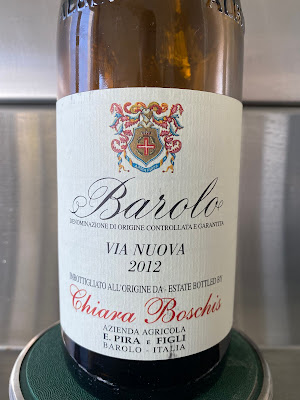
E. Pira Chiara Boschis Via Nuova

 In general, I do not take much notice when people describe a vintage as great or poor. Hot or cool, yes, because this can be objectively verified. But in terms of quality, there is so much variation that you can find great wines in so called poor vintages, and poor wines in great vintages. The odds are perhaps against it, but I prefer to look at the individual wine.

2012 was regarded as a pretty good vintage in Piedmont, although dwarfed by 2010 and 2013. So when I opened the 2012 E. Pira Chiara Boschis Via Nuova I was pretty confident this should be a good wine at a good time to drink. The Via Nuova is a blended Barolo. The number of vineyards varies between vintages. In 2012, it is a blend of six vineyards, two each from Barolo, Monforte, and Serralunga.


When I opened the bottle, I got a bit concerned. The colour was a quite developed blend of red and brown. I inspected the cork, which was firm and hardly penetrated by wine. Dried flowers and prune notes emerged from the glass.

Being from the southern areas of Piedmont, this is always a full-bodied wine. Unfortunately, this wine lacked energy. The flavours were very earthy with some dried fruit characteristics. The wine still has a good structure with mellowed dry tannins. The finish is long.

This wine is much more developed than it should be at 9 years of age, and is past its best. It could of course be the bottle, but if you have this wine, I suggest you drink it now.

Score: 89/0


Monday, October 4, 2021

Gianfranco Alessandria Barolo

 Gianfranco Alessandria is not a division 1 producer in Barolo and 2011, while part of a string of decent vintages, was not a great one. How good can the 2011 Gianfranco Alessandria Barolo really be? It comes from the San Giovanni vineyard of the Monforte subregion.


The colour of the wine is a rustic red. It looks quite developed.

Cranberry fruit opens up on the palate, followed by savoury characteristics, such as leather, cigarbox and earthy notes. It is a complex and attractive profile. Overall, the mouthfeel is a little rustic, but the wine still has good energy. It is balanced despite the robust tannins, typical for a traditional wine from  Monforte. 

Overall, the wine has an interesting profile and personality. I recommend to drink this now.

Score: 93/+++


Thursday, July 15, 2021

Giovanni Rosso Serra Barolo

 As I opened the 2012 Giovanni Rosso Serra Barolo last night, I had moderate expectations. The producer is not thought to be in the top echelon of Piedmont; 2012, while a good vintage, is overshadowed by 2010 and 2013; and the Serra vineyard is not a top terroir. In fact of the seven producers who take fruit from there, only Giovanni Rosso makes a single vineyard wine. This is somewhat perplexing. The vineyard is situated about 1km south of Serralunga, south-east facing, at good altitude, with limestone soil.

The limestone shines through on the pathways

Anyway, this wine was sheer delight. In my mind, the best Barolo shows the structure of Cabernet Sauvignon, and the aromatics of Pinot Noir. This wine did just that. It was very aromatic on the nose, with rose petal, red cherry, and mushroom aromas.


On the palate, the wine was very lifted, with red cherry fruit dominant. This is quite a light-footed wine, yet complex, with great minerality - unusual for Serralunga. You could almost take the flavours and energy for a Pinot Noir, except for the very dry and chalky tannins. Beauty in the glass!

Score: 96/+++   


Sunday, May 9, 2021

2010 Barolos

 Currently, there is a lot of hype about the 2016 vintage in Barolo. And there seems no doubt it is a good vintage. But let us not forget there has been a string of great vintages there in the last 15 years. As I discovered last week, a couple of wines from 2010 provide sensational drinking right now. These wines were the 2010 Mauro Molino Bricco Luciani and the 2010 E. Pira Chiara Boschis Via Nuova.


The first fascinating fact was that these two wines were almost indistinguishable in aroma and flavour. This was very surprising to me, as the Mauro Molino wine is a single vineyard wine from La Morra, located in the North of Barolo and known for more fragrant wines, whereas the Via Nuova is a blend of seven vineyards from Barolo, Monforte and Serralunga in the South. This may speak to the fact that over time distinguishing features disappear to a degree.

To the wines: Both wines were floral and aromatic, with rose petal and cherry flavours, black olive and some earthy notes. They were super elegant and smooth, with excellent fine tannin management. You could describe these wines as feminine, but they had persistent power as well, with the Chiara Boschis wine delivering a slightly bigger mouthfeel, as one would expect. The finish of both wines was very long.

I was particularly surprised by the quality of the Mauro Molino wine, a producer who trades more at the value end (as far as Barolos are concerned). These wines will go for many years to come, but why wait, given the complex, yet refreshing and elegant, and complete drinking experience right now. 

Score (both wines): 97/+++


Tuesday, March 30, 2021

Paolo Scavino Barolo


On the second day, everything came together beautifully for the 2010 Paolo Scavino Barolo. If you cannot wait this long. make sure you decant the wine a while before drinking.

Plum, raspberry, cranberry, forest floor creates an enticing blend on the palate. This wine does not have the typical tar & roses flavour. The tannins are dry, finely grained and long in the mouth. The acidity is well integrated. This wine delivers a beautiful balance before it finishes super long.

You would call this a full-bodied wine, but there is actually more energy than fruit weight. Wow! This is the entry level Barolo. However, it comes from an excellent vintage. I am looking forward to the 2016 when it lands here, soon.

Score: 96/+++


Saturday, January 23, 2021

Giacomo Conterno Barolo Francia

 For a special occasion, I opened a bottle of the oldest Barolo in my cellar from the legendary Giacomo Conterno.


The 1997 Giacomo Conterno Barolo Francia had a high shoulder and look at the cork! Fresh like a daisy and came out like a two year old. 

1997 in Piedmont was similar to 1982 in Bordeaux. This warm vintage put Nebbiolo on the international map. At the time, new approaches were tried in Piedmont, but not by Conterno. His maceration period was 30 days or so, the barrels large.

In 2020, this is a mature wine. The wine still has some freshness on the nose, but on the palate, the primary fruit is almost gone. There are tea leaves, a bit of dark cherry, cedar and tobacco. But Conterno was never about the fruit, and the structure is still strong. The very long dry and silky finish gives this wine its quality.

Score: 94/++