Showing posts with label Riesling. Show all posts

Tuesday, October 22, 2024

Rieslingfreak No.2

 Sometimes, not very often, when I drink a new wine, I am simply astonished. This happened to me yesterday when I drank the 2024 Rieslingfreak No.2 from Polish Hill in Clare Valley.


This wine has a high intensity of lime and green apple, but it is not fruity. The wine has a great line, and it is not broad. Equally, it is not piercing. It has a wonderful balance. The palate pushes towards a mineral and very satisfying finish.

This is the best young Australian Riesling I have tasted, not withstanding some Leo Burings of the past. I have never rated a wine as high for this price ($30/bottle).

This wine will age well, but it is such a treat right now.

Score: 97/+++


Wednesday, August 7, 2024

Penfolds Collection 2024


The Penfolds Collection now consists of 22 wines. It is difficult to taste them all. I had an opportunity to taste 9 of these wines. The biggest omissions were St. Henri (small volume?), Bin 707, RWT, the premium Chardonnays, and the French wines.

An overall impression of the red wines is that they seem to be fresher and more energetic than in the past. The influence of new oak is more subdued, and overall the wines are quite drinkable straight away.

I was not too impressed with the white wines I tasted. The 2024 Bin 51 Riesling from Eden Valley was quite broad (90 points). The 2023 Bin 311 is actually quite complex on the palate expressing citrus, white nectarine, strike match and almond flavours. The Penfols notes give more than 10 flavours, but somehow the wine did not grab me as some previous vintages have (92 points).

Of the entry level red wines, the 2023 Bin 23 Grenache was a real revelation. Many Grenaches are too big and too fruity, but this wine is quite restrained. It is medium-bodied, with raspberry flavours and a touch of bubblegum sweetness, only a touch. The mouthfeel is quite velvety and the finish is long - a very attractive wine (94 points). The 2022 Bin 28 Shiraz, the Penfolds workhorse, is pure and plummy, but the finish is short (92 points). 

The American wines are from the wildfires impacted 2021 vintage. The Bin 600 is this curious combination of Paso Robles Cabernet Sauvignon and  15% South Australian Shiraz. Despite the Shiraz component, I felt the hole on the mid-palate. The Cabernet component not very strong. The wine has an earthy taste and the finish is medium (91 points). The 2021 Bin 704 is Napa Cabernet Sauvignon. This is quite a big wine, but it has acidity to match. This is an intense and tannic wine, but it is in balance (93 points).

The 2022 Bin 407 Cabernet Sauvignon is a blend of Cabernet grapes from all major regions of South Australia is quite a step up. It is a fresh wine with good drive, representing the vintage. The cooler year defines this wine. It is much leaner than in previous years, again with a bit of a gap in the middle. However, it is a well constructed wine with good balance (92 points). The 2022 Bin 389 Cabernet Shiraz is quite a step up. The wine is quite fresh, with good drive, showing the characteristics of the vintage.  Blackberry, plum, and mulberry flavours deliver a satisfying mouthfeel. The key feature to me is the very long finish. This wine will benefit from ageing, no doubt (95 points).

Grange; what can you say that has not been said already. this is the 2020 Grange. The first impression; you can actually drink this wine on release and enjoy it. Given the unparalleled grape resources available to Penfolds, it is not surprising that the variability from year to year is quite low. So you expect the wine to be powerful and ripe, which it is, with licorice and dark chocolate flavours adding to the fruit. However, this is not an outstanding Grange, when measured against other vintages. What is missing is the detailed layering you find in the best vintages. Did the 2020 bush fires have an influence? (96 points).

Overall, Penfolds is heading in the right direction with this release. Some key wines were missing in this tasting, so a complete assessment will have to wait.
                                                                                                                                                                                                                                                              

Tuesday, April 16, 2024

O'Leary Walker Polish Hill Riesling

 I think of O'Leary Walker in a similar way in which Bin 389 is described as baby Grange. To me, O'Leary Walker is the baby Riesling to Grosset's Rieslings. Both produce Polish Hill and Watervale Rieslings. Grosset Rieslings show this purity of fruit and great drive. O'Leary Walker is similar, just not quite as much, and at a much lower price.


The 2023 O'Leary Walker Polish Hill Riesling delivers the typical lemon and lime flavours of Clare Valley. It is perhaps not as focused and precise as the Grosset equivalent, but it comes close. The wine is very energetic on the palate. It is linear and long. The wine is obviously still very young, but already well balanced and enjoyable.

This is an excellent Riesling in the Australian style (acidic and lean). It will age well, but I prefer drinking this wine young.

Score: 94/+++


Sunday, August 6, 2023

2023 Penfolds Collection

 What Penfolds presents in August is quite a collection these days: 25 wines in fact. In addition, there is a Chinese wine (not available in Australia yet), and some cheaper wines, such as the terribly named Max wines.


I taste nine of their new releases at a new event, Penfolds Transcend. The wines are narrated on screen by Steph Dutton, Penfold's red winemaker, who will succeed Peter Gago, in my view. It was efficient and worked well. 

The 2023 Bin 51 Eden Valley Riesling is a good Riesling with white flower aromas, and citrus and melon flavours. The wine has good drive and a mineral finish, a well executed, typical Riesling from Eden Valley (92 points).

The 2022 Reserve Bin A from the Adelaide Hills can be funky and spectacular in some years. This is not one of those. Apple blossom notes on the nose are followed by apple custard and pear flavours. This is quite a soft, opulent wine with good length and a wet stone finish (92 points).

The 2022 Bin 23 Pinot Noir is now exclusively made from Tasmanian fruit. There are quite a few flavours on the palate like strawberry, dark and sour cherry, cranberry. The key feature, however, are the firm dry tannins. This wine is not yet quite in the Penfolds DNA (92 points).

Then we come to the 2021 Bin 28 Shiraz, Penfold's workhorse. This is a rich wine with plum and mocca flavours, a bit of five spice as well. The core of this robust wine is quite sweet and juicy (93 points).

The 2020 FWT (French Wine Trial) 585 is a Bordeaux blend, Cabernet Sauvignon dominant. Blackberry, chocolate and licorice are the dominant flavours. There are savoury notes as well. Overall, the mouthfeel is soft and a little lean: more Bordeaux than Penfolds (92 points). 

The Bin 704 Cabernet Sauvignon from the Napa Valley is the much more powerful wine of course. It has excellent blackberry fruit purity. It has great balance between fruit and savoury flavours and finishes on fine grained tannins (94 points).

An absolute highlight was the 2021 Bin 389 Cabernet Shiraz. There are layers of dark berries; blueberry, blackberry, mulberry. Roasted meat flavours and spice add to complexity. The wine is seamless between the Cabernet and the Shiraz fruit, and fruit and savoury flavours. This dry wine,  is concentrated, yet can be enjoyed now. This is probably the best 389 I have ever tasted (97 points).  

The 2019 Grange is immediately recognizable. Blackberry and blue fruit, licorice, black olive and charcoal form the core. This is an intense wine with great depth, yet it is fresh and smooth. It is already drinkable. It will probably forever live in the shadow of the 2018, but it is a great follow-up (98 points).

After tasting Grange, the concentration tends to drop. Yet, the 2021 Bin 707 Cabernet Sauvignon deserves attention. It is full-bodied, with concentrated blackcurrant and tobacco flavours. This is an elegant wine with an extra long finish (97 points).

Tasting a range of young Penfolds wines used to be hard work. Yet this was thoroughly pleasant. The oak influence has been dialed back, and freshness has increased. 


Saturday, March 25, 2023

Two Traditional, Disappointing White Wines

 Remember buttery Chardonnays? White wine is quite susceptible to different winemaking techniques. I recently tasted two mainstream varieties, a Sauvignon Blanc and a Riesling, which reminded me how these wines used to taste in the ‘old days’. Passionate wine drinkers have moved on, and so have leading producers.

The first was the Villa Maria Private Bin Sauvignon Blanc from Marlborough. Immediately, the palate gets attacked by grassy and gooseberry flavours. They are so strong, it is irrelevant that otherwise the wine is well made.

Score: 85/—

Gunderloch is highly regarded for their sweet and late harvest wines, such as Trockenbeerenauslese. The entry level is the Gunderloch Fritz Riesling. This wine is slightly sweet, but the main issue here is the lack of structure. The wine sits slightly round in the mouth, not moving down the palate. It is neither refreshing nor delicate.

Score: 85/—

Saturday, November 12, 2022

Macedon Ranges, Part 1: Bindi

 It was high time to catch up with Bindi again, the high quality producer of Chardonnay and Pinot Noir. Like in many parts of the country, the rainfall this year has been significant. As a result, the grass growth has been substantial, as can be seen on the photo of the famous Block 5 Pinot Noir vineyard.


These days, Bindi is much more than Chardonnay and Pinot Noir, but we started with the two well known Chardonnays from barrel. 

The 2022 Kosta Rind Chardonnay is grown on volcanic soil, which gives the wine some generosity. Lime and citrus flavours are balanced with earthy notes. There is a saline quality to the attractive palate, balanced by fine acidity (94 points). The 2022 Quartz Chardonnay is a sensational wine. As the name suggests, the soil is quartz mixed with clay. This delivers a more structured wine. There is a lot of complexity on the palate of this bigger, yet dynamic wine. The mouthfeel is quite dry, with the acidity more prominent. This wine will need time to unfold. It is very persistent in the mouth, with chalky tannins and a long finish (97 points).

Then we started to taste from bottle.


The first wine was a surprise in more ways than one. The 2022 Riesling, from an outside vineyard, is Michael Dhillon's first foray into Riesling - and what a cracker this is. The grapes were grown on granite soil, quite common in Macedon. There are some floral notes here, but the main impact on the palate is lime and citrus. This wine has a wonderful texture. It is not broad. The wine has good drive, without being dominated by acidity. I liked this a lot (95 points). We tasted a 2022 Rosé, which showed an interesting blend of redcurrant, some herbal notes and white pepper. However, the slightly sweet finish overtook the positive palate impression for me (88 points).

We then went to some Pinot Noirs from new high density planted vineyards. The Darshan vineyard, named after Michael's grandfather, was planted in 2014. We tasted the 2017 Darshan Pinot Noir, the first wine from this vineyard. With 3(!) year old vines, it showed amazing promise. Dark cherry fruit blends in with mushroom and forest floor characteristics. The purity of the fruit stands out. This is a classic Pinot, quite delicate, with a silky feel: a beautiful wine (94 points). Then came the 2020 Block 8 Pinot Noir from a densely planted vineyard in 2017. So this is another wine from vines three years old. Again, it is delicate, with dark complexity and grippy tannins (93 points). This was followed by the 2021 Block 8 Pinot Noir. This showed vintage variation. The wine had higher acidity and showed good length. I found it delicious (95 points).  

The final Pinot Noir was the 2021 Kaye Pinot Noir, named after Michael's Mother. This wine is a bit more forward and approachable, with dark cherry the dominant flavour. Having said this, the structure of the wine does stand up (93 points). I found the 2021 Pyrette, the Shiraz from Heathcote, a bit perplexing. This is meant as an early and easy drinking wine. It is quite dark and peppery, with a mix of cherry and earthy notes, and a quite pronounced beetroot flavour. I did not think it gelled together all that well (90 points).

I spent two hours with Michael Dhillon on this visit. His commentary, as always, was full of insight. He has now managed this site for over 25 years, and the wines benefit from this experience. The Pinot Noirs from the new plantings are already amazingly good. It is clear he is not done yet. More great wines will come from here.   


Monday, August 1, 2022

Skillogalee Riesling


The 2021 Skillogalee Riesling is a typical Riesling from the Clare Valley. It is fresh on the palate with lime flavours and some red apple. This is quite a rounded wine. It seems there is a little residual sweetness, which is quite appealing. Having said this, the wine finishes dry.

Score: 90/++


Wednesday, July 27, 2022

Barossa, Part 3

 On day two in the Barossa, I kicked off with Brothers At War. The Wardlaw brothers have different preferences in wine, one favouring the bigger Barossa Valley wines, the other the sleeker Eden Valley wines. Again, my tasting was extensive, and I need to summarize somewhat.

The two Rieslings from the Eden Valley, the 2021 The Grape Grower, and the 2021 Nothing In Common, were excellent. The first is very delicate, with lime fruit and light acidity. The second is firmer, with more depth of fruit (both 92 points).

Then we come to the red wines of the family range and the premium range. I tasted the 2020 Some Other Guy GSM, the 2020 The Old Man Eden Valley Syrah, the 2020 I'm Always Right Eden Valley Cabernet, and the 2020 Fist Fight Barossa Shiraz. These wines are all quite fruit forward. They do not have enough structure for me (86 to 90 points).   


I have similar issues with the 2020 Single Vineyard Eden Valley Mataro and the 2020 Single Vineyard Syrah. These wines come from the Pendee Farm vineyard in Springton. The Syrah is very austere, and the mouthfeel thin, the Mataro is dominated by strong coarse tannins (90 points).

I preferred the 2020 Single Vineyard Barossa Valley Shiraz from a 60 year old Lyndoch vineyard. It is red fruited, infused with some mocca notes, still made in a fresh style with firm acidity (93 points).

Some production notes, not sure you can read them

The star of the tasting was the 2021 Single Vineyard Eden Valley Grenache. It comes from the 160 year old Stonegarden vineyard (there it is again!). 50% whole bunch is used in this wine. Red cherry, and a little fruity raspberry and cranberry flavours open up beautifully on the back palate, supported by silky tannins (95 points).

The final wine is the 2018 Icon Eden Valley Syrah/Grenache. 'Icon' seems a bit rich for a wine nobody knows. This wine has more concentration, but shows still fresh raspberry and red cherry flavours. The barnyard notes, which I have not tasted in a wine for some time, are not out of place. The finish is quite long (94 points). 

My next visit is to Eisenstone. There are a couple of things I like about this new winery from the start. This winery makes only Shiraz; focus until you master it! Secondly, it labels one series of wines by subregion, and a second by special vineyards. Stephen Cook used my book on Barossa Shiraz to develop his approach!


The first wine I taste is the 2019 Ebenezer Shiraz. The fruit comes from the famous Hoffmann vineyard. It is a mix of 1965 Dallwitz fruit (also used by Sami-Odi) and young vines. All wines are matured in French oak, this one has 50% new. There are blackcurrant, blueberry and some mocca flavours on the palate. The fruit weight is good. Savoury notes come from the oak. The wine tastes long in the mouth (93 points). The 2019 Hoffmann Single Vineyard Shiraz wine is similar in style, with red and black fruit flavours. The wine is more opulent, yet quite elegant with good complexity. This is a classic full-bodied Barossa Shiraz (95 points). The 2019 Roenfeld Rd. Shiraz, from the vineyard which also produces the new Opulus label, is surprisingly aromatic, but the structure is quite tight and linear (92 points).

The 2020 wines, from a more difficult vintage, appear more generous, with a lighter touch perhaps. The 2020 Gomersal Shiraz is lively and fruity with blackberry and blueberry flavours (93 points). The 2020 Koonanga Shiraz, from the Beckers vineyard) is very dark with mocca notes - a typical Northern Barossa Shiraz (94 points). The 2020 Hoffmann Single Vineyard Shiraz is the star of this line-up. It has a big mouthfeel, with blackberry and blueberry flavours. A very opulent wine with some lifted character and finely grained, yet firm tannins (96 points).

The style of this winery is classic Barossa Shiraz with excellent fruit sources. The winemaking could lighten up a bit more. The addition of acidity feels a little forced and not totally harmonious. It will be interesting to see the wines of 2021, when vintage conditions were perfect.

My final tasting was with Dave Powell of ??? After leaving Torbreck, he formed Powell & Son. This went well for a few years, before he had a falling out with Callum Powell. Callum now makes lighter style wines under the Agricola label. Dave Powell is still being pursued for using his own name by the Torbreck owners. So he now formed Neldner Road. However, some wines are still marketed under Powell & Son. 


The first wine is the 2018 Barossa Valley GSM. It is a classical blend with 60% Grenache. This wine is very fresh, very drinkable with great texture. The wine is quite fruit orientated with  darker flavours than typical for Grenache. The wine has good length, like a Torbreck Steading from a good year (94 points). The 2019 Barossa Shiraz spends 18 months in French foudres. It is very dark, with chocolate flavours dominant. This wine is great value for money (93 points). The 2019 Neldner Barossa and Eden Valleys Shiraz is like the Struie. Matured in foudres as well, the Eden Valley component shines through, with lifted aromatics and blue fruit (94 points).

My  second favourite of the line-up is the 2019 Loechel Eden Valley Shiraz. This wine sees 67% new oak, matured in barriques. The vineyard soil is  predominantly granite. This is a full-flavoured wine, but it has an element of lightness. The wine is elegant with great length (96 points). The 2019 Kalimna Shiraz, from 80 year old vines, is a good counter point. This wine has big fruit weight and quite coarse tannins - the big Barossa (94 points).

The 2018 Chatterton Shiraz comes from four Barossa and two Eden Valley vineyards. All vines are more than 100 years old, and the sources are largely the same as what David used for RunRig. The wine spends two years in French new oak. I found this wine already quite drinkable. The wine arrives in distinctive layers on the palate. The wine is rich, but is slightly lifted as well. It is beautifully crafted (96 points). It is tough for the 2017 Kleinig Mataro to follow. This wine displays typical Mataro flavours of meat, earth, and spice. It has a surprising fresh and expanding finish - really nice (94 points).

When you taste David Powell wines you know what to expect. There is a widespread view that his wines are too big to be enjoyed by more than a glass. I found these wines quite drinkable, however, and the winemaking is first class.

This ends the Barossa trip. I enjoyed many beautiful wines. There is a widening of styles and a new excitement in the valley, and some notable evolution at Penfolds. One thing has to be said. Most wines tasted here above 93 points are $80/bottle or more. Enjoying good wine has become quite expensive.  


Saturday, July 23, 2022

Barossa, Part 1


I spent the following two days in the Barossa. And what better way to start than at a private Penfolds tasting at the Kalimna Homestead. It is of course surrounded by the famous Kalimna vineyard, first planted around 1890 by the Fowler family. Vineyard and homestead was bought by Penfolds in 1945. Red winemaker Steph Dutton, who is likely to succeed Peter Gago when he retires (you read it here first), took me through the tasting, which consisted mostly of a mix from the 2021 and 2022 Penfolds Collection.

We started with the 2022 Bin 51 Riesling from Eden Valley. This was the first of a number of very positive surprises. Lime rind was the dominant flavour component. The wine has good volume and a fine texture. Minerality develops on the back palate before a long finish (95 points).

Next came the 2019 Yattarna. The fruit is 56% Tasmania, 34% Tumbarumba, 11% Adelaide Hills. The Tasmanian component has been increasing due to climate change and style refinement, while Tumbarumba fruit adds nerve, and Adelaide Hills generosity according to Steph. The wine is matured in 50% new oak barriques. Concentrated citrus fruit, nectarine, pear and smoky oak deliver a complex flavour profile. This is a stylish wine with some fruit weight, but matched with mineral acidity. The Yattarna is getting better with every release. This is a stunning wine (97 points).


The first red is the 2019 Bin 128 Coonawarra Shiraz. This wine sees 100% French hogsheads, 20% new. Peppercorn and spice are the key features of this well structured wine. I detect a bit of alcoholic warmth on the finish (93 points). 

Then comes a special release wine, the 2018 Century Vines Barossa Valley Shiraz. Blending is in the DNA of Penfolds. This could have come from a single vineyard of 100 year old vines, but no, this is a blend from a number of grower owned old vineyards. What this does, it gives a certain layering of fruit flavours (more so in Grange). This wine is matured in old French hogsheads. This is a ripe wine. Mulberry, blackberry, figs and bacon on the palate, anchored by savoury, gravelly tannins - classic Barossa, classic Penfolds (96 points).

Then comes one of the big surprises of this tasting: the 2019 Bin 389 Cabernet/Shiraz. This wine always has more than just 50% Cabernet fruit. This one has 53%. Quite a bit comes from Langhorne Creek. The wine is matured in 100% American oak, 30% new. This wine has great complexity. The herbal notes of the Cabernet start you off, sweet plum from the Shiraz takes over, and it all ends in a mix of meatiness and mocca. The big surprise here is the sheer drinkability of the wine. I remember tasting older vintages at young age, and this was often not a pleasant experience. Oak and tannins were too strong. According to Steph, the introduction of cross-flow filtration has given this wine much more polish. I will in the summary talk about some other developments at Penfolds which make the young wines so exciting (96 points). 


The 2019 Bin 169 Coonawarra Cabernet Sauvignon is from the yet to be released 2022 Collection. The wine is aged in French hogsheads, 56% new. There is the expected blackcurrant, mulberry, tobacco leaf, and dark chocolate. I have always struggled a bit with Coonawarra Cabernet, often because of eucalypt flavours. There is a bit in this wine, but it is in the background. The structure of this wine is very tight. This wine needs time (94 points). 

Now we come to the star of the tasting, the 2018 St. Henri. The wine is aged in old French vats, which gives the fruit prime place. The wine is multi-regional, but predominantly Barossa Valley. This wine is so polished and elegant. Blackberry, plum and chocolate lead to an overall creamy like praline flavour. The tannins are super fine and silky (98 points).

Similarly to the  Bin 389, the main feature of the 2017 Grange for me is the sheer drinkability of this wine. The layering of the fruit comes from the blend of 14 blocks in this wine. It is a very dark and voluminous wine, a typical Grange in this way. Aromatic and meaty, big and drink now. How do they do it (97 points)?

The big revelation in this tasting was how approachable the wines were. Also, French oak is becoming ever more prominent, without giving up on the house style of the flagship American oak wines. This lead to a general discussion of what has changed at Penfolds. It turns out a lot. 
- Many trials with different oak barrels have been carried out over the years. The sourcing is now much smarter than it used to be. 
- The tannin management is much more detailed.
- In the vineyard, there is a lot of detailed mapping and technology is used for profiling moisture and ripeness. Grapes get picked by rows now, rather than vineyards.
- There is also an emphasis on root stock and clones management.

I was very impressed with these wines, and by early accounts, this will carry over into the 2022 Collection. I will have an opportunity to taste many of these in 10 days. 


Monday, July 18, 2022

Clare Valley, Part 2

 The next stop was Jim Barry. Jim Barry can offer a number of highlights in its portfolio. First is the 2021 Assyrtiko. This really is an attractive variety, originating from Santorini. I have written about this before. Jim Barry is the only Australian producer. And this variety is well worth seeking out. Why? It is an aromatic variety, and at the same time, it is very energetic. This is a great summer drink (92 points).

Of course, you cannot go past the Florita Rieslings. This vineyard came to prominence under John Vickery and the Leo Buring label. I tasted three years: 2021, 2015, 2013. The 2021 showed white flower on the nose. This continued on the palate together with lime flavours. This wine is quite powerful and very driven (94 points). The 2015 had a similar fruit flavour profile, and started to show the maturing signs of Riesling: a whiff of kerosene, but actually more of a marmelade flavour (95 points). The 2013 displayed more kerosene, but the fruit was still fresh (94 points). I also tasted the 2018 LoosenBerry Walta Walta, the joint effort with Dr. Loosen from Germany. This wine is made more in the German style, with more time on lees and maturing in used oak. I found the wine a bit nondescript and a little sweet, although it is labeled dry (92 points). The 2021 showed more freshness and line (93 points).

The next bracket featured Cabernet Sauvignon. The first wine was the 2016 Pb Shiraz Cabernet Sauvignon. It had redcurrant on the front palate, some Shiraz sweetness in the middle and an earthy finish. This was a decent example of Australia's classic blend (92 points). Then came the 2018 First Eleven Coonawarra Cabernet Sauvignon. This wine has a very bright profile with redcurrant dominant, backed up by some mocca flavours (92 points). The 2017 Benbournie Cabernet Sauvignon from the Clare was quite different; a solid structure and a very tannic wine which gripped my mouth (91 points). This bracket was ok, but there were no outstanding wines here.

This changed with the 2018 The McRae Wood Shiraz. This wine is dark fruited with blackberry flavours, 5 spice and olive notes. The fruit is from declassified Armagh, and augmented with fruit from other vineyards. But hey, this wine is quite brilliant, with silky tannins and a long finish (95 points). The Armagh comes from 54 year old vines, and has quite some pedigree, obviously. The 2017 is very dark and more concentrated than the before tasted McRae Wood, and it still has some freshness. Yet I found the wine a bit dense (94 points).   

Saturday, July 16, 2022

Clare Valley, Part 1

I spend the first day of a brief tour to South Australia’s wine regions in the Clare Valley. I am mainly interested tasting red wines as opposed to the more flagship Riesling. My first stop is at Taylors. I abandoned Taylors some ten years ago because of their in my view excessive use of new oak. Since then, a number of new labels have been introduced. So it was time for a new assessment.

The first couple of wines were Rieslings, though; the 2022 St Andrews Riesling and the 2012 St. Andrews Riesling. St Andrews means the fruit is from the Estate. Both wines are quite similar in character, with the 10 year old wine more developed and the acid less prominent. There is white flower and lime, both on nose and palate. The wines are quite fruity and a little broad (88 points).

The Chardonnays see 100% new oak. The 2018 St Andrews Chardonnay tastes of stone fruit, and the oak is pretty well integrated (92 points). The 2015 version already has quite a golden colour, and some butterscotch coming through (90 points).

The 2018 St Andrews Shiraz sees 65% new oak, and is matured in this 60% American and 40% French oak. The wine is still quite fresh, red fruited, with some confectionery flavours, no doubt from the American oak (91 points). The 2015 Pioneer Shiraz (best of grapes) has spent 3-4 years in oak (not sure if 100% new). This is a wine on steroids. The fruit weight is big, the tannins firm and coarse, and the vanilla oak prominent. Not my cup of tea (92 points).

Finally, the Cabernets. The 2017 St Andrews Cabernet (current release), shows good typicity. Redcurrant, bay leaf, herbs, and capsicum. The firm acidity delivers a good structure. The fruit is a little underdone given the good vintage (92 points). The 2015 Visionary Cabernet was the best wine of the line-up, but not by much. Again, it is made from the best grapes and spends a lot of time in oak. The flavours were similar to the last wine, but the finish was much longer. This wine will last a long time (93 points).

Overall, oak was still a dominant feature, although perhaps better managed than what I remember. Unfortunately, the fruit was not quite big and concentrated enough to be a dominant match.


Tuesday, April 19, 2022

German Riesling Tasting

My taste buds are fine again, I think, but this is one from the vault: a tasting which happened two months ago. 


The tasting was structured in such a way that at first Kabinett-type wines were tasted, followed by GG (Grosses Gewaechs). All major German regions were represented. The first flight was young wines, the second was of five to six year old wines. Points were given for the favourite wines of the night.

The most highly rated wine ended up to be the 2015 Heymann-Loewenstein Uhlen Roth Ley, Mosel.
This wine impressed with a very complex palate, depth and its full mouthfeel. Despite richer characters, such as hazelnut, the wine had energy and minerality, reflecting the very special terroir of red slate on steep terraces. 

The second place was shared between the 2018 Robert Weil Kiedrich Turmberg, Rheingau and the 2015 Reichsrat von Buhl Jesuitengarten, Pfalz. Both wines shared notes of white flower, but were otherwise quite different from each other. The Robert Weil wine is quite austere, complex, yet linear, with a long finish. There was similarity to a top level Clare Riesling, in my view. The Jesuitengarten was a bigger wine, quite powerful, with citrus and stone fruit flavours, and a riper expression of a dry Riesling.

In third place, or fourth place if you like, came in the 2019 Egon Mueller Scharzhof Riesling. This is a remarkable winemaker with a remarkable property on a bend of the Saar (now labeled Mosel). The purity of the fruit of this slightly off-dry wine was amazing. It was already very complex for such a young wine, very fresh, with passion fruit standing out. The wine was slightly perplexing. It had great energy, even though the acidity seemed quite low.

This tasting demonstrated the rich landscape of German Riesling with quite different expressions depending on soil, winemaker, and region. It seems to me that Australian Riesling is pretty much cut from one cloth (with the exception of Frankland Estate perhaps), whereas this variety has so much to offer.


Monday, March 7, 2022

Special Tasting At Penfolds


 A few days ago, I was hosted at Magill Estate to a tasting of some special wines. 

The whites were the 2021 Cellar Reserve Polish Hill Riesling and the 2020 Bin 20A Chardonnay. The white wines have always lived in the shadow of the red wines, maybe until now. Cellar Reserve are one-off wines. They do not create restrictions which the major labels can do. This Riesling shows the expected lime and lemon flavours of Polish Hill. In comparison with Grosset, this wine has a wider mouthfeel, not quite as steely (this is a matter of personal preference). Having said this, it has a beautiful line of acid (94 points). 

The Bin 20A Chardonnay is the little brother of Yattarna. A stands for Adelaide Hills, where always 100% of the fruit comes from. This wine is nothing like any other Chardonnay I have tasted from Adelaide Hills. It is a much more powerful and quite funky wine.Whereas Yattarna seems carefully crafted, this wine lets loose. It comes from the Piccadilly area, and has been matured in 60% new French oak. The wine can clearly take it. Ripe melon flavours and a flinty minerality dominate the palate. This wine has personality (95 points).

The next section was a comparison of cork and stelvin closure, based on the 2013 Bin138 SGM. The wine is composed of 75% Shiraz, 15% Grenache and 10% Mourvedre. As expected, the wine under cork showed more development, with a slightly garnet colour. The stelvin wine showed red and purple. The wine under cork felt big in the mouth, with raspberry flavours. It had a sweet, somewhat fat core (92 points). The screw-capped wine was much fresher, with a more interesting flavour profile, including aniseed and some vegetable notes, such as fennel (94 points).

The result was not what I expected. For red wine, I prefer cork because of the more natural development (in my mind), whereas I have had a number of 10 year old red wines under screw-cap which showed frustratingly little development at all. However, in this comparison, the wine under cork was further developed than I would have liked, and ‘reduced’ to a sweet core. The wine under stelvin showed some development, and kept an interesting flavour profile.

I will skip over the Bin 28 wines. The comparison here was difficult because of the significant difference in age.

Finally, I tasted two wines from the new California Collection. The 2018 Bin 704 is the Penfolds Napa Cabernet. Sourced predominantly from Oakville and Rutherford i.e. the valley floor, and matured in 100% new French oak, this wine is positioned, if you will, against the premium Napa Valley Cabernets (and priced attractively by comparison). It has the boysenberry flavour I associate with Napa Cabernet, but it is not as open as the American wines. I feel it is tighter. The different fermentation style with Penfolds typical punch-downs, may explain this. The wine is quite long and has an elegant mouthfeel, which makes it quite approachable now, maybe because of the maturing in hogsheads (95 points).

Penfolds legacy is founded by risky experiments. The Max Schubert story of Grange is well known where Shiraz was used instead of  the Cabernet Sauvignon of Bordeaux. RWT was aged in French oak against all Penfolds tradition. Do we have another example here, when red wine maker Steph Dutton ‘threw’ 13% of ultra premium Shiraz fruit from Australia into the best Napa Cabernet fruit they had to create Quantum? This 2018 Quantum is called wine of the world, maybe a bit presumptuous, but no large wine company had ever done this before. This wine is matured in 100% French barriques. Is this a Napa Cabernet? Is this a Penfolds wine? What I would say is that it is a very high quality wine, with layers and layers of fruit, with blackcurrant dominant. It is much too early to drink now, but will unfold very well, I have no doubt. It will be longer lasting than most Napa Cabernet. It is Penfolds’ best Cabernet, but a Grange equivalent? Not sure (97 points).

 The reception by Penfolds was most enjoyable, and the expert comments by Zoe Warrington very much appreciated. This tasting was a real treat.

Sunday, February 27, 2022

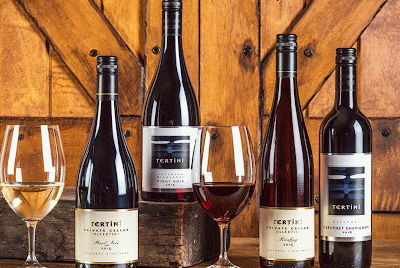
Tertini Wines

 Tertini is located in the Southern Highlands, NSW, and it deserves more recognition. I visited 18 months ago, and have now come back for a second look. Last time, I reported that the strength of this winery is in Riesling, Chardonnay, and Pinot Noir. This turned out to be the case in this tasting as well. 


The 2019 Tertini Riesling has 8g of residual sugar. It delivers a bit of sweetness, but essentially adds more interest to the palate, which delivers citrus and some honey flavours. The wine remains crisp, with well balanced acidity and a dry finish (93 points).

The 2019 Pinot Blanc is a clean wine, texture orientated, and a good food wine. The finish is a little flat (90 points).

I tasted their two Chardonnays, which provide an interesting contrast in styles. The 2018 Tasmanian Chardonnay is very fresh, citrus focussed, and very dry. This is a typical modern Australian cool climate Chardonnay. I found it a bit lean, but well made (92 points). The 2019 Southern Highlands Chardonnay in contrast goes through 100% malolactic fermentation and sees 40% new oak. This is a  wine with a rounder mouthfeel. Citrus, melon, and pineapple flavours deliver complexity on the palate (93 points). 

The 2019 Southern Highlands Pinot Noir is an attractive wine with a light touch. There is a small amount of whole bunch (12%) in this wine. Red cherry, five spice, mushroom, and forest floor flavours deliver a typical good quality Pinot Noir flavour, on a light frame in this case, defying the 13.1% alcohol (94 points).

The other red varieties I tasted, a Nebbiolo from Hilltops (very Pinot Noir like), a Corbena Amarone, and a Lagrein (Northern Italian variety) create some curiosity value, but do not reach the quality of the other reviewed wines. 


Tuesday, March 9, 2021

Day Three: Adelaide Hills, part 1

 There is now a plethora of wineries in the Adelaide Hills. It is cooler than McLaren Vale or the Barossa and it attracts also some innovative approaches, mainly in the northern part. I have never visited there before. So I decided to split the day between more conventional wineries and some more adventurous ones. The first winery is The Lane Vineyard. It wants to be especially known for its Champagne.

The bottles are sweating. I had not noticed.

The first is the Lois. This is quite a find; a very refreshing, forward champagne, yet with very fine beads. I liked this a lot. It compares favorably with Croser or Chandon, in my view, for less cost (91 points). The second is the Estate Blanc de Blanc which has been on lees for five years. It is darker in colour and more textural, but I did not find it entirely convincing for this kind of approach (90 points). The third champagne is very rare; the Heritage, a champagne 2010 late disgorged. This wine is darker again, with brioche notes, and very long in the mouth (95 points).

I then participated in the Gathering tasting. This is a tasting of four wines, matched with canapés. This was very well done, and is supported by detailed information.


Skipping the Sauvignon/Semillon (you have to have some principles), let us start with the 2019 Beginning Chardonnay. There is flinty citrus and pineapple on the palate. The oak influence (30% new) is noticeable, but the wine is balanced - a good food wine (92 points). The 2016 Reunion Shiraz is quite a delight. This is a lighter style, very pretty. Red berries feature on the palate, lightly peppered. This is an elegant wine, finishing with soft tannins (93 points). I found the 2017 19th Meeting Cabernet Sauvignon a bit herbaceous. It is a clean wine, but the fruit weight is too light (89 points).

My second stop is at Murdoch Hill, increasingly known for its Chardonnay. The first wine I taste is the 2019 Sulky Riesling. The wine is fruity, a little sweet, with not much definition (88 points). Then come three Chardonnays. The 2020 standard Chardonnay delivers intense apple and pineapple flavours. 35% new oak adds vanilla on the palate. Overall, the wine is a little broad (90 points). the 2019 Tilbury Chardonnay is the premium wine. It consists of 100% Piccadilly fruit (think Petaluma). The flavours are quite intense and powerful. There is good length in this wine (93 points). The 2020 Tilbury Chardonnay has less new oak (15%), but more drive and intensity, as the apple and pineapple flavours are well supported by acidity (94 points).

The red wines are also worth a try. The 2018 Phaeton Pinot Noir comes from higher altitude at Piccadilly. The wine has a slightly earthy colour.  It is strawberry based with earthy undertones. There is 40% wholebunch in this wine, and the tannins are soft and silky - not your standard Pinot, but I quite liked it (93 points). The 2018 Landau Syrah is also a bit unusual. It is medium-bodied. Game and savoury notes dominate the palate. The wine is elegant, but slightly herbaceous (92 points).


Tuesday, January 26, 2021

Grosset Polish Hill Riesling


How refreshing is this 2012 Grosset Polish Hill. For those who are used to German Riesling, this is quite different. The style of this wine is austere. The acidity is high, and accentuates the piercing and intense citrus flavous of this wine. This wine is still young, but some almond and shy toasty flavours are starting to emerge. The energy of this wine is exemplary, with a medium to long finish.

I think the most interesting point to drink this wine at would be five years from now. It will easily go another ten years.

Score: 95/+++


Monday, January 18, 2021

Three Outstanding European White Wines

 In a recent tasting of examples of 8 different white wine varieties, three wines stood out. The move in Germany to designate some sites with GG (Grosses Gewächs), and imposing some regulations for these, has clearly been successful. The example in this tasting was the 2015 A. Christmann Koenigsbacher IDIG GG Riesling. 


From a warm vintage, this wine is now showing some age, but also complexity which has generally not been seen say, a decade ago. This is an aromatic and rich wine, with a blend of citrus and honey flavours. A little sweetness is kept in check by unobtrusive acidity. This is a very balanced wine from a producer who can't do wrong.

Score: 95/+++

The second wine was the 2013 Louis Jadot, 1er cru, Meursault Genevrières.


The tasting was blind, but it was immediately clear this was a Burgundy Chardonnay due to the obvious oak treatment of this wine. As a result, the wine was creamy with some toast on the palate, but at the same time, the wine showed pineapple fruit and minerality. This is quite an intense wine with a long and persistent finish.

Score: 94/+++

The third wine was a Chenin Blanc from the Loire. The Loire Valley is quite complex, with different subregions and varieties. This example came from Savennières, specifically the famous Coulée de Serrant vineyard of Nicolas Joly. This 17ha 'monopole' has been planted by Cistercian monks in the 12th century originally, and still includes old vines on ungrafted rootstock.


The 2011 Nicolas Joly Coulée de Serrant Chenin Blanc is based on biodynamic vineyard management. It is a dry version of Chenin Blanc and shows an array of flavours: lemon, apple, herbs, ginger, walnut, and perhaps sherry. I sometimes struggle with the 'salad' of flavours in Chenin, but this is a balanced wine of very good maturity.

Score: 94/++


Friday, January 15, 2021

Highland Heritage Riesling

 Highland Heritage from Orange is new to me. The 2019 Highland Heritage Riesling has done quite well on the show circuit.


The colour of the wine is golden with a green tinge, medium intensity. The bouquet jumps from the glass with floral and citrus aromas, big for a cool climate Riesling.

There is quite a bit going on on the palate. Fruity citrus flavours, floral notes, a hint of sweetness. This is a well made wine with just enough acidity to deliver balance. However, the mouthfeel is round, bordering on flabby. Many people may like this. There is also a hint of alcohol (12.1%) on the finish. Personally, I would have preferred this wine to be 1% lower in alcohol.

Score: 90/0


Wednesday, December 16, 2020

Duke's Vineyard Single Vineyard Riesling

 The Great Southern region of Western Australia is becoming a strong performer for Riesling.


The 2019 Duke's Single Vineyard Riesling is obviously still very young, but is starting to open up. Lime, green apple notes and a chalky feel provide attractive flavours, supported by fine acidity. The wine is very balanced, maybe a little predictable, maybe a little lean, but this is personal preference. This wine is very dry with good length on the back palate.

Very good value for money.

Score: 93/++


Friday, November 13, 2020

Felton Road Riesling


When you think about Riesling, you think about Germany, of course. You may also think about Austria and Australia, but New Zealand? And if the producer is Felton Road, you think about their Pinot Noir. Yet it can produce world-class Riesling as well.


The 2017 Felton Road Dry Riesling is such an example. Lemon citrus, green apple, five spice, and oyster shell create a great flavour mix, supported by pronounced minerality. The key is how precise and steely this wine is, before it leads to a long, long finish.

This wine is still young, and will easily live for 10 years or more from now - for those who prefer some brioche and toasty flavours.

Score: 94/+++