Showing posts with label Gamay. Show all posts

Sunday, March 2, 2025

Jean-Marc Burgaud Beaujolais

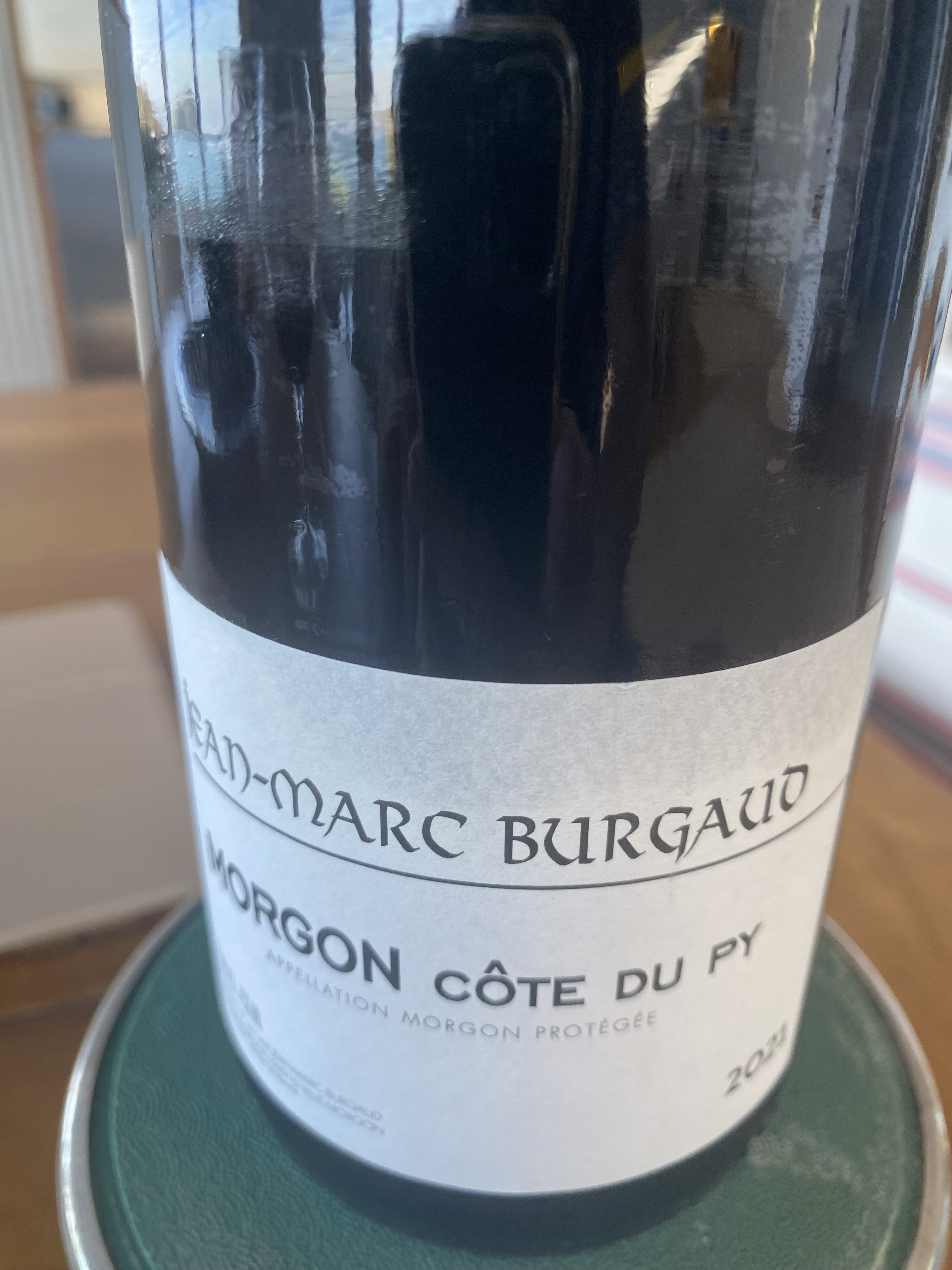
 Gamay used to be the most planted red variety in Burgundy. Now it is Pinot Noir, of course. And the success of Beaujolais Nouveau made Beaujolais a popular drink, but rendered Gamay as a not serious, early to drink variety. For quite a number of years, some Gamay producers have staged a comeback. Probably the most serious of these wines come from the subregion of Morgon, and the hill of Côte du Py is the core. So how does the 2021 Jean-Marc Burgaud Morgon Côte du Py stack up? 


This is quite a concentrated wine, with good fruit weight. Red and black cherry flavours deliver quite a fruity profile on the front palate.Then herbal notes come on strong and add a savoury profile. The structure is backed up by firm tannins. This is clearly a wine which can age for 5-8 years.

Score: 93/++

Friday, January 5, 2024

Te Mata Gamay Noir

 This 2022 Te Mata Gamay Noir is a great find. 


There is a lot of talk about the improvement of Beaujolais cru, and some of this is justified. And then you get a Gamay from left field, at half price or less, which is quite exciting.

The colour is carmine (ruby with a bit of blue), very appealing.

On the palate, there is raspberry fruit, but also a lot of savoury flavours, game and green tea. The mouthfeel is velvety. The wine is not very concentrated, but the flavours create an intriguing complexity. Acidity and tannins are medium.

This is a good quality, very drinkable great summer wine. Highly recommended.

Score: 90/+++


Saturday, April 15, 2023

Domenica New Releases

 The new Domenica range from Beechworth is from 2021 and 2022. The 2021 Domenica Rousanne Marsanne shows white flower notes. On the palate, this wine is surprisingly energetic with its citrus flavours. I expected a broader texture. There are some earthy notes on the back palate, which is anchored by firm acidity. The wine is not fat, which can be experienced sometimes with this blend, but also not very typical, without the expected texture (91 points).

The 2022 Domenica Chardonnay tastes of citrus and white peach. There is good drive in this wine, but not quite the complexity I was hoping for. This is a medium bodied wine with good structure, supported by firm acidity (92 points).

The 2022 Domenica Gamay is a new wine in the line-up. Carbonic maceration delivers some confectionary flavours, but also floral notes and good minerality on the finish. Still, the confectionary flavours are too much for me (I am very sensitive to this) (90 points).

The 2021 Domenica 'Two Cells' Shiraz is an attractively priced wine. It is a medium-bodied wine which is quite tight. Plum and black cherry flavours are not overly concentrated while spice adds interest. This is a cool climate Shiraz, which needs a bit more time to come together (90 points).

Overall, it is commendable to see these wines at lower alcohol levels. On the other hand, they lack some specific interest to stand out from the crowd.


Thursday, March 11, 2021

Day Three: Adelaide Hills, part 2

 When I (like others) review wine, I look at criteria such as clarity and depth of colour, purity and intensity of fruit, complexity, power, elegance, texture, drive, tannin structure, balance, finish. But when I look at  'alternative' winemakers, I realize this is not the way they think. They have strong ethical convictions which come first. The wines are a consequence of these convictions, and for them the classical criteria are less important - not irrelevant, but less important. I will still rate the wines along the classical criteria in order to use the same benchmarks, but I will point out the ethical convictions as the cornerstone. The two wineries I visited have two different approaches.

The first is Unico Zelo. I meet with Chief Thinker Brendan Carter. The title sounds overbearing, but during the discussion I started to find it appropriate. His two convictions are sustainability and sharing the spoils. Part of the business is a cooperative, where profits are shared with growers. He identified that in the Riverland, while traditional varieties need a lot of irrigation, Fiano does not. So this is one of his key varieties next to Nero d'Avola. Terroir plays an important role. My tasting consists of three Fianos from different regions, and three Nero d'Avolas.

The Fianos

The 2019 River Sand Fiano comes from sandy soil in the Riverland. It is a textural wine, fresh, with earthy flavours (91 points). The 2020 Slate Farm comes from the Polish River region in Clare Valley. The soils consists mainly of red clay and shale. This wine is quite light and fresh, with good energy. Tropical fruit on the palate starts us off, before minerality takes over. This was my favorite of this trio (92 points). I found the 2020 Alluvium from the Adelaide Hills a bit broad and earthy (88 points).  

No controls are applied to the fermentation process. Therefore it can be hot, which moves the dial from fruit to texture.

The Nero d'Avolas

The 2020 Halcyon Days is the Nero d'Avola from the Riverland. Raspberry flavours dominate in this high acid red. I found the wine a bit too juicy (88 points). The 2020 Mallee Gambit from Clare is similar, but more intense. The sour cherry makes this very typical for Nero. The fruit is very pure, again with high acidity (90 points). The 2020 Pipe Dream from Adelaide Hills has the biggest fruit weight, and also earthy notes to add complexity, but the balance did not quite work for me (88 points).

Overall, these are good wines, quite fresh, slurp-able, and expressing their respective terroirs.

The centre of the natural wine making movement in Australia is the area around Basket Range in the Adelaide Hills. I define 'natural' as not adding any sulfur, apart from no fining and no filtration. Not adding sulfur has two implications. There is a challenge of making these wines stable, and they are for early consumption, generally. The driver of this movement was Taras Ochota, whose untimely death last year rocked the community. I decided not to visit Ochota Barrels, because there was a run on the wines, and the winery is mostly sold out. Also, it did not feel right. In addition, on the one occasion I tasted the wines, I was not too impressed.

Instead, I headed to the Summertown Aristologist. This is a restaurant, natural wine bottle shop and tasting area. The main wines featured are those of Lucy Margaux. This slightly trippy lady showed me some wines.


The first wine was the 2020 Samone, made by Anton von Klopper and a kindred spirit from Portugal, Oriol Artigas. It is a blend of Pinot Gris, Pinot Blanc, Gamay, and Pinot Noir. The wine was slightly fizzy, as you can see in the picture, and did not have much flavour (84 points).

This was followed by the 2020 Lucy Margaux Gamay Sauvage from Hahndorf. This is a fresh and juicy wine with red cherry flavours. The wine is a little cloudy and has undergone carbonic maceration. It is refreshing, but lacking depth (88 points).


The last two wines were two Chardonnays from the Commune of Buttons. They come from different parts of the same vineyard at Basket Range, as I understand it. The yield was only 2t/acre. The 2019 Clover delivers pineapple fruit. It is quite smooth and nicely balanced with acidity (91 points). The 2019 ABC (I guess this is ironically named?) has a similar flavour, but more intensity. I found it slightly broader (91 points). I found these two wines quite agreeable.


What a whirlwind tour this has been. Old favorites have come through again, but I made some interesting discoveries as well. The wine world never ends to being fascinating.


Saturday, February 6, 2021

Thévenet Morgon Vieilles Vignes

I remain interested in exploring the cru Beaujolais, in particular from Morgon. This is where wine is made for ageing and where one may be able to find a wine similar in quality to a good Burgundy at 25% of the price. I thought maybe the 2018 Thévenet Morgon Vielles Vignes could be such a wine.


Jean-Paul Thévenet was named one of the 'Gang of Four' in the 1980s. The aim was to produce meaningful and complex wines by farming old vines and apply organic and biodynamic principles. There is no fining and filtration, and possibly no sulphur treatment. His wines come close to what some people call 'natural' wine.

And this shows immediately after opening the bottle and pouring a glass. The colour of the wine is ruby, quite intense, and a little cloudy. Red cherry is the dominant flavour, added to by some spice, earth and saltiness. The winemaking approach delivers a big mouthfeel and quite a ripe wine for Gamay. The tannins are quite smooth, and the finish medium to long.

I find it hard to rate this wine. The last paragraph suggests this is a very good wine, but I did not enjoy it that much. The cloudiness made the wine a bit clunky, lacking finesse. I assume the purpose here was to make a serious Gamay with good fruit weight, but this came at a cost, in my view.

Score: 89/-       


Tuesday, October 6, 2020

Morgon Beaujolais

 There is no denying that there is a trend towards lighter style red wines. Many Shiraz and Cabernet producers try to accommodate this by picking earlier, reducing extraction and using less new oak. Nevertheless, 'lighter' styles are gaining share. The first wave was Pinot Noir. The second wave is Rosé or Rosado or Rosato. The third wave is more subtle, but gaining traction. It is Beaujolais. 

The current Beaujolais story is a little complicated. Beaujolais is made from Gamay, a variety which is associated with fruity and easy drinking styles. Beaujolais Nouveau, released in the same year as harvested, was a big marketing success a few decades ago, but is not regarded as a serious wine by passionate wine drinkers.

However, the Beaujolais region has also created 10 cru areas, similar to the system in Burgundy. In contrast, they relate to entire village areas here rather than single vineyards as in Burgundy. If you want to get away from Beaujolais Nouveau as far as possible, you look for the 'M' villages, Morgon and Moulin-à-Vent. Wines from here tend to be darker and more tannic than the other areas. Today, I am reviewing two wines from Morgon.


On the left, is the 2018 Daniel Bouland Corcelette Vielles Vignes. This wine comes from 90 year old vines grown on sandy soils. As such, this is a pretty and charming wine. The red berry flavour is fruity, yet dry, and fills the mouth in a pleasant and satisfying way. The tannins are soft and silky. The acidity provides some grit. This wine is elegant, of medium depth and length.

Score: 92/++ 

Domaines Louis Claude Desvignes produces a wine from Corcelette as well, but this wine is the 2018 Louis Claude Desvignes Montpelain. The vines are 80 years old, and the soil is small rocks in clay. The different soil type has a major influence on the wine. This wine is darker fruited and richer in the mouth with more fruit weight. Some savoury and earthy elements add to complexity. The tannins are more muscular than in the Daniel Bouland. This is a more generous and bigger wine than many Pinot Noirs. It does not quite have the nuances or drive of a good Burgundy, but is elegant and pleasant to drink.

Score: 92/++    


Monday, June 12, 2017

Marcel Lapierre Morgon

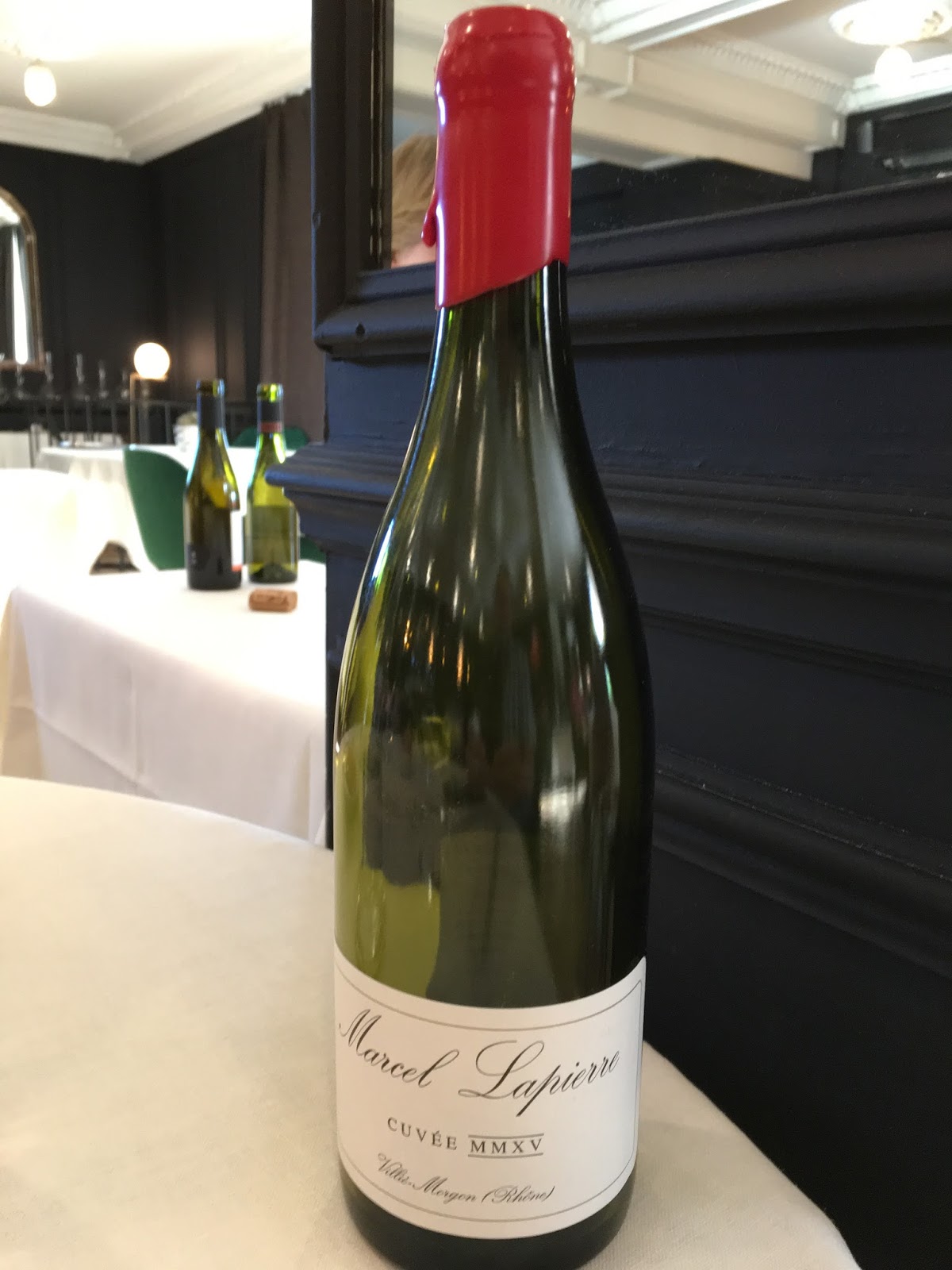
I am currently in Burgundy, researching and wine tasting for an upcoming artice in Gourmet Traveller Wine. Therefore, I cannot share my tasting results on this blog right now. However last night, I tasted a wine outside of this effort. It was the 2015 Marcel Lapierre Morgon.

Beaujolais has come a long way since it created the marketing success of Beaujolais Nouveau. This is now fading somewhat, but serious wines from the Gamay grape are emerging right now. There are ten crus in Beaujolais: Brouilly, Regnie, Chirubles, Cote de Brouilly, Fleurie, Saint-Amour, Chenas, Julienas, Morgon and Moulin a Vent. The last two have the best fruit weight and tannin structure.

This wine from Marcel Lapierre is from Morgon. It has a medium deep crimson colour and a beautiful sour kirsch/redcurrant bouquet. This is a medium bodied wine, coming in at a solid 14% alcohol. It tastes of redcurrant and cranberry, and fills the mouth nicely, with an emphasis on the mid-palate. This is a serious wine, quite savoury, with a strong acidic structure. Tannins are not so noticeable. This Gamay wine is about filling the mouth nicely and in a round way, while Pinot Noir is all about line and length.

Score: 91/++