Showing posts with label Barossa Valley. Show all posts

Saturday, August 23, 2025

Standish Revisited

 The Standish wines of 2018 and 2019 were sensational on release. More intense than Rockford, less ripe than Torbreck, more polished or elegant than Penfolds. What was not to like. In the last couple of years, the magic wore off a bit, but still. But what are the 2018s and 2019s like now, after six and seven years, often the peak of Barossa Shiraz?


The Standish 2018 is still a full-bodied wine, with concentrated blackberry and kirsch flavours. The wine is quite brooding, still holding something back, it seems. The tannins are silky and the finish long. I still give it a high score (96 points), but it does not taste quite as magical as on release. I recommend to let it be for another 3-4 years when the wine will add some elegance and maturity to the power.

The Standish 2019 is brighter and more vibrant. This wine drinks well now. The flavour profile is complex, with black, blue and red fruits on the palate. It does not have the weight of the 2018, and therefore the magic combination of power and elegance, but it is a well made wine (96 points).


Sunday, July 27, 2025

Penfolds RWT Shiraz


The 2006 Penfolds RWT Shiraz has an intensity only Penfolds seems to be able to deliver. This is a classic wine with characteristic blackberry fruit and jam paste, licorice, black olive and dark chocolate. There is a hint of black pepper, and the oak is well integrated.

This is a wonderous wine. It is still fresh after 19 years, it is incredibly balanced on the palate with its firm tannins and the lingering finish.

This wine still has a long life ahead, maybe another 20 years. This RWT is world class.

Score: 98/+++

Tuesday, July 15, 2025

Spinifex Moppa Shiraz

 The 2021 Spinifex Moppa Shiraz drinks like the little brother of the La Maline Shiraz/Viognier, which I reviewed some time ago. La Maline is an Eden Valley wine at higher altitude, whereas the Moppa Shiraz is from the Barossa Valley, but from the higher altitude of Moppa, as opposed to the valley.


The colour is deep purple. On the nose, ripe dark fruit flavours emerge from the glass.

On the palate, concentrated blackberry fruit is engulfed in strong black pepper flavours. At the same time, there is firm acidity on the palate delivering a nice counterpoint to the concentrated fruit. Some secondary flavours are developing, like black olive and leather. Overall, the wine delivers an attractive mouthfeel, without being overly complex. The tannins are firm, and the finish medium plus.

Coming back to the comparison with the 2021 La Maline, everything is similar, but not dialed up as high. This is a perfect wine for our cold winter days.

Score: 93/++  


Saturday, June 28, 2025

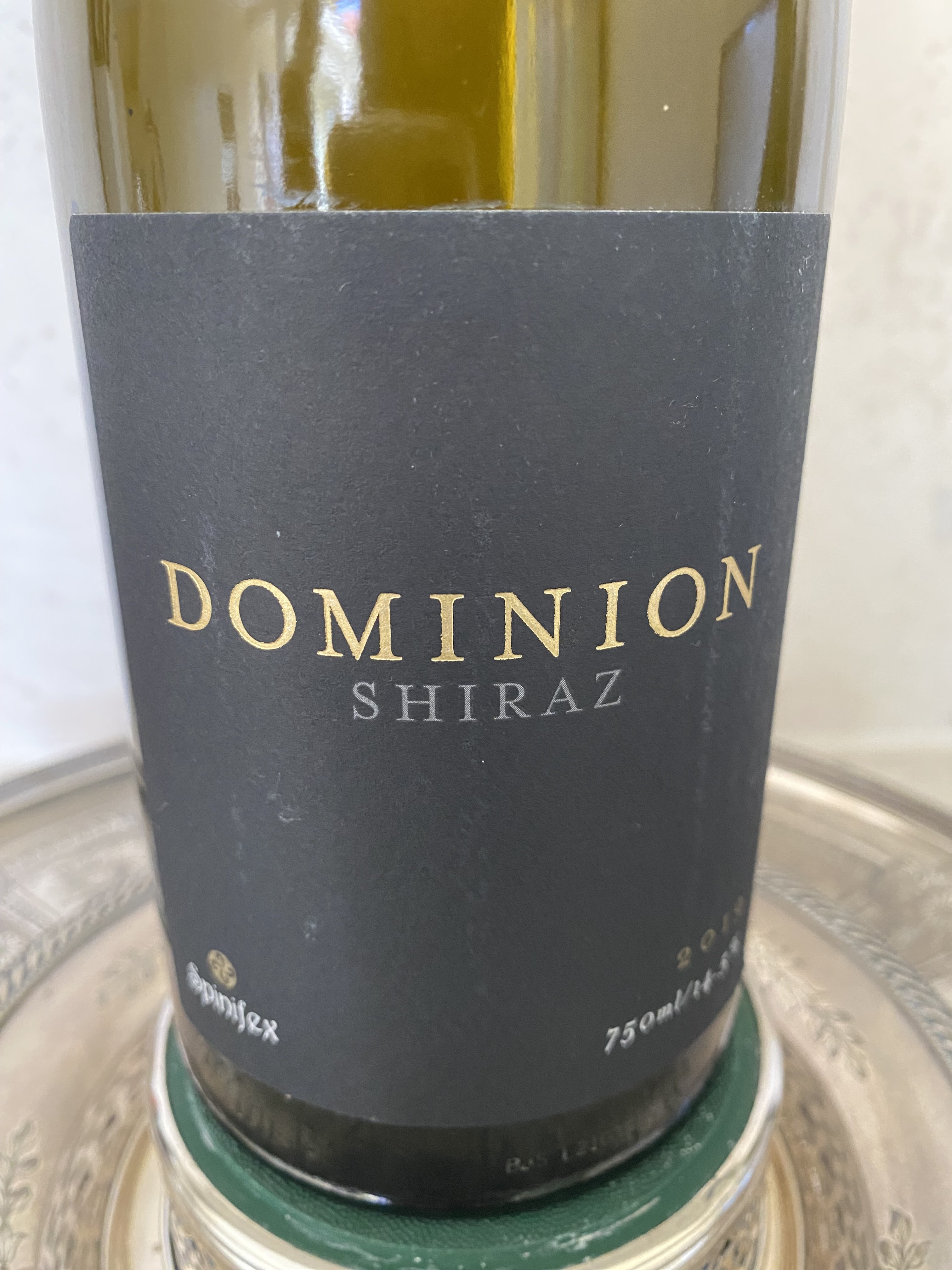
Spinifex Dominion Shiraz

 For most of us, it is not always possible to taste a wine before you buy it. You then often relate to the taste profile of a producer in general. In the case of Spinifex this would be fresh, and as Peter Schell would say, delicious. So the following is what I got when I opened a 2019 Spinifex Dominion Shiraz.


The colour of the wine is deep purple. I got dark fruit flavours on the nose, and this translated to the palate. This is a big and concentrated wine with blood plum and mulberry flavours. The wine delivers an intense mouthfeel. It is ripe, but not overripe, but not refreshing either. Dark chocolate and leathery notes reveal themselves mid-palate. Tannins are not very strong, and the finish is medium.

This wine comes from a Vine Vale vineyard with vines over 100 years old. It is the second Spinifex vineyard purchase after Rostein, and 2019 is the first vintage. I assume the soil is sandy, given the flavour profile and the purity of the fruit. The wine caught me with surprise being from Spinifex, but it is a good example of Barossa Valley Shiraz.

Score: 94/++


Thursday, June 12, 2025

Penfolds The Max Schubert Cabernet Shiraz

 Penfolds is essentially positioned as a premium wine brand. Lately, however, a number of one-off products were released where the pricing no longer relates to the cost or value of the product, but rather to a recognition and admiration for the Penfolds name. It positions these prestige products similar to brands like Rolex, Hermès or Birkin. The wine I am reviewing here is a single product wine, but it was created before the prestige strategy was introduced. The 2012 Penfolds The Max Schubert Cabernet Shiraz is of course a premium wine. It was created to mark the centenary of Max Schubert's birth. The wine is inspired by the famous 1962 Penfolds Bin 60A in that it is also a blend of premium Coonawarra Cabernet fruit and Barossa Shiraz fruit. In this case, the ratio is 61% to 39%.


It turns out, this is a remarkable wine. It is rich and concentrated. It also shows why a Cabernet/Shiraz blend is such a good idea. The red fruited Cabernet provides the drive, the Shiraz fruit fills the mouth. The palate is complex and layered. Redcurrant and mulberry unfolds first, followed by velvety blackberry fruit and finally a dose of mocca. The wine is in perfect balance, as the 100% new American oak is well integrated. (This can be a challenge and requires first class ripe, but not overripe fruit.)  The wine has a persistent and clean finish which goes on and on.

At 13 years old, this is a perfect time to drink this wine. The structure is strong, the fruit is still vibrant, and the tannins have started to soften. One of my favorite wines this year so far.

Score: 98/+++


Tuesday, June 3, 2025

Eisenstone Ebenezer Shiraz

 When I visited Stephen Cook, the winemaker of the relatively new winery Eisenstone in the Barossa, I think it was in 2017 or 2018, my book 'Barossa Shiraz' featured on the tasting table. He explained that his focus to showcase the different subregions of the Barossa was heavily influenced by my book. Since then, his winery has gone from strength to strength. Yesterday, I revisited the 2019 Eisenstone Ebenezer Shiraz, which I bought on this visit.


Given the location, I expect a fairly rich wine infused with chocolate flavours. And yes, this is what I got. Black plum and blackberry fruit flavours are concentrated. Sweet mocca flavours deliver a rich mouthfeel. Ironstone and charred meat flavours add to the complexity. The additional years in bottle deliver a well rounded wine. The fruit comes from the famous Hoffmann vineyard, some from 1965 fruit, some from young vines. The wine is full-bodied, and with a surprising lift on the finish.

This wine, as I think the general positioning of Eisenstone wines, sits in the middle between the ripe wines of, say Torbreck or Standish, and the new wave of winemakers who pick early, and sometimes a little green. As such, it takes full advantage of the uniqueness, the Barossa climate can deliver in Shiraz,
without going to extremes. One can drink more than one glass of this wine, but it is also totally safe to cellar this wine for many more years. 

Score: 95/+++


Saturday, January 18, 2025

Cirillo 1850 Ancestor Grenache

 The Cirillo Ancestor Grenache is one of the few wines I buy on an annual basis. The latest release is the 2018 Cirillo 1850 Ancestor Grenache. One of the things I like about this wine is that it gets released at six years of age.


This wine is more fruited than in the previous two years. Blueberry and mulberry flavours are quite ripe. There is an unusual mint character as well, not unpleasant. The wine to me is borderline on confected, but it has the pleasant characteristics of concentration and strong aromatics, and it lifts towards the long finish.

Cirillo does not represent the sophisticated winemaking that Yangarra does, for example. But what Marco Cirillo creates is what the French call a vin d'emotion, a wine which evokes an emotional response. In this way, this wine is a wine of beauty.

Score: 94/+++ 


Monday, November 18, 2024

Barossa Valley, Part 2

 Two more wineries to visit on this short trip to the Barossa; Phase III Wines and Alkina.

The name Phase III refers to the third stage of Ben Kelley's life, when he decided to move to the Barossa to grow truffles, and then wine. However, he has been associated with wine for a long time and along the way got to know Fraser McKinley, the winemaker of Sami-Odi fame. His influence is obvious in a number of ways, for example the port shaped bottles and including wine from more than one vintage.


Ben is more playful, though; grabs fruit from wherever he can, adds Pinot to Shiraz, and generally behaves like a kid in a candy store (not in a bad way). His volume of his key wine, Dero (Australian slang for 'I am nobody') is 250 cases.

I also tasted some more experimental wines. The 2022 Phase III Semillon is an attractive wine. It is barrel fermented and richer and rounder than a young Hunter Valley wine. Yet it is a refreshing wine at 10.5% alcohol with crisp citrus flavours (92 points). The 2023 Phase III Chardonnay comes from High Eden, near Mountadam. The wine has whole bunch and tastes of tropical fruit and spices with a nice acidic backbone. The wine also includes four buckets of frontignac. I did not notice it, but it may have added complexity (92 points).

There was also a 2021 whole bunch Pinot Noir. It was robust and powerful, with red fruits dominating, and a musky and savoury backbone. It was interesting, but did not work too well (86 points).

Then I tried the 2023 Phase III Home Block Shiraz. Ben has now planted three small vineyards, which over time presumably will replace bought fruit. The fruit in this wine comes from 3 (!) year old vines. This seems crazy, and it does not work too well. The fruit is picked early. The wine is fruity, despite 100% whole bunch and one of the lowest alcohol Shirazes in the valley at 12.2% (88 points).

Then we come to the 2023 Phase III Devo, the main wine. The fruit comes from something like 10 vineyards, including two Hoffmann blocks. The bottle is in a bag, in reference to his earlier work in a bottle shop. The philosophy is to pick early and whole bunch to soften the tannins. He wants to make wine to be drunk early. The wine shows pleasant red and black fruit, but no sweetness. The structure is solid (93 points).

I would not be surprised if something stunning will come from this producer one day.  

The final stop is at Alkina. The contrast could not be starker. Serious money has gone into this business. The vineyards around the property have been meticulously analysed, and divided by soil type. This is not unusual in many parts of the world, but not common to this detail in the Barossa Valley. The different plots are called polygons, meaning an area made up of line segments. The focus of Alkina is Grenache and Shiraz. It will be interesting to compare these wines to the McLaren Vale tasted wines.

The first Grenache based wine tasted is a 2024 Alkina Rosé. The wine is matured 50% in stainless steel, 50% in concrete. The wine is light, with beautiful aromatic flower scents, and clean raspberry flavours (93 points).


The entry level Grenache was the 2023 Alkina Kin Grenache. It is a blend from different plots of limestone and schist soil. 100% whole bunch was used, and the wine was matured in 100% concrete, to bring out the fresh fruit. The wine is red fruited and quite soft - an easy drinking wine (92 points).

A big step-up were the two polygon Grenaches, from 2022, a cool vintage. The 2022 Alkina Polygon 3 Grenache comes from a plot of limestone and schist soil. This is an intense and super elegant wine, majestic comes to mind. The acidity is present, but beaten by the weight of the fruit. The silky tannins lead to a very satisfying finish - a superb wine (96 points).

The 2022 Alkina Polygon 5 Grenache comes from heavier soil, fractured schist and clay. And this is reflected in the wine. This wine is bigger, quite fiery. This more savoury wine has a great structure pointing to a long life ahead (96 points).

These two wines were certainly highlights of my week in South Australia. They are superbly crafted, and showing off the different soil profiles really well. 


Then came the Shiraz flight. The 2023 Alkina Birdsong Shiraz is matured in concrete to showcase the pristine red and black fruit. There is elegance and power in this wine, but the wine is not as focused as some (92 points).

The 2022 Alkina Polygon 1 Shiraz comes from a tiny plot of quartzite and schist soil. The colour is very dark, and the nose is big. This is a fiery, but quite dense wine with a long finish. Attractive mulberry flavours stand out (95 points).

And then came a surprise, the new 2023 Alkina Striato. I do not know much about this wine. It was quite a contrast to the Polygon 1. The wine is lighter, lively and red fruited. It has great balance and finishes with firm, but fine grained tannins (95 points).

As previously, this was an excellent tasting experience. Some of the Alkina wines are superb. With its scientific soil approach, could Alkina become an icon Barossa winery? There is one big problem: these polygons are tiny plots, and the resulting wine is made in small volumes. It will simply not be available to many people. This however, should be a criterion for an icon winery. However, if you are lucky enough to get access to some of these wines, enjoy!

This week in South Australia had a strong focus on Grenache. A theory is emerging. The premium Grenaches from Blewitt Springs and Clarendon tend to be fresh and red fruited. Their ph is between 3.0 and 3.35, indicating high acidity. The Grenaches from Alkina have a ph of close to 3.6, indicating lower acidity, largely a function of the warmer climate. These wines still have some freshness, but fruit intensity and some dark fruit flavours are also characteristic. So it seems ph levels can predict key components of the Grenache flavour.


Thursday, November 14, 2024

Barossa Valley, Part 1

 Then on to the Barossa, where I wanted to taste the 'new' or 'alternative' Barossa. My first stop is at Agricola in the Eden Valley. This is a small operation (700 cases per year) by Callum Powell, the son of ex-Torbreck winemaker David Powell. His wines are nothing like Torbreck, though.


Callum's wines have been well received and are sold out, but he was kind enough to open two bottles for me. One of the key features of his Shiraz winemaking is the use of 100% whole bunch in the ferment. Let's see how this goes. He also does not do any manipulation, say adding acid etc.

The first wine is the 2023 Agricola DWxHV Shiraz. DW stands for Dallwitz, HV for Hutton Vale. So this is a blend of fruit from the famous Hoffmann managed vineyard in Ebenezer and Eden Valley. The wine is fresh and very savoury and drinks well. I took the bottle with me, and found on day two that more green elements emerged. Using 100% whole bunch is brave in a cool vintage such as 2023, but the fruit from the warm Ebenezer area made it work, although not perfect (92 points).

The second wine, the 2023 Agricola Ebenezer Shiraz comes from old Dallwitz and Dimchurch fruit (not the oldest blocks). The wine is bright, and tastes of red skinned fruit, licorice, and mocca. This is also a fresh wine, a little bit herbal. There is no sweetness in these wines and alcohol is about 13.9% (92 points).

I found these wines interesting. In warmer vintages and with more experience, they could become outstanding.

My second visit is to Ollin, a new winery only started in February of this year.  However, Jaysen Collins, the winemaker, is very experienced, probably best known for the work at Massena together with Dan Standish.


The surprise here was that I liked the white wines better than the reds. The 2022 Ollin Chenin Blanc spent 24 months on lees, yet the colour was still bright. This was a refreshing dry field blend with 13.5% alcohol (92 points). The 2022 Ollin Chardonnay was my wine of the tasting. It spent 12 months on lees and was matured in old French barrels. Gentle citrus flavours dominate in this textural wine (93 points). I also liked the 2023 Ollin Rosé from Grenache fruit. 12 months on lees and barrel fermented, this is made in the Provence style - pale, but with flavour (92 points). 

I was not too impressed with the red wines. The 2022 Balto Grenache from Standish fruit was hand stomped. It is meant for early drinking, but I found fruit and earthy components not well integrated (86 points). The 2022 Ollin Grenache is more serious. It comes from 160 year old fruit in the Eden Valley. There is a lot of spice on the palate. The wine is quite astringent and acidic (87 points). The 2022 Ollin Shiraz, from Kalleske fruit, is a slightly better wine. It is fresh, red fruited, but also quite astringent (89 points).


Tuesday, July 2, 2024

Standish Wines Revisited

 For the last six years or so, Dan Standish has collected incredible praise for his Shiraz wines, and I was one of the first to do so. Now it is one thing to produce wines which are great on release. It is quite another to maintain this level over time. As most people who buy his wines will store them for at least some time, this is quite important.

Yesterday I opened a 2018 The Standish Wine Company The Relic and 2018 The Standish Wine Company Andelmonde to see how they have matured. The corks under wax were very fresh on opening. 


I tried the Relic, a Shiraz/Viognier, first. The wine comes from a Krondorf vineyard, with vines slightly more than 100 years old. The colour is deep purple. The wine is very aromatic on the nose. Intense blackberry fruit hits the palate first. There is spice as well. Tobacco and earth flavours are in the background. The fruit weight in the mouth is strong, yet the wine has sufficient energy to drive the flavours down the palate. This is supported by silky tannins, before the wine delivers this massive finish, which goes on and on, and is not heavy. As an aside, you cannot distinguish the Shiraz from the Viognier, which is great.

This wine has not suffered through ageing. Based on this tasting, I would not even be able to say when this Relic will hit its peak - in ten years?

Score: 99/+++

The Andelmonde comes from a 60 year old, sandy vineyard in Light Pass. The colour of the wine is a brighter red. It is more floral on the nose. It is not as powerful as the Relic, with a focus on elegance. Redcurrant and blood plum flavours dominate, no secondary flavours to speak of right now. The tannins are quite tight-fisted. The overall feel is one of harmony, before the wine finishes firm. Again, this wine will live for a long time.

This wine is different from the other Standish wines, more fragrant. It is a shame that Dan could not renew the lease once it ran out. The Andelmonde will be rare and past vintages will be cherished for a long time.

Score: 97/+++

These two wines have held up incredibly well. They have hardly aged and promise even more in the future. Who says powerful Barossa Shiraz cannot age?


Tuesday, June 18, 2024

Torbreck RunRig

 Torbreck is known for its full-bodied, ripe wines. As a result, there has always been a question about the ageability of its wines. I am not talking about 20 years here, but maybe just 8 years. I am putting this to the test with the 2016 Torbreck RunRig.


There are divided views on Torbreck's winemaking style, but there is no doubt that Torbreck has access to some of the best vineyards in the Barossa, as they pay well above market for grapes. The top fruit shines through in this wine.

The wine is full-bodied and delivers a complex palate. Dark plum and ripe blackberry feature as the fruit component. Vanilla from the oak and Viognier influence, mocca, tobacco, smoked meat flavours add to it, but these elements play a secondary role to the fruit in this wine. I still feel good energy in the mouth. The tannins are firm and silky. The finish is very long, expansive, and complex. I think this wine is in its prime now.

Score: 96/++  


Tuesday, April 23, 2024

My second ever Australian 100 pointer

 I have never been able to taste Penfolds' original Bin 60A from the 1962 vintage. The wine was never commercially released, but won many awards and by many wine critics is described as Australia's greatest wine. The Bin 60A label has only been used one more time, for a wine from the 2004 vintage, which showed similar characteristics to 1962. I tasted the 2004 Penfolds Bin 60A a few days ago. The wine is the same blend of Coonawarra Cabernet Sauvignon (56%)  and Barossa Shiraz (44%).


I start by saying this wine bowled me over from the get go. Perfumed forest aromas rise from the glass. The palate is still youthful. The terra rossa soil based blackcurrants shine. The Barossa fruit brings additional weight and some sweetness, but this is never overbearing (alc. 13.5%). The savoury aspects taste of cedar, lead pencil shavings, licorice, and game. There is intensity in this wine, but also surprising lightness. It takes 'harmonious' to another level. Penfolds is known more for power than elegance, but this is a very elegant wine. The mouthfeel is rounded and almost silky. The dry, fine-grained tannins lead to a very long finish, which leaves earthy flavours in the mouth. 

This wine will last much longer, but now, after 20 years, is perhaps the ideal time to drink it. Fruit  and savoury flavours are in perfect balance. 

Score: 100/+++


Saturday, March 2, 2024

Cirillo 1850 Ancestor Grenache

 I was a bit slow to post, as I was in Asia in hot weather. It was beer time. Now back to drink some great Australian wine. Cirillo claims to own the oldest Grenache vineyard in the world, and it may well be. The vines grow on deep sands on the flats of Light Pass. As other Cirillo wines are released earlier and provide cash-flow, it is great to see that the flagship Grenache is only released at 7 years of age. So the newly released wine is the 2017 Cirillo 1850 Ancestor Grenache.


The harvesting of Grenache fruit is quite tricky, as the grapes take a while to ripen, but then ripen very quickly with baumé levels shooting up fast and risking an overripe wine. Marco Cirillo has been at this game for some time, so he knows how to manage it.

So how does the 2017 shape up? This is a full-bodied wine with raspberry flavours hitting the palate, but immediately put in check by some savoury and herbal notes. These flavours will integrate more over the next 2-3 years. This brand is always dark in colour. At 14% alcohol, it is a very drinkable wine.

This is one of Australia's leading Grenaches. It is interesting to contrast it with Yangarra's approach. The Yangarra wines are meticulously and I would say scientifically crafted. Cirillo's approach seems more intuitive. As I drink this wine, I taste Italian love and family in the glass. I really enjoy this wine. 

Score: 95/+++


Wednesday, December 27, 2023

Mataro (Mourvèdre) Time

 The days around Christmas have been quite cool in Sydney, so I decided to open some Mataro. This variety is found most often blended with Shiraz and Grenache as a Southern Rhône or Australian wine. Mataro tends to produce tannic wines, with gamy notes. It is also difficult to grow. However, there are some straight variety wines.


The first wine I opened was the 2016 Powell & Son Kleinig Vineyard Mataro. Seven years seemed like a good age. However, the wine showed very ripe and burnt. Mulberry and earthy flavours were dull. Tannins had mellowed. The wine clearly lost its energy and had aged too quickly.

Score: 82/--

The second wine was an entry level 2021 Alkina Mataro. I expected this to be much fresher, due to the winemaker and its young age. It had a similar dark colour to the Powell. The typicity was quite good, with mulberry and savoury flavours. The wine had more energy than the Powell, but it was still very full-bodied and quite thick in the mouth - not very exciting.

Score: 88/0

I think I prefer to enjoy Mataro as part of a blend.


Monday, November 6, 2023

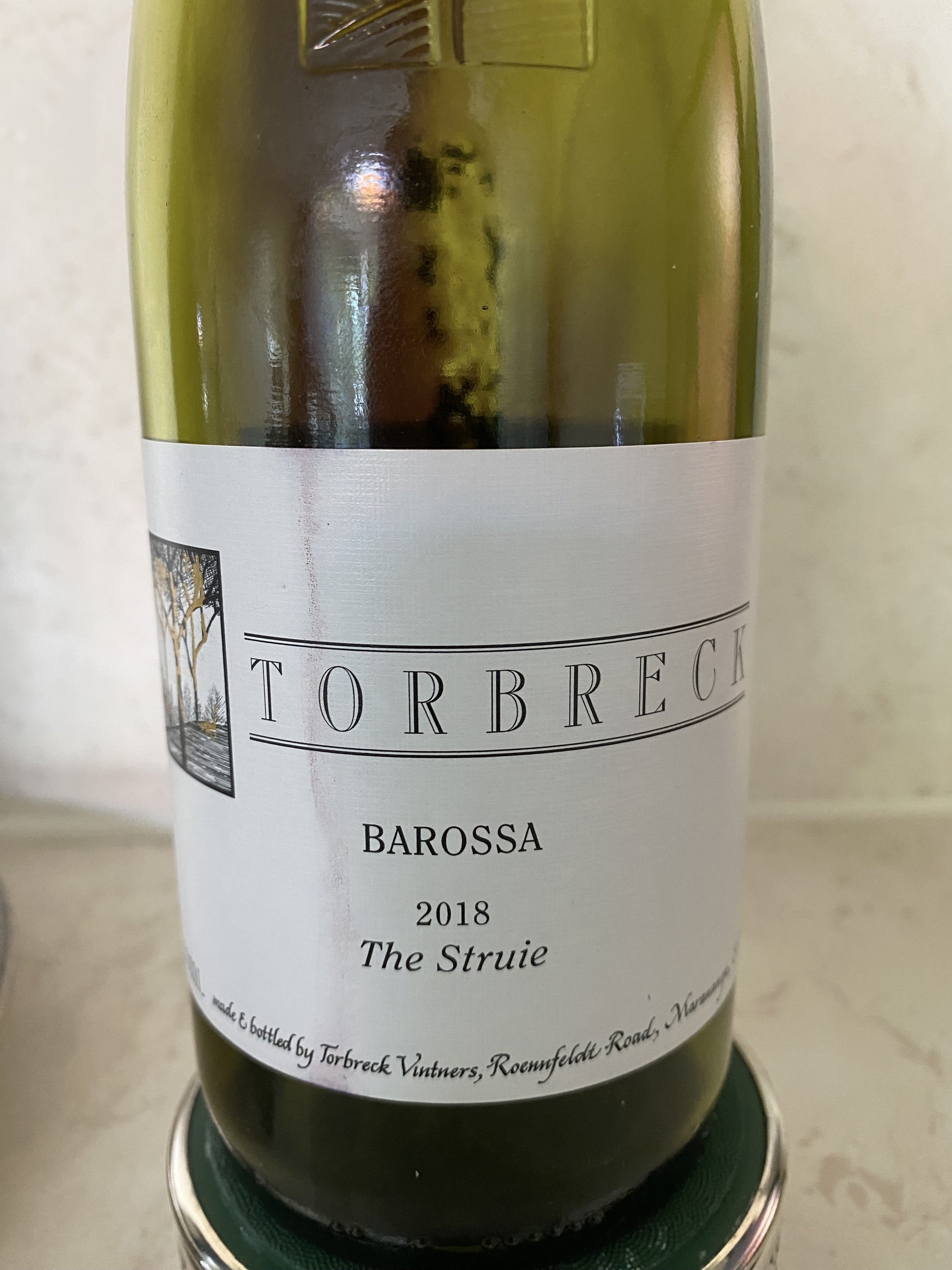
Torbreck The Struie

 I often enjoy the mid level wines more than the top wines from wineries which are known to produce late picked, ripe wines. So it is with The Struie from Torbreck.


As always, there is Barossa dirt in an empty Torbreck bottle, but the 2018 Torbreck The Struie delivers a surprise. The colour is deep purple, typical of a full-bodied South Australian Shiraz. The fruit in this year includes only 25% Eden Valley fruit. Normally it is 50%.

On the palate, the complex flavours comprise blackberry, mulberry, black olive, spice, and tobacco. One experiences a full-bodied mouthfeel, and it is surprisingly fresh and alive. The wine is very balanced, matching the fruit with lively acidity and firm tannins. The finish has medium length.

This is an example of a well-made full-bodied Shiraz. It is pretty full throttle, with 15% alcohol, but quite satisfying to drink. It would appeal to a wide range of red wine drinkers.

Score: 95/+++


Saturday, October 7, 2023

Powell & Son GSM


Powell & Son did not exist for long. David Powell is now Neldner Road, and Callum is Agricola. When David Powell was winemaker at Torbreck, he sometimes mentioned that making GSM was his favourite, in particular the Steading. This 2018 Powell & Son GSM is very similar.

The Grenache flavours of strawberry and red cherry dominate the front palate. Then the sweet core of Shiraz plum fruit takes over, and finally the savoury flavours of the Mataro. This is all seamless and well integrated. The wine delivers a full mouthfeel. It is generous and balanced, not overblown and not complicated. Firm tannins and enough acidity deliver a solid structure.

Score: 93/+++


Friday, September 29, 2023

Chateau Tanunda

 The last time I drank Chateau Tanunda wines was about ten years ago in preparation for my book. I had not been impressed. In fact, I found it totally puzzling how this winery could collect so many medals in big shows overseas. I thought the grounds of the Chateau are the highlight - and they are really magnificent.

Recently, I had an opportunity to taste three wines from their bamboozling range. The first wine, from the Terroirs of the Barossa series was the 2019 Chateau Tanunda Ebenezer Shiraz. This is a full-bodied wine, quite ripe, the ironstone soil reflected on the palate. This is a red fruited wine, quite tannic, only just within the envelop of what I regard as an acceptable expression of dry red wine. This wine is very concentrated and could certainly have been more elegant (90/0 points).

The other two wines were from Bethany, which features black biscay soil, not really ideal for growing quality wine. (I note Bethany Wines is up for sale.) The 2019 50 Year Old Vines Shiraz is very dark. Blackberry and chocolate flavours are matched with coarse tannins. Again, a concentrated wine lacking elegance (90/0 points).

The last wine was the 2019 50 Year Old Vines Cabernet Sauvignon. This wine was overripe, oaky, and quite sweet. The chocolate flavours could not match this impression. The wine had a coarse finish (86/-- points).

I am happy not to taste Chateau Tanunda for another ten years.  

Saturday, September 23, 2023

Hayes Family Wines Tasting

 Hayes Family Wines is a certified organic winery in the heart of the Barossa. A recent tasting showed some strength, but also some easy pitfalls of winemaking in the Barossa.


Hayes produces a large number of different wines. The first wine I tasted was the 2021 Koonunga Creek Block Grenache. The Koonunga subregion is famous for its sandy soil, and therefore well suited to Grenache. The grapes for this wine come from 130 year old vines, but as can easily be the case with Grenache, this wine is too alcoholic (15%). The old 500l oak barrels cannot tame the alcohol. The raspberry flavours are very ripe, and although the wine seems balanced otherwise, the hot finish takes the pleasure out of this wine (88/0 points).

This contrasts with the 2021 Glengrae Old Bush Block Grenache from Ebenezer. The vines grow on the famous red-brown clay, and deliver a darker wine. Raspberry, black cherry, mocca flavours, and some spice vie for your attention. This is an attractive and elegant wine with a medium finish. Alcohol is 14.5% (94/++ points).

Then there is the 2021 Prayer Garden Grenache, also from Ebenezer. The soil is sand over clay, and the wine is more red fruited. It is not a bad wine, but the mouthfeel is not very distinct (91/0 points).

The first Shiraz is the 2019 Estate Reserve Shiraz from Stonewell. 2019 was a drought year, and it shows in this wine. It has a sweet core and a very oaky flavour (86/-- points).

The 2018 Ancestor Shiraz is a better option. This wine is also intense and quite big, but the blackberry and vanilla flavours deliver a much more elegant and balanced mouthfeel (92/0 points). 


Sunday, August 6, 2023

2023 Penfolds Collection

 What Penfolds presents in August is quite a collection these days: 25 wines in fact. In addition, there is a Chinese wine (not available in Australia yet), and some cheaper wines, such as the terribly named Max wines.


I taste nine of their new releases at a new event, Penfolds Transcend. The wines are narrated on screen by Steph Dutton, Penfold's red winemaker, who will succeed Peter Gago, in my view. It was efficient and worked well. 

The 2023 Bin 51 Eden Valley Riesling is a good Riesling with white flower aromas, and citrus and melon flavours. The wine has good drive and a mineral finish, a well executed, typical Riesling from Eden Valley (92 points).

The 2022 Reserve Bin A from the Adelaide Hills can be funky and spectacular in some years. This is not one of those. Apple blossom notes on the nose are followed by apple custard and pear flavours. This is quite a soft, opulent wine with good length and a wet stone finish (92 points).

The 2022 Bin 23 Pinot Noir is now exclusively made from Tasmanian fruit. There are quite a few flavours on the palate like strawberry, dark and sour cherry, cranberry. The key feature, however, are the firm dry tannins. This wine is not yet quite in the Penfolds DNA (92 points).

Then we come to the 2021 Bin 28 Shiraz, Penfold's workhorse. This is a rich wine with plum and mocca flavours, a bit of five spice as well. The core of this robust wine is quite sweet and juicy (93 points).

The 2020 FWT (French Wine Trial) 585 is a Bordeaux blend, Cabernet Sauvignon dominant. Blackberry, chocolate and licorice are the dominant flavours. There are savoury notes as well. Overall, the mouthfeel is soft and a little lean: more Bordeaux than Penfolds (92 points). 

The Bin 704 Cabernet Sauvignon from the Napa Valley is the much more powerful wine of course. It has excellent blackberry fruit purity. It has great balance between fruit and savoury flavours and finishes on fine grained tannins (94 points).

An absolute highlight was the 2021 Bin 389 Cabernet Shiraz. There are layers of dark berries; blueberry, blackberry, mulberry. Roasted meat flavours and spice add to complexity. The wine is seamless between the Cabernet and the Shiraz fruit, and fruit and savoury flavours. This dry wine,  is concentrated, yet can be enjoyed now. This is probably the best 389 I have ever tasted (97 points).  

The 2019 Grange is immediately recognizable. Blackberry and blue fruit, licorice, black olive and charcoal form the core. This is an intense wine with great depth, yet it is fresh and smooth. It is already drinkable. It will probably forever live in the shadow of the 2018, but it is a great follow-up (98 points).

After tasting Grange, the concentration tends to drop. Yet, the 2021 Bin 707 Cabernet Sauvignon deserves attention. It is full-bodied, with concentrated blackcurrant and tobacco flavours. This is an elegant wine with an extra long finish (97 points).

Tasting a range of young Penfolds wines used to be hard work. Yet this was thoroughly pleasant. The oak influence has been dialed back, and freshness has increased. 


Saturday, July 29, 2023

Utopos New Releases

 When I traveled to the Barossa last year to visit some newer wineries, I missed Utopos. The visit was arranged, but owner and winemaker Kym Teusner fell sick. It was therefore a welcome opportunity to taste these wines in Sydney this week. 

The wines come from a vineyard on Roennfeldt Road in Marananga, previously leased out to Penfolds and next door to David Powell's property. It is a special plot, reaching to the top of the ironstone ridge at 300 meters. Three types of soils allow a lot of options. There is red-brown earth at the bottom, a strip of black biscay in the middle, and depleted top soil exposing ironstone and quartz in the top region. Most of the 30 acres under vine were planted in the early 1990s. Shiraz is planted to the East, Cabernet Sauvignon to the North, and Grenache and Mataro to the West. The average yield is a low 1t/acre. 


The 2021 Grenache is a pretty and fresh wine, tasting of red and black cherry, with a balanced structure and silky tannins. The finish is soft and long (94 points).

The 2021 Mataro/Shiraz/Grenache (40/30/30) is quite different, with the Mataro component quite prominent. Dark fruited and savoury, this wine delivers a firm grip (93 points).

The 2021 Cabernet Sauvignon is quite savoury as well, with the ironstone soil making its presence felt. The wine is medium weight and quite smooth, well made, perhaps lacking some impact (92 points).

The 2021 Shiraz is dark, with blackberry, mulberry and earthy flavours. The wine is fresh and elegant, of medium concentration. It is perhaps a bit fruit forward (94 points).

The 2021 Cabernet Sauvignon/Shiraz (60/40) is blue and black fruited with a fresh mouthfeel. The tannins are fine and dry. This wine is a good example of the benefits of this famous, now slightly neglected blend (95 points).

The 2018 Shiraz, from this excellent vintage, has a very aromatic bouquet. This is a very pretty wine, black fruited and savoury, with silky tannins and a long finish (96 points). 

I was then shown the first wines from 2016. They were nowhere near the quality of the younger wines. Apparently a lot of work was required in the vineyard to get the vines up to scratch. 

If I were to generalize, Utopos wines are characterized by purity and the aromatics of the fruit, as well as savoury influences. On this site, there has been some discussion of the merits or otherwise of traditional ripe Barossa Shiraz on the one hand and leaner wines made by young winemakers on the other. Kym Teusner with Utopos wines seems to strike a happy medium.