Showing posts with label Eden Valley. Show all posts

Tuesday, July 22, 2025

Neldner Road Loechel Shiraz

 A leopard does not change his spots, nor does David Powell change his winemaking style. The 2019 Neldner Road Loechel Shiraz is from Eden Valley, yet this is a concentrated and ripe wine, which you would pick to be from the Barossa Valley in a blind tasting.


The wine is quite dense, with blackberry and charred meat flavours. However, there is obvious black pepper on the palate, as an indication of cooler climate. The tannins are firm, blocky, and dry. I found the long finish a little harsh.

This is a bold wine, not elegant. The first glass impresses by the intensity of the wine, but it is hard to enjoy a second glass.

Score: 92/0 


Sunday, May 18, 2025

Spinifex La Maline Shiraz


The 2021 Spinifex La Maline is the successor of the 2018, but it arrives in a different reincarnation. It now comes from the Eden Valley (Barossa Valley before). In fact, it is a parcel of Peter Schell's and Magali Gely's own Rostein vineyard. As before, it includes a small portion of Viognier, 2% this year. I am not sure this label will survive or be subsumed into the Rostein wine. 

The 2021 vintage was another cool vintage. It is interesting to see how this effects a higher altitude Eden Valley wine, even more so, as 35% whole bunches are included. 

The colour of the wine is deep purple. It still looks very fresh.

On the palate, the first impression is the purity of fruit, but also the quite dense and concentrated mouthfeel. Blackberry, mulberry, black olive and leather deliver an attractive flavour profile. Black pepper is a big factor. The wine has some similarity to cool climate Victorian wines from a flavour profile point of view, but it is richer and riper. Tannins and finish are medium.

Score: 94/++


Wednesday, January 22, 2025

Henschke Mount Edelstone

 The Henschke Mount Edelstone has always been a very popular wine on my blog. I am continuing to explore the 2018 vintage with this wine.


Nice to see a traditional and well trusted label

Wow! The 2018 Henschke Mount Edelstone is not what I expected. Therefore, I had a look at some other reviews. They reported what you would expect of this wine. But I experienced something different. A different bottle or lazy reporting by others? Anyway, this is my take on what I drank.

This wine is different. It is predominantly red fruited, red cherry, pomegranate. It is lighter on its feet than the previously reviewed Yarra Yering. There are purple flower notes. It is clearly lighter than the typical Mount Edelstone profile, no mocca here, either. This wine is a delight to drink. The mineral laden acidity, and the very fine tannins deliver a great structure.

This wine is tightly wound right now, a racy wine waiting to burst out of the glass.

Score: 97/+++

Monday, November 18, 2024

Barossa Valley, Part 2

 Two more wineries to visit on this short trip to the Barossa; Phase III Wines and Alkina.

The name Phase III refers to the third stage of Ben Kelley's life, when he decided to move to the Barossa to grow truffles, and then wine. However, he has been associated with wine for a long time and along the way got to know Fraser McKinley, the winemaker of Sami-Odi fame. His influence is obvious in a number of ways, for example the port shaped bottles and including wine from more than one vintage.


Ben is more playful, though; grabs fruit from wherever he can, adds Pinot to Shiraz, and generally behaves like a kid in a candy store (not in a bad way). His volume of his key wine, Dero (Australian slang for 'I am nobody') is 250 cases.

I also tasted some more experimental wines. The 2022 Phase III Semillon is an attractive wine. It is barrel fermented and richer and rounder than a young Hunter Valley wine. Yet it is a refreshing wine at 10.5% alcohol with crisp citrus flavours (92 points). The 2023 Phase III Chardonnay comes from High Eden, near Mountadam. The wine has whole bunch and tastes of tropical fruit and spices with a nice acidic backbone. The wine also includes four buckets of frontignac. I did not notice it, but it may have added complexity (92 points).

There was also a 2021 whole bunch Pinot Noir. It was robust and powerful, with red fruits dominating, and a musky and savoury backbone. It was interesting, but did not work too well (86 points).

Then I tried the 2023 Phase III Home Block Shiraz. Ben has now planted three small vineyards, which over time presumably will replace bought fruit. The fruit in this wine comes from 3 (!) year old vines. This seems crazy, and it does not work too well. The fruit is picked early. The wine is fruity, despite 100% whole bunch and one of the lowest alcohol Shirazes in the valley at 12.2% (88 points).

Then we come to the 2023 Phase III Devo, the main wine. The fruit comes from something like 10 vineyards, including two Hoffmann blocks. The bottle is in a bag, in reference to his earlier work in a bottle shop. The philosophy is to pick early and whole bunch to soften the tannins. He wants to make wine to be drunk early. The wine shows pleasant red and black fruit, but no sweetness. The structure is solid (93 points).

I would not be surprised if something stunning will come from this producer one day.  

The final stop is at Alkina. The contrast could not be starker. Serious money has gone into this business. The vineyards around the property have been meticulously analysed, and divided by soil type. This is not unusual in many parts of the world, but not common to this detail in the Barossa Valley. The different plots are called polygons, meaning an area made up of line segments. The focus of Alkina is Grenache and Shiraz. It will be interesting to compare these wines to the McLaren Vale tasted wines.

The first Grenache based wine tasted is a 2024 Alkina Rosé. The wine is matured 50% in stainless steel, 50% in concrete. The wine is light, with beautiful aromatic flower scents, and clean raspberry flavours (93 points).


The entry level Grenache was the 2023 Alkina Kin Grenache. It is a blend from different plots of limestone and schist soil. 100% whole bunch was used, and the wine was matured in 100% concrete, to bring out the fresh fruit. The wine is red fruited and quite soft - an easy drinking wine (92 points).

A big step-up were the two polygon Grenaches, from 2022, a cool vintage. The 2022 Alkina Polygon 3 Grenache comes from a plot of limestone and schist soil. This is an intense and super elegant wine, majestic comes to mind. The acidity is present, but beaten by the weight of the fruit. The silky tannins lead to a very satisfying finish - a superb wine (96 points).

The 2022 Alkina Polygon 5 Grenache comes from heavier soil, fractured schist and clay. And this is reflected in the wine. This wine is bigger, quite fiery. This more savoury wine has a great structure pointing to a long life ahead (96 points).

These two wines were certainly highlights of my week in South Australia. They are superbly crafted, and showing off the different soil profiles really well. 


Then came the Shiraz flight. The 2023 Alkina Birdsong Shiraz is matured in concrete to showcase the pristine red and black fruit. There is elegance and power in this wine, but the wine is not as focused as some (92 points).

The 2022 Alkina Polygon 1 Shiraz comes from a tiny plot of quartzite and schist soil. The colour is very dark, and the nose is big. This is a fiery, but quite dense wine with a long finish. Attractive mulberry flavours stand out (95 points).

And then came a surprise, the new 2023 Alkina Striato. I do not know much about this wine. It was quite a contrast to the Polygon 1. The wine is lighter, lively and red fruited. It has great balance and finishes with firm, but fine grained tannins (95 points).

As previously, this was an excellent tasting experience. Some of the Alkina wines are superb. With its scientific soil approach, could Alkina become an icon Barossa winery? There is one big problem: these polygons are tiny plots, and the resulting wine is made in small volumes. It will simply not be available to many people. This however, should be a criterion for an icon winery. However, if you are lucky enough to get access to some of these wines, enjoy!

This week in South Australia had a strong focus on Grenache. A theory is emerging. The premium Grenaches from Blewitt Springs and Clarendon tend to be fresh and red fruited. Their ph is between 3.0 and 3.35, indicating high acidity. The Grenaches from Alkina have a ph of close to 3.6, indicating lower acidity, largely a function of the warmer climate. These wines still have some freshness, but fruit intensity and some dark fruit flavours are also characteristic. So it seems ph levels can predict key components of the Grenache flavour.


Thursday, November 14, 2024

Barossa Valley, Part 1

 Then on to the Barossa, where I wanted to taste the 'new' or 'alternative' Barossa. My first stop is at Agricola in the Eden Valley. This is a small operation (700 cases per year) by Callum Powell, the son of ex-Torbreck winemaker David Powell. His wines are nothing like Torbreck, though.


Callum's wines have been well received and are sold out, but he was kind enough to open two bottles for me. One of the key features of his Shiraz winemaking is the use of 100% whole bunch in the ferment. Let's see how this goes. He also does not do any manipulation, say adding acid etc.

The first wine is the 2023 Agricola DWxHV Shiraz. DW stands for Dallwitz, HV for Hutton Vale. So this is a blend of fruit from the famous Hoffmann managed vineyard in Ebenezer and Eden Valley. The wine is fresh and very savoury and drinks well. I took the bottle with me, and found on day two that more green elements emerged. Using 100% whole bunch is brave in a cool vintage such as 2023, but the fruit from the warm Ebenezer area made it work, although not perfect (92 points).

The second wine, the 2023 Agricola Ebenezer Shiraz comes from old Dallwitz and Dimchurch fruit (not the oldest blocks). The wine is bright, and tastes of red skinned fruit, licorice, and mocca. This is also a fresh wine, a little bit herbal. There is no sweetness in these wines and alcohol is about 13.9% (92 points).

I found these wines interesting. In warmer vintages and with more experience, they could become outstanding.

My second visit is to Ollin, a new winery only started in February of this year.  However, Jaysen Collins, the winemaker, is very experienced, probably best known for the work at Massena together with Dan Standish.


The surprise here was that I liked the white wines better than the reds. The 2022 Ollin Chenin Blanc spent 24 months on lees, yet the colour was still bright. This was a refreshing dry field blend with 13.5% alcohol (92 points). The 2022 Ollin Chardonnay was my wine of the tasting. It spent 12 months on lees and was matured in old French barrels. Gentle citrus flavours dominate in this textural wine (93 points). I also liked the 2023 Ollin Rosé from Grenache fruit. 12 months on lees and barrel fermented, this is made in the Provence style - pale, but with flavour (92 points). 

I was not too impressed with the red wines. The 2022 Balto Grenache from Standish fruit was hand stomped. It is meant for early drinking, but I found fruit and earthy components not well integrated (86 points). The 2022 Ollin Grenache is more serious. It comes from 160 year old fruit in the Eden Valley. There is a lot of spice on the palate. The wine is quite astringent and acidic (87 points). The 2022 Ollin Shiraz, from Kalleske fruit, is a slightly better wine. It is fresh, red fruited, but also quite astringent (89 points).


Sunday, May 5, 2024

Spinifex Rostein Shiraz

 Spinifex has now entered its third phase. Let me explain. When Peter Schell came to the Barossa Valley, he embarked on a very clever strategy. He identified parcels of less well known Rhone varieties, for example Cinsault, which he could buy cheaply, and through clever blending managed to offer attractive wines at good prices. He became the blending wizard of the Barossa. He famously said: I would never do a 100% Shiraz, only over my dead body. Now this is exactly what he did next. La Bete Noir was born, Moppa, and La Maline (includes some Viognier). This was phase two. And then in the last 6 years, he added extra premium red wines with the Indigene and the Rostein.


The Rostein, from an old vineyard in the Eden Valley, is Peter Schell's most expensive wine. Yesterday, I tasted the 2018 Spinifex Rostein Shiraz. It seems this has been the only release so far.

Brooding dense fruit flavours rise from the glass. It is clear, this is an intense wine. It delivers the typical higher altitude Eden Valley blue fruit. There are dried plum flavours and licorice. Despite this fruit weight, the wine delivers good energy. It is both round and driven in the mouth. The bright acidity makes this wine still fresh after six years. The wine has a balanced structure with fine tannins and a lively finish.

Score: 95/+++


Monday, November 6, 2023

Torbreck The Struie

 I often enjoy the mid level wines more than the top wines from wineries which are known to produce late picked, ripe wines. So it is with The Struie from Torbreck.


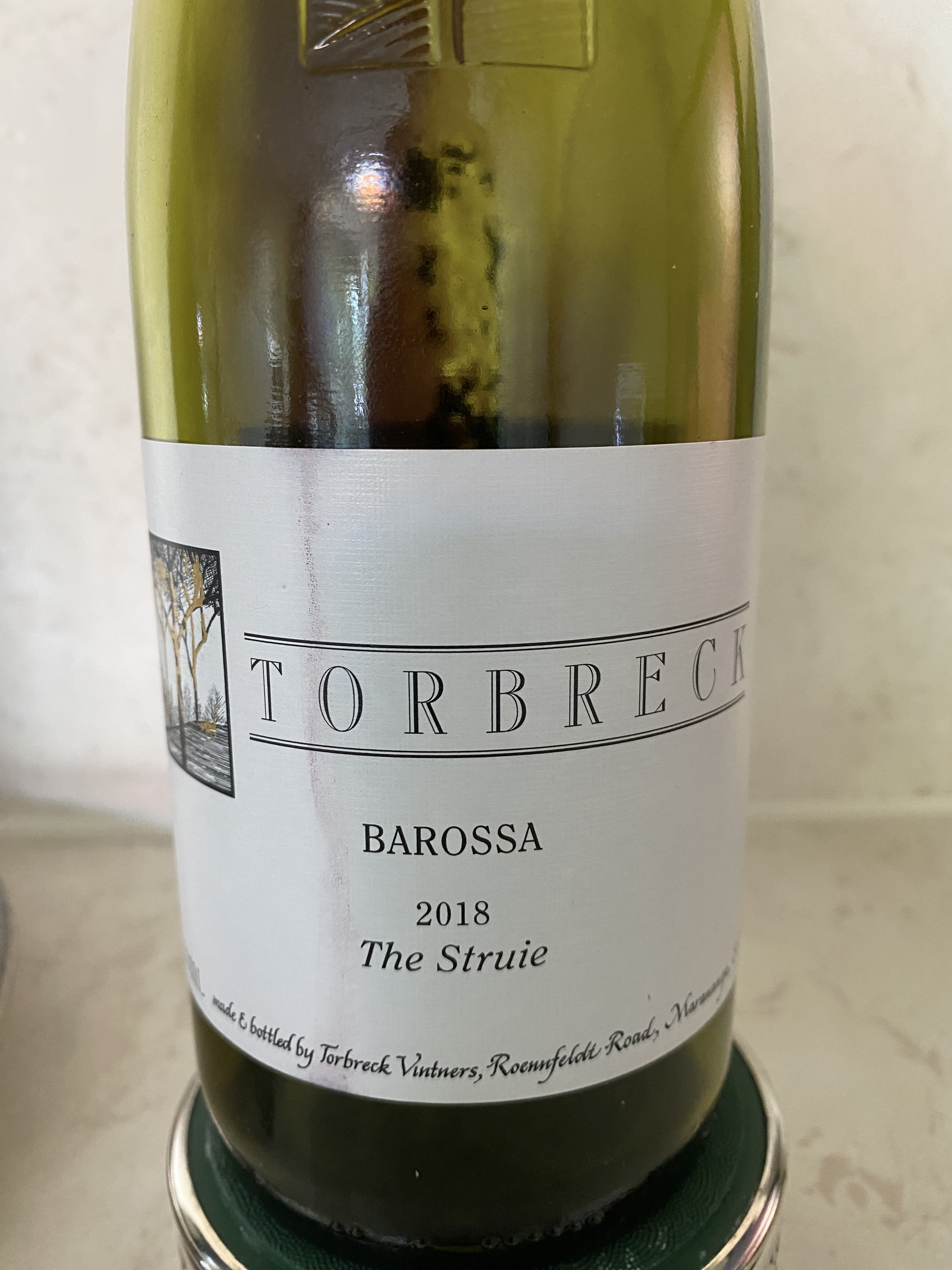
As always, there is Barossa dirt in an empty Torbreck bottle, but the 2018 Torbreck The Struie delivers a surprise. The colour is deep purple, typical of a full-bodied South Australian Shiraz. The fruit in this year includes only 25% Eden Valley fruit. Normally it is 50%.

On the palate, the complex flavours comprise blackberry, mulberry, black olive, spice, and tobacco. One experiences a full-bodied mouthfeel, and it is surprisingly fresh and alive. The wine is very balanced, matching the fruit with lively acidity and firm tannins. The finish has medium length.

This is an example of a well-made full-bodied Shiraz. It is pretty full throttle, with 15% alcohol, but quite satisfying to drink. It would appeal to a wide range of red wine drinkers.

Score: 95/+++


Friday, October 27, 2023

Head Ancestor Grenache

 Alex Head has dramatically increased his range. The Ancestor Grenache comes from the famous 163 year old Stonegarden Vineyard at Springton, Eden Valley. The soil is sandy loam over decomposed granite and clay.


Only 900 bottles were made of the 2020 Head Ancestor Grenache. This is a soft and smooth version of Grenache. Raspberry, cherry, and plum flavours lead to a very round and ripe mouthfeel. Black olive and cola flavours add complexity. The acidity is low, the tannins are fine grained. The wine ends with a velvety finish.

This wine is not quite my style, but it is well made.

Score: 93/+ 


Sunday, August 6, 2023

2023 Penfolds Collection

 What Penfolds presents in August is quite a collection these days: 25 wines in fact. In addition, there is a Chinese wine (not available in Australia yet), and some cheaper wines, such as the terribly named Max wines.


I taste nine of their new releases at a new event, Penfolds Transcend. The wines are narrated on screen by Steph Dutton, Penfold's red winemaker, who will succeed Peter Gago, in my view. It was efficient and worked well. 

The 2023 Bin 51 Eden Valley Riesling is a good Riesling with white flower aromas, and citrus and melon flavours. The wine has good drive and a mineral finish, a well executed, typical Riesling from Eden Valley (92 points).

The 2022 Reserve Bin A from the Adelaide Hills can be funky and spectacular in some years. This is not one of those. Apple blossom notes on the nose are followed by apple custard and pear flavours. This is quite a soft, opulent wine with good length and a wet stone finish (92 points).

The 2022 Bin 23 Pinot Noir is now exclusively made from Tasmanian fruit. There are quite a few flavours on the palate like strawberry, dark and sour cherry, cranberry. The key feature, however, are the firm dry tannins. This wine is not yet quite in the Penfolds DNA (92 points).

Then we come to the 2021 Bin 28 Shiraz, Penfold's workhorse. This is a rich wine with plum and mocca flavours, a bit of five spice as well. The core of this robust wine is quite sweet and juicy (93 points).

The 2020 FWT (French Wine Trial) 585 is a Bordeaux blend, Cabernet Sauvignon dominant. Blackberry, chocolate and licorice are the dominant flavours. There are savoury notes as well. Overall, the mouthfeel is soft and a little lean: more Bordeaux than Penfolds (92 points). 

The Bin 704 Cabernet Sauvignon from the Napa Valley is the much more powerful wine of course. It has excellent blackberry fruit purity. It has great balance between fruit and savoury flavours and finishes on fine grained tannins (94 points).

An absolute highlight was the 2021 Bin 389 Cabernet Shiraz. There are layers of dark berries; blueberry, blackberry, mulberry. Roasted meat flavours and spice add to complexity. The wine is seamless between the Cabernet and the Shiraz fruit, and fruit and savoury flavours. This dry wine,  is concentrated, yet can be enjoyed now. This is probably the best 389 I have ever tasted (97 points).  

The 2019 Grange is immediately recognizable. Blackberry and blue fruit, licorice, black olive and charcoal form the core. This is an intense wine with great depth, yet it is fresh and smooth. It is already drinkable. It will probably forever live in the shadow of the 2018, but it is a great follow-up (98 points).

After tasting Grange, the concentration tends to drop. Yet, the 2021 Bin 707 Cabernet Sauvignon deserves attention. It is full-bodied, with concentrated blackcurrant and tobacco flavours. This is an elegant wine with an extra long finish (97 points).

Tasting a range of young Penfolds wines used to be hard work. Yet this was thoroughly pleasant. The oak influence has been dialed back, and freshness has increased. 


Monday, July 17, 2023

The Standish Wine Company - A Vintage Comparison

 People who follow my blog know that I am quite fond of the Standish wines. They push fruit weight and ripeness to the boundary, but in doing so manage to match power with elegance. I like these wines in particular, as in this way they deliver a uniqueness of what Barossa Shiraz can be in the world of wine.

Today, I will report on a comparison between two wines of 2021, the current release, and the same wines from 2018. Before I go into details, a few words on alcohol levels.

Three of the 2021 releases have a noted alcohol content of 14.9%. Apart from the fact that this is high, it is most likely to be higher in reality.  As in Australia the actual level can be 1.5%ige points different from the label, it seems Dan Standish wanted to avoid a 15% plus labelling. Do these wines really all have the same alcohol level?  I find it difficult to talk to Dan Standish about this. It is legal, but seems deceiving to me.

 Why is the alcohol so high in a drought braking, milder vintage? Standish likes to use whole-bunch in his wines. The 2021 Lamella uses 100% whole-bunch , there is 70% in the Schubert Theorem. People use different arguments about the benefit of whole-bunch. To me it adds texture, tannin structure and complexity, but the stems have to be ripe. So in a mild vintage like 2021, harvesting has to be late to achieve stem ripeness. This drives the sugar content, and ultimately alcohol up.

Now let us have a look at the wines.

                      The labels are not very interesting. I am showing the back label for the 2021s.

So I am comparing here the 2021 Lamella with the 2018, and the same years for the Schubert Theorem. In theory, the Lamella would be the freshest of the Standish line-up, and the Schubert Theorem the biggest wine. As these are big wines, I have tasted them over three days, from an open bottle.

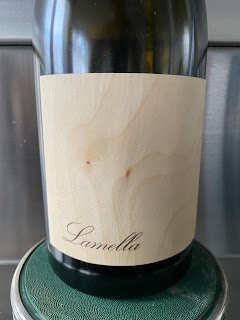
The Lamella comes from the Hutton Vale vineyard in the northern part of Eden Valley. The cuttings come from the Mt. Edelstone vineyard. The red-brown earth is similar to much of the Barossa Valley, but the vineyard is at higher altitude. The fruit is the latest picked of the Standish vineyards.

The 2021 Lamella is quite ripe; it is black fruited as opposed to the more typical blue fruit from Eden Valley. The oak is noticeable, but the fruit can take it. There are Early Grey, black olive, and licorice flavours. On day one, the wine needs time to open up in the glass. Then it becomes quite elegant and delivers a long, harmonious line. On day two, the fruit is more aromatic, but the alcohol is also starting to come through. On day three, the wine loses some freshness and energy.

Score: 96/+++

The 2018 Lamella shows more violets and is more fragrant. Yes, there is fruit weight, but the wine is more transparent and layered. Raspberry, and blue fruits dominate the slightly peppered palate. This is very elegant. The wine has good energy. It is still very young. I love the silky finish. On day two, the wine has opened up more, and on day three it remains superbly elegant.

Score: 98/+++

The Schubert Theorem comes from a vineyard on Roennfelt Road in Marananga. The vineyards have quite a bit of quartz here, which tends to make the wines big and ripe, as the quartz reflects the heat at night, and the ripening continues. Whole-bunch is 70%.

The 2021 Schubert Theorem is the big surprise for me in this line-up. The wine is black, deep, and powerful, as expected, but it is also quite elegant and lush with silky tannins. In addition to the black and blue fruits, black olive and pencil shave add to this balanced and majestic wine. It has a very long finish. Clearly, the milder conditions were beneficial to the Schubert Theorem in this year. In many ways, the wine is similar to the 2018 Lamella, but with a firmer finish and more fruit weight. The wine remained silky and smooth on day two and three.

Score: 98/+++ 

The 2018 Schubert Theorem has a similar flavour profile: blackberry, ripe plum, black olive. The wine feels more blocky in the mouth, and is starting to taste a little tough and ripe. On day two, it is less blocky, but starts to show a slightly hot finish, and is not as rounded as on the first day. The very dry tannins lead to a long finish. As the wine mellows, the alcohol becomes noticeable.

Score: 95/++

Overall, this tasting presents a complex picture. Here are some of my insights:

1) The 2018s are still young. In fact, in a blind tasting, one may not be able to distinguish 21 from 18. This points to a very long life for these wines.

2) The wines must definitely breathe. Day two was the tasting peak. At least a few hours decanting is highly recommended.

3) It is hard to predict which of these extraordinary wines performs best. In this tasting it was the 2018 from Eden Valley (the warmer year in the cooler region), and the 2021 Schubert Theorem (the warm region from a cooler year).

4) The concern: initially, the fruit power dominates the alcohol. But as the wines mellow, alcohol may raise its ugly head.

Confused? Comments welcome.


Monday, May 29, 2023

Henschke DNA (Must Read!)

 There has been a lot of talk about the DNA of Penfolds, comprising multi-regional sourcing, the use of small American oak barrels, fermentation straight into barrels. Little is said about the DNA of Henschke, maybe because the focus is on individual vineyards. Yet, at a recent tasting of iconic Australian and French wines, three different Henschke wines were tasted, and they had something in common which the others did not. These wines were a 2012 Cyril Henschke, a 2012 Mt. Edelstone, and a 2006 Hill of Grace.


So what did these wines have in common? I thought mulberry, aniseed, licorice, and some black earth minerality. Another taster saw some deep greens, like kelp in these wines as well. So this is the Henschke DNA, as much a function of old vines as of the winemaking, I think.  

The 2012 Cyril Henschke, a Cabernet Sauvignon blend, tasted of blackberry, olive and some capsicum. The tannins had softened considerably, and the wine was in perfect harmony (96 points). 

The 2012 Mt. Edelstone was quite perfumed. Mulberry flavours lead to a sweeter and riper mouthfeel. This was a deeply layered wine (94 points).

The 2006 Hill of Grace was even more perfumed; a very polished wine with black cherry and aniseed flavours. Harmony and elegance made this wine stand out (97 points). 


Sunday, January 1, 2023

Spinifex Rostein Shiraz

 Peter Schell of Spinifex has employed a clever strategy of blending. Many components of his wines are from less desired grapes, bought well, and blended into appealing wines of great drinkability. Then in 2014, Spinifex bought the Rostein vineyard in the Flaxman Valley of Eden Valley. This vineyard is in the southern part of Eden Valley, near High Eden, and situated at close to 500m altitude on predominantly sandy soil. 2018 is the first release of this single vineyard wine, positioned as the new Spinifex flagship. Given Eden Valley, the altitude, and the soil, I was expecting a fragrant, perfumed wine. I could not have been further from the truth.


Is the label the soil profile? If it is largely sandy soil, I would not expect it to look like this, but I am not sure.

The colour of the 2018 Spinifex Rostein Shiraz is deep purple. There is a sense of denseness on the nose. It made me slightly uneasy. And clearly, on the front palate, it is already clear this is a big and ripe wine. Blackberry and blood plum flavours are added to by ever so slight typical Eden Valley blue fruit. Licorice, smoke, and meaty flavours add complexity.

The mouthfeel is big, more power than elegance, but balanced with firm acidity and blocky tannins. Surprisingly, the alcohol is only 14.2%, and it is not felt. Overall, this is a well made wine, it feels more Barossa Valley than Eden Valley, but no matter, this is a substantial addition to warm climate Shiraz.

I am drinking this at 4.5 years of age. The wine is still very young, and it has a structure which will easily take it into the second decade.

Score: 96/++ 
 

Friday, December 2, 2022

Ruggabellus Archaeus

 When Ruggabellus arrived on the scene, it created quite a stir. Abel Gibson picked the Rhone varieties much earlier than anybody else and used 100% whole-bunch on Shiraz. Lately it has been quieter other than the announcement he is going back to cork.

The other development is that from the early concept of only making GSM blends of different proportions for the premium wines, he added a 100% Shiraz. This is actually similar to Peter Schell of Spinifex, the master blender of the Barossa, who finally added 100% Shiraz as an ultra premium wine.


So this is the 100% Shiraz from the Eden Valley, the 2018 Ruggabellus Archaeus. I reviewed this wine about 20 months ago, and found it a bit unbalanced. Time to have another look.

The flavours are of red cherry and pomegranate, quite fresh. Herbal notes and firm acidity are quite prominent as well. This time, the wine is  a bit more rounded than 20 months ago, but I find it a bit medicinal on the finish.

Score: 93/+


Saturday, July 30, 2022

Massena Stonegarden Shiraz

 Massena is an interesting brand to look at for those who like Dan Standish wines, but prefer to avoid the prices of the Standish Wine Company, as he is making the wines for this label. Having said this, the 2018 Massena Stonegarden Shiraz is not as cheap as it once was.


Here is another review of a wine from the Stonegarden vineyard in Eden Valley. As you can see, it is high altitude, with quite rocky soil and low yields.


The wine is made using open fermenters, basket pressed, and using new and old French oak barrels. This full-bodied wine delivers flavours of plum, kirsch, mulberry, and mocca. The mouthfeel is quite soft before firm tannins hit the palate. I did not find this wine particularly appealing. It said to me 'I am not getting the love I deserve'. 

Score: 93/0


Wednesday, July 27, 2022

Barossa, Part 3

 On day two in the Barossa, I kicked off with Brothers At War. The Wardlaw brothers have different preferences in wine, one favouring the bigger Barossa Valley wines, the other the sleeker Eden Valley wines. Again, my tasting was extensive, and I need to summarize somewhat.

The two Rieslings from the Eden Valley, the 2021 The Grape Grower, and the 2021 Nothing In Common, were excellent. The first is very delicate, with lime fruit and light acidity. The second is firmer, with more depth of fruit (both 92 points).

Then we come to the red wines of the family range and the premium range. I tasted the 2020 Some Other Guy GSM, the 2020 The Old Man Eden Valley Syrah, the 2020 I'm Always Right Eden Valley Cabernet, and the 2020 Fist Fight Barossa Shiraz. These wines are all quite fruit forward. They do not have enough structure for me (86 to 90 points).   


I have similar issues with the 2020 Single Vineyard Eden Valley Mataro and the 2020 Single Vineyard Syrah. These wines come from the Pendee Farm vineyard in Springton. The Syrah is very austere, and the mouthfeel thin, the Mataro is dominated by strong coarse tannins (90 points).

I preferred the 2020 Single Vineyard Barossa Valley Shiraz from a 60 year old Lyndoch vineyard. It is red fruited, infused with some mocca notes, still made in a fresh style with firm acidity (93 points).

Some production notes, not sure you can read them

The star of the tasting was the 2021 Single Vineyard Eden Valley Grenache. It comes from the 160 year old Stonegarden vineyard (there it is again!). 50% whole bunch is used in this wine. Red cherry, and a little fruity raspberry and cranberry flavours open up beautifully on the back palate, supported by silky tannins (95 points).

The final wine is the 2018 Icon Eden Valley Syrah/Grenache. 'Icon' seems a bit rich for a wine nobody knows. This wine has more concentration, but shows still fresh raspberry and red cherry flavours. The barnyard notes, which I have not tasted in a wine for some time, are not out of place. The finish is quite long (94 points). 

My next visit is to Eisenstone. There are a couple of things I like about this new winery from the start. This winery makes only Shiraz; focus until you master it! Secondly, it labels one series of wines by subregion, and a second by special vineyards. Stephen Cook used my book on Barossa Shiraz to develop his approach!


The first wine I taste is the 2019 Ebenezer Shiraz. The fruit comes from the famous Hoffmann vineyard. It is a mix of 1965 Dallwitz fruit (also used by Sami-Odi) and young vines. All wines are matured in French oak, this one has 50% new. There are blackcurrant, blueberry and some mocca flavours on the palate. The fruit weight is good. Savoury notes come from the oak. The wine tastes long in the mouth (93 points). The 2019 Hoffmann Single Vineyard Shiraz wine is similar in style, with red and black fruit flavours. The wine is more opulent, yet quite elegant with good complexity. This is a classic full-bodied Barossa Shiraz (95 points). The 2019 Roenfeld Rd. Shiraz, from the vineyard which also produces the new Opulus label, is surprisingly aromatic, but the structure is quite tight and linear (92 points).

The 2020 wines, from a more difficult vintage, appear more generous, with a lighter touch perhaps. The 2020 Gomersal Shiraz is lively and fruity with blackberry and blueberry flavours (93 points). The 2020 Koonanga Shiraz, from the Beckers vineyard) is very dark with mocca notes - a typical Northern Barossa Shiraz (94 points). The 2020 Hoffmann Single Vineyard Shiraz is the star of this line-up. It has a big mouthfeel, with blackberry and blueberry flavours. A very opulent wine with some lifted character and finely grained, yet firm tannins (96 points).

The style of this winery is classic Barossa Shiraz with excellent fruit sources. The winemaking could lighten up a bit more. The addition of acidity feels a little forced and not totally harmonious. It will be interesting to see the wines of 2021, when vintage conditions were perfect.

My final tasting was with Dave Powell of ??? After leaving Torbreck, he formed Powell & Son. This went well for a few years, before he had a falling out with Callum Powell. Callum now makes lighter style wines under the Agricola label. Dave Powell is still being pursued for using his own name by the Torbreck owners. So he now formed Neldner Road. However, some wines are still marketed under Powell & Son. 


The first wine is the 2018 Barossa Valley GSM. It is a classical blend with 60% Grenache. This wine is very fresh, very drinkable with great texture. The wine is quite fruit orientated with  darker flavours than typical for Grenache. The wine has good length, like a Torbreck Steading from a good year (94 points). The 2019 Barossa Shiraz spends 18 months in French foudres. It is very dark, with chocolate flavours dominant. This wine is great value for money (93 points). The 2019 Neldner Barossa and Eden Valleys Shiraz is like the Struie. Matured in foudres as well, the Eden Valley component shines through, with lifted aromatics and blue fruit (94 points).

My  second favourite of the line-up is the 2019 Loechel Eden Valley Shiraz. This wine sees 67% new oak, matured in barriques. The vineyard soil is  predominantly granite. This is a full-flavoured wine, but it has an element of lightness. The wine is elegant with great length (96 points). The 2019 Kalimna Shiraz, from 80 year old vines, is a good counter point. This wine has big fruit weight and quite coarse tannins - the big Barossa (94 points).

The 2018 Chatterton Shiraz comes from four Barossa and two Eden Valley vineyards. All vines are more than 100 years old, and the sources are largely the same as what David used for RunRig. The wine spends two years in French new oak. I found this wine already quite drinkable. The wine arrives in distinctive layers on the palate. The wine is rich, but is slightly lifted as well. It is beautifully crafted (96 points). It is tough for the 2017 Kleinig Mataro to follow. This wine displays typical Mataro flavours of meat, earth, and spice. It has a surprising fresh and expanding finish - really nice (94 points).

When you taste David Powell wines you know what to expect. There is a widespread view that his wines are too big to be enjoyed by more than a glass. I found these wines quite drinkable, however, and the winemaking is first class.

This ends the Barossa trip. I enjoyed many beautiful wines. There is a widening of styles and a new excitement in the valley, and some notable evolution at Penfolds. One thing has to be said. Most wines tasted here above 93 points are $80/bottle or more. Enjoying good wine has become quite expensive.  


Monday, July 25, 2022

Barossa, Part 2

 The main purpose of my visit this time is to get to know some of the newer wineries and their wine styles. Eperosa is a small operation by winemaker Brett Grocke. It shot to some fame when Brett Grocke was named winemaker of the year by James Halliday in 2021. Most wines come from the two owned vineyards in Krondorf and the Magnolia vineyard in Vine Vale. He makes mainly Semillon and the Rhone varieties. I will cover the most important wines below.


The 2020 Magnolia 1941 Semillon is grown in deep sand (as is common in the Hunter). The wine spent 16 months on lees and is barrel fermented. This means it is getting quite a bit of treatment. Lemon and oyster shell flavours lead to a bigger texture than often associated with Semillon. There is some slight oxidation in this wine. It has some waxiness on the back palate. I found this an attractive style (92 points).

The leading Grenache is the 2020 Stonegarden 1858 Grenache. As is the case with fruit from the Hoffmann vineyard in Ebenezer, suddenly everybody wants fruit from this old Springton, Eden Valley vineyard. The vineyard is high altitude, with rocky soil. This wine is red fruited, as you would expect, with red cola flavours. It also has a dark presence with licorice notes. I must say I expected more from this (92 points).

The most important wines are the Shiraz wines from the Magnolia vineyard. It sits at the base of Menglers Hill at over 300m altitude. A number of gullies run through the property and split the vineyard into distinctive blocks, planted at different times. The soils vary, with deep sand the most common.

The 2020 Magnolia 1965 Shiraz comes from the highest part of the vineyard. It is farmed organically. It is quite a concentrated wine, with violet notes, blue fruited (similar to Eden Valley) with some iron flavours, and very elegant. Brett compared the wine to Cornas (94 points).

The 2020 Magnolia 1896 Shiraz is grown on rockier soil. Again, it is blue fruited and shows an ethereal elegance, which one seems to only get from very old vines. The tannins are fine and the finish long (95 points).

I enjoyed the two flagship wines. They taste more like Eden Valley than Barossa Valley. The other wines are fine, but not so special (except for the Semillon).

The next stop was Alkina. Alkina is the talk of the valley right now. The 60ha property near Greenock was purchased by Argentinian billionaire Alejandro Bulgheroni about 10 years ago. He also owns wineries in Argentina, Uruguay, France, USA and Italy. 6ha on the property was planted in 1950. Another 37ha have been planted by now, some parts going back to 1970, some only a few years old. The vineyard is managed biodynamically, and extraction in the winery is on the light side. Significant investment in concrete eggs, Italian Amphorae and Georgian Qveri give the winery a look unlike any other in the Barossa Valley.


The entry level wines from young vines are called Kin. I tasted the 2022 Semillon, and the 2021 Grenache and Mataro from this range. The Semillon is fuller bodied than the Hunter wines. The reds show great typicity. There is great freshness and fruit purity in these wines (92-93 points).

I did not like the 2020 Birdsong Shiraz much. It was matured in old foudres. The wine is very fruity, followed by drying tannins (89 points).

I now need to talk about the Polygon project. Electro conductivity mapping technology has been used on the original 6ha vineyard to separate out in fine detail different soil types. This is done by sending electromagnetic impulses into the ground. This project is lead by Chilean soil scientist Pedro Parra and Italian winemaker Alberto Antonini. Based on the mapping, a number of soil pits are excavated. Different profiles were identified. These small blocks now form the basis for individual wines. It is expected they will show differences, depending on the schist, clay, limestone and quartzite compositions.

The first wine I taste from this area is a blend, however: the classic GSM. The 60% Grenache comes from Polygon 4, comprising clay and degraded schist. It is called 2020 Old Quarter. The wine is fresh, very elegant, pretty, and complex. It is very balanced between components, which have 70-100% whole bunch. There is excellent minerality on the finish (95 points).


The 2019 Polygon 5 Grenache is made in a similar way. The soil is schist with clay and iron. It translates into a firmer structure. This is a dark and elegant wine with intense raspberry and red plum flavours.  The tannins are very fine (95 points). This is supposed to contrast with the Polygon 3 Grenache. These wines are made in minuscule quantities, and unfortunately, no more Polygon 3 was available. The 2019 Polygon 1 Shiraz comes from a schist  and quartzite block. This is a bigger wine, blackberry, mocca, and licorice flavours, with firm and chalky tannins (95 points). There will never be much of these wines, we are talking about 50 cases each.

Overall, Alkina is an innovator, bringing something new to the Barossa. The wines are positioned on the beginning of the ripeness spectrum, with great fruit purity and finesse.


Saturday, July 23, 2022

Barossa, Part 1


I spent the following two days in the Barossa. And what better way to start than at a private Penfolds tasting at the Kalimna Homestead. It is of course surrounded by the famous Kalimna vineyard, first planted around 1890 by the Fowler family. Vineyard and homestead was bought by Penfolds in 1945. Red winemaker Steph Dutton, who is likely to succeed Peter Gago when he retires (you read it here first), took me through the tasting, which consisted mostly of a mix from the 2021 and 2022 Penfolds Collection.

We started with the 2022 Bin 51 Riesling from Eden Valley. This was the first of a number of very positive surprises. Lime rind was the dominant flavour component. The wine has good volume and a fine texture. Minerality develops on the back palate before a long finish (95 points).

Next came the 2019 Yattarna. The fruit is 56% Tasmania, 34% Tumbarumba, 11% Adelaide Hills. The Tasmanian component has been increasing due to climate change and style refinement, while Tumbarumba fruit adds nerve, and Adelaide Hills generosity according to Steph. The wine is matured in 50% new oak barriques. Concentrated citrus fruit, nectarine, pear and smoky oak deliver a complex flavour profile. This is a stylish wine with some fruit weight, but matched with mineral acidity. The Yattarna is getting better with every release. This is a stunning wine (97 points).


The first red is the 2019 Bin 128 Coonawarra Shiraz. This wine sees 100% French hogsheads, 20% new. Peppercorn and spice are the key features of this well structured wine. I detect a bit of alcoholic warmth on the finish (93 points). 

Then comes a special release wine, the 2018 Century Vines Barossa Valley Shiraz. Blending is in the DNA of Penfolds. This could have come from a single vineyard of 100 year old vines, but no, this is a blend from a number of grower owned old vineyards. What this does, it gives a certain layering of fruit flavours (more so in Grange). This wine is matured in old French hogsheads. This is a ripe wine. Mulberry, blackberry, figs and bacon on the palate, anchored by savoury, gravelly tannins - classic Barossa, classic Penfolds (96 points).

Then comes one of the big surprises of this tasting: the 2019 Bin 389 Cabernet/Shiraz. This wine always has more than just 50% Cabernet fruit. This one has 53%. Quite a bit comes from Langhorne Creek. The wine is matured in 100% American oak, 30% new. This wine has great complexity. The herbal notes of the Cabernet start you off, sweet plum from the Shiraz takes over, and it all ends in a mix of meatiness and mocca. The big surprise here is the sheer drinkability of the wine. I remember tasting older vintages at young age, and this was often not a pleasant experience. Oak and tannins were too strong. According to Steph, the introduction of cross-flow filtration has given this wine much more polish. I will in the summary talk about some other developments at Penfolds which make the young wines so exciting (96 points). 


The 2019 Bin 169 Coonawarra Cabernet Sauvignon is from the yet to be released 2022 Collection. The wine is aged in French hogsheads, 56% new. There is the expected blackcurrant, mulberry, tobacco leaf, and dark chocolate. I have always struggled a bit with Coonawarra Cabernet, often because of eucalypt flavours. There is a bit in this wine, but it is in the background. The structure of this wine is very tight. This wine needs time (94 points). 

Now we come to the star of the tasting, the 2018 St. Henri. The wine is aged in old French vats, which gives the fruit prime place. The wine is multi-regional, but predominantly Barossa Valley. This wine is so polished and elegant. Blackberry, plum and chocolate lead to an overall creamy like praline flavour. The tannins are super fine and silky (98 points).

Similarly to the  Bin 389, the main feature of the 2017 Grange for me is the sheer drinkability of this wine. The layering of the fruit comes from the blend of 14 blocks in this wine. It is a very dark and voluminous wine, a typical Grange in this way. Aromatic and meaty, big and drink now. How do they do it (97 points)?

The big revelation in this tasting was how approachable the wines were. Also, French oak is becoming ever more prominent, without giving up on the house style of the flagship American oak wines. This lead to a general discussion of what has changed at Penfolds. It turns out a lot. 
- Many trials with different oak barrels have been carried out over the years. The sourcing is now much smarter than it used to be. 
- The tannin management is much more detailed.
- In the vineyard, there is a lot of detailed mapping and technology is used for profiling moisture and ripeness. Grapes get picked by rows now, rather than vineyards.
- There is also an emphasis on root stock and clones management.

I was very impressed with these wines, and by early accounts, this will carry over into the 2022 Collection. I will have an opportunity to taste many of these in 10 days. 


Thursday, July 7, 2022

Powell & Son Loechel Vineyard Shiraz (edited)

 When writing about Dave Powell, wine and personality are inextricably linked. He is larger than life, a very generous, but also quite opinionated man. I don't want to go too much into it, but this is briefly what happened. After he lost control of Torbreck, he formed a company with his son Callum, who had been helping him at Torbreck towards the end. This was Powell & Son. Unfortunately, this partnership only lasted a few years. Dave Powell went his own way, forming Neldner Road. 

When Powell & Son hit the market, a couple of wines were offered for $750 per bottle. I thought this was a very cynical approach for a new brand, not withstanding Dave managed to source excellent fruit from old vineyards. As I learnt, these wines were largely pre-sold to Hongkong, where Dave had a strong following. This essentially bankrolled the new venture. Obviously, since China raises tariffs, this has become impossible.

I was much more modest and bought some 2016 Powell & Son Loechel Vineyard Shiraz for $130 per bottle. The fruit comes from Eden Valley, just south of the town, from 50 year old vines.


The colour is ruby, giving the higher elevation of the vineyard (400m) away. On the nose, black fruits and some smoky notes emerge.

On the palate, plum (why do most people not want to mention plum as a flavour?), blackberry, also blueberry, olive and smoke deliver a complex, full-bodied mouthfeel. This is a ripe wine, as expected, but shows some surprising freshness as well. The tannins are silky before the wine finishes long.

Dave Powell is perfect with Eden Valley fruit. What can be overwhelming from the Barossa Valley does not quite reach the same level of denseness from the Eden Valley. I found this wine to be a fantastic example of a full-bodied, yet drinkable and satisfying Shiraz. I wish I had bought more than a couple of bottles.

Score: 96/+++


Tuesday, May 3, 2022

The Standish Wine Company - The 2020s Released Today

 Dan Standish, with his last two releases, has achieved the trifecta of power, elegance, and drive in his wines. The 2020 vintage threw up a particular challenge. It was the second drought year; even old vines start to struggle then. Yields are low, only a couple hundred kg/acre, as opposed to the standard low 1/2t/acre. The harvest was 80% below normal. As a result, the skin to pulp ratio of the grapes is high, and the risk of harvesting grapes with port-like flavours is real. Dan Standish told me a year ago, there would only be one wine. Things must have improved, because four wines will be released today. I decanted these wines 5 hours before tasting, assuming they would be big and concentrated, and tasted over two days.


Tasting these wines, two facts stand out: they have kept their specific brand profiles, but also, there is a wider quality difference, in my opinion, between the wines than in the last couple of years.

I started with the 2020 The Relic. This is the wine with the 1% Viognier component. It is hardly noticeable, much less than in the Clonakilla or the RunRig. The flavours of this wine jump out of the glass. It is red fruited, but darker on day two of tasting the wine. The wine is surprisingly fresh, but most flavour is on the front palate. It is an elegant wine, but it felt a little unsettled. This wine from the Krondorf vineyard is always first to be picked. But was this picked too early? There is a herbal character to the wine, and a bit of greenness. The tannins are not as fine and ripe as in the other wines. Maybe because there are less whole clusters in this wine? I did not warm to this wine as much, although it had drive and power and could do really well in a few years.

Score: 94/+

Next came the 2020 The Standish. The fruit is much darker; blackberry and mulberry flavours, violets, and shaved pencil. This wine has a lot of depth and purity, and is lively and energetic. Mocca flavours add to the complexity. The mouthfeel is brilliant. It is mellow, with silky tannins and a velvety finish. The wine glides down the palate in perfect harmony. It will age for a long time, but is already quite approachable.

Score: 99/+++

The 2020 The Schubert Theorem is the biggest of these wines, as expected. The colour is very dark, almost black, and the nose quite perfumed. The fruit weight is high and ripe. Blackcurrant, black liquorice, black olive, deeply layered - you get the picture. This is a broad shouldered, masculine wine with a huge structure, very tannic. It left my mouth quite dry. Still, the wine is not overripe and quite balanced.

Score: 96/++

The 2020 Lamella from the Hutton Farm vineyard at Eden Valley is very elegant. It is mostly blue fruited, very smooth and balanced. It is perhaps the antithesis to The Schubert Theorem in the context of Dan Standish's winemaking. The higher level of acidity is noticeable, but it gets caught by the firm tannin structure on the long finish. 

Score: 97/+++ 

Overall, this is another great set of Standish wines. If you are looking for more linear wines with drive, you go for The Relic or The Standish. If you enjoy a big, fat mouthfeel, you opt for The Schubert Theorem. If you enjoy more acidity, the Lamella is your wine. 


Friday, December 24, 2021

The Standish Wine Company Lamella Shiraz

 I am quite excited about this wine. Therefore I am writing this up, as I drink it on Christmas Eve. It is the 2015 The Standish Wine Company Lamella from Eden Valley.


I am drawn straight to the palate. Flavours of red cherry, cranberry, mocca, and some secondary earthy notes create interest. The key here, however, is the combination of energy, power and elegance. This wine absolutely nails it. The tannins are fine for a full-bodied wine. The super long finish is smooth and lifted, and very impactful.

This wine is superb drinking now. It will not last as long as a very good Bordeaux, but should drink really well for the next 3-5 years.

Score: 97/+++