Showing posts with label Barossa. Show all posts

Sunday, May 5, 2024

Spinifex Rostein Shiraz

 Spinifex has now entered its third phase. Let me explain. When Peter Schell came to the Barossa Valley, he embarked on a very clever strategy. He identified parcels of less well known Rhone varieties, for example Cinsault, which he could buy cheaply, and through clever blending managed to offer attractive wines at good prices. He became the blending wizard of the Barossa. He famously said: I would never do a 100% Shiraz, only over my dead body. Now this is exactly what he did next. La Bete Noir was born, Moppa, and La Maline (includes some Viognier). This was phase two. And then in the last 6 years, he added extra premium red wines with the Indigene and the Rostein.


The Rostein, from an old vineyard in the Eden Valley, is Peter Schell's most expensive wine. Yesterday, I tasted the 2018 Spinifex Rostein Shiraz. It seems this has been the only release so far.

Brooding dense fruit flavours rise from the glass. It is clear, this is an intense wine. It delivers the typical higher altitude Eden Valley blue fruit. There are dried plum flavours and licorice. Despite this fruit weight, the wine delivers good energy. It is both round and driven in the mouth. The bright acidity makes this wine still fresh after six years. The wine has a balanced structure with fine tannins and a lively finish.

Score: 95/+++


Tuesday, February 6, 2024

Penfolds RWT Shiraz

 I am opening this 2006 Penfolds RWT Shiraz with some trepidation. It is after all the French oaked baby brother of Grange, and I have mainly enjoyed lighter wines during these hot summer months. Also, we are still in the dusk of the Robert Parker period.


The colour of this wine is deep purple, no orange tint yet. Blackberry and liquorice notes dominate the intense experience on the nose.

On the palate, a very complex flavour profile develops. The fruits are predominantly ripe blood plum, mulberry and blackberry. But then there are savoury flavours of tar, charred meat, liquorice and mocca. I taste the vanilla from the 70% new French oak hogsheads. This is a very concentrated wine, built like a house from bricks. The wine is fat and sweet in the core. I find the tannins from this Northern Barossa fruit quite coarse and matching the fruit weight. The finish is long and holding up the wine's complexity.

This is a good wine, but a bit much for me at this time of year.

Score: 95/0  


Saturday, December 24, 2022

Torbreck RunRig

 Torbreck offers a remarkable line of wines, priced from the $20s/bottle to the $700s or so. For drinkability, I have always enjoyed the mid priced wines the best; Struie, Gask, and in particular The Steading. I found wines like Factor and Les Amis too concentrated and ripe. Sure, this is what the grapes could give, but is it enjoyable? A bit of an exception has been RunRig. This blend from originally eight outstanding and old vineyards always had a bit of magic for me. I described the structure as if built like a skyscraper, with huge fruit weight and massive tannins. But there was always some balance and remarkable complexity.

After quite an absence, I enjoyed another vintage the other day: the 2016 Torbreck RunRig. I do not want to go into much detail on the flavours here. Chocolate and charred meat are dominant. This wine is no longer the poster boy of Parker wines. Yes, it is still very big and intense, but the 2016 version is more harmonious, and simply more enjoyable to drink. It could be argued that Torbreck lost some of its magic since the departure of David Powell, the original winemaker. However, judging by this example, RunRig has been tamed a bit, and this is for the better. This wine is an outstanding example of what a full-bodied Barossa Shiraz can deliver.

Score: 96/+++

Monday, August 8, 2022

Premium Cabernets Comparison

 This is a brief review of some Australian premium Cabernets.


The star of this comparison tasting was the highly acclaimed 2020 Cullen Diana Madeline. It is a Cabernet Sauvignon Merlot blend. This was the most elegant wine, red fruited, with some tannin bite at the same time, and a beautiful finish. This is a world class wine (97 points).

The one closest in style to it was the 2019 Grosset Gaia. It had a similar feel, but was a bit broader in the mouth, less detailed, again with firm tannins (94 points).

The other wine from Margaret River was quite different. It was the top of the range 2018 Vasse Felix Tom Cullity Cabernet Malbec. It showed darker fruit, with mulberry flavours. The Malbec influence is strong. This is a bigger wine, quite fruity (93 points).  

An impressive wine was the 2017 Hickinbotham Clarendon Trueman Cabernet Sauvignon. It comes from the Northern, hillier part of McLaren Vale. This is a smooth wine, ripe, but balanced, with a silky mouthfeel and a medium to long finish (95 points).

I was less impressed with the 2016 Yalumba Menzies Cabernet Sauvignon. The redcurrant flavours are big and ripe. Christmas pudding or mud cake deliver quite a fat mouthfeel (92 points). 

There was also a New Zealand wine, the Merlot dominant 2019 Craggy Range Gimblett Gravels Te Kahu. This is quite a soft wine, but it lacked sufficient mouthfeel (91 points).


Tuesday, March 29, 2022

Craggy Range and Torbreck

 I am drinking the 2016 Craggy Range Te Kahu Merlot blend. This wine hits me with its concentrated fruit. It is intense and powerful, but also elegant and quite smooth. I am reminded of Torbreck.


There is a lot of primary fruit here, blackberry and plum. The structure is firm, with a dry tannic backbone. There is great fruit in this wine; it is well made. However, the mouthfeel is of a thick and blocky wine. It is not layered.

Score: 94/0

As it happens, the first wine I grab after is the 2017 Torbreck Factor. This is Torbreck's most concentrated 100% Shiraz. In comparison to the Craggy Range, it is darker, riper, almost Port like, and the oak shows more. In my view, this is not like wine should be, and the dry year did not help. I do not think the winemaking has been great here. Interestingly, David Powell's favorite during his Torbreck reign has always been the Steading, not the more powerful wines with the best and ripest fruit, selling for three times the price.

Score: 89/-

PS: So in hindsight, the Craggy Range was nothing like a Torbreck (I just had forgotten) 


Friday, December 24, 2021

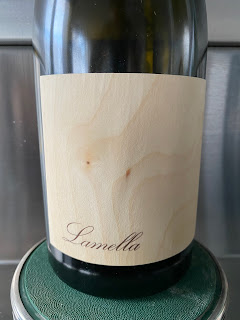
The Standish Wine Company Lamella Shiraz

 I am quite excited about this wine. Therefore I am writing this up, as I drink it on Christmas Eve. It is the 2015 The Standish Wine Company Lamella from Eden Valley.


I am drawn straight to the palate. Flavours of red cherry, cranberry, mocca, and some secondary earthy notes create interest. The key here, however, is the combination of energy, power and elegance. This wine absolutely nails it. The tannins are fine for a full-bodied wine. The super long finish is smooth and lifted, and very impactful.

This wine is superb drinking now. It will not last as long as a very good Bordeaux, but should drink really well for the next 3-5 years.

Score: 97/+++

Thursday, September 23, 2021

Penfolds Bin 389 Cabernet/Shiraz

 The 2012 Penfolds Bin 389 Cabernet/Shiraz is a powerhouse. Intense aromas of blackberry and mocca rise from the glass.

On the palate, blackcurrant, plum and blackberry flavours blend the typicity of Cabernet Sauvignon and Shiraz together in a seamless way. This wine is full-bodied, as you would expect, and quite dense, almost impenetrable, more than in other vintages. The tannins are firm and match the fruit weight. The wine is in balance and very long on the finish.

At 9 years, this wine still is a baby. It has at least a couple of decades to go.

Score: 95/++

Saturday, February 27, 2021

A Whirlwind Tour Through South Australia

This is my first interstate trip in a year. It is brief: three South Australian wine regions in three days.

Day 1: Barossa Valley 


On the first day, I visited the Artisans of Barossa to taste Spinifex and John Duval wines, the Standish Wine Company, and Elderton.

Something unusual seems to go on at Spinifex. Peter Schell did not respond to my emails. More importantly, there seems to be quite a change in strategy. He used to be the master blender of the Barossa, identifying small plots of the less common Rhone varieties and creating beautiful fresh wines. Now, there is a marked shift to single varieties wines. I am not sure why.

The 2019 Esprit is still 'old school'. It is a fresh, elegant wine, although a little sweet (91 points). Then I am confronted with the drought vintages of 2019 and 2020. The 2020 Garcon is a robust Grenache, with macerated strawberry flavours and a bit confectionary (89 points). Similarly, the 2020 Syrah is broader than usual and a little harsh (88 points).

In moving away from the blends, Peter Schell has also decided to bottle varieties which arguably are better suited to warmer climate. The labels are different, to maybe indicate a more experimental character of these wines. The 2019 Aglianico has relatively weak fruit weight, certainly in comparison to the firm and very dry tannins (87 points). In contrast, the 2019 Tannat is a revelation. Tannat tends to be very robust in France and Uruguay, but here, this red fruited wine has a lifted character, with an elegant palate and a smooth finish. Who would detect this variety in a blind tasting? (93 points).

Finally, I taste the 2018 La Maline. This Shiraz comes from the northeastern slopes of the Barossa Valley, where winds have a cooling effect and temperatures drop at night. There is 4% Viognier in this wine. The wine is fragrant and perfumed, but not overly so. It has a beautiful core of Shiraz fruit and finishes in an elegant style (95 points).

I tasted the three classical wines of John Duval. The 2018 Plexus, a GSM, shows the Grenache component in particular. It is an entry wine, but shows good harmony and intensity (90 points). The 2019 Entity is another example of the drought vintage. In previous years, this Shiraz was exceptional, but in 2019 it is not balanced. The core is quite sweet, and the finish a bit harsh (89 points). This contrasts with the 2017 Eligo, a best of fruit wine, from a cooler vintage. This wine has a big mouthfeel, but remains elegant with great length (95 points).  


to be continued...


Monday, January 11, 2021

My Favourite Barossa Wineries

 I have been reflecting how my favourite Barossa wineries have been changing over time. It is a bit like companies on the stock exchange, except in this case it is not market capitalisation that drives it, but a combination of changing winemaking styles, new entrants, and a changing palate on my part. So here it goes:

10 years ago*

1) Henschke

2) Torbreck

3) Rockford

4) Kalleske

5) Spinifex

And today:**

1) The Standish Wine company

2) Henschke

3) Spinifex

4) Sami-Odi

5) Head

Any comments?

* Penfolds is excluded as a multi region blender

** Eperosa could perhaps be in the current list, but I have not tasted it enough

Friday, January 1, 2021

Penfolds Grange

 The third wine in this trio of indulgence was Grange, of course. I was tempted to open a 2010 as well, the last vintage I bought of this wine. However, I felt this would not have been near its peak yet, so I decided for a 1998 Penfolds Grange. This wine had been recorked at the recorking clinic in 2016. This is a terrific service by Penfolds. First, the wine is opened to check on its quality. Then a couple of thimbles of new wine (in this case Grange 2010) get added to the wine. As a result, there is a threefold benefit: a new cork, very high shoulder, and a bit of refreshment, if you like). 

Note the very high shoulder of this 22 years old wine

The 1998 Grange performed very much as expected. I previously described Grange built like a skyscraper; the structure is wide and long. This makes the wine unique and instantly recognizable. Blood plum, blackberry, mocca, and meaty flavours dominate the layered profile.

This is a big and ripe wine, but it is smooth just the same. The tannins are coarse, but balanced by the massive fruit weight, and supported by enough acidity to keep the wine lively. The finish is huge, almost moving back up the throat (I have not experienced this before). Thankfully, the wine is not hot on the finish. The dominant feature of this wine is power, with elegance playing a support role. In the last 10 years, there has been a gradual shift to more elegance.

This 1998 Grange is still fresh and will live well for at least another 15 years.

Score: 97/+++ 


Thursday, August 6, 2020

The Penfolds Collection 2020

This is a big week in Australian wine. Last night, the winners in James Halliday's Wine Companion 2021 were announced, but also Penfolds winemakers launched the new releases in an online tasting event. This post is a bit unusual, as I will briefly comment on this event without having tasted the wines. I will do this, because tastings are rarer these days, not many would have seen last night's virtual tasting, and yes - a Penfolds release is important.

The release covers five vintages, from a 2020 Riesling to 2016 Grange. I have to say this virtual tasting was incredibly professional. What needed to be said was said, and no extra waffle. I want to focus here on the 2018 vintage, which in previous posts I mentioned is pretty special.

At the value end are Bin 28 and Bin 128. Both wines appear to be pretty good. They are quite different from each other. Bin 28 Shiraz is a multi-region blend, with the Barossa claiming the lion share. As a result, and courtesy to the 2018 vintage, this is a full-bodied wine with red and black fruit characteristics. If you like your wine big and sweet, this one is for you. The Bin 128 Shiraz, in contrast, is from Coonawarra. It is medium-bodied and more savoury.

Then there is Bin 389, the classic Cabernet (57%)/Shiraz blend. The Cabernet fruit seems to be of particular high quality, expressing rich, dark and plush flavours. Power and elegance is how this wine is described. Like with Grange, fermentation finishes in barrel, which delivers a special sweetness to the wine and the Penfolds house style. Unfortunately, I missed the discussion of the RWT, as I had another commitment.   

Monday, July 20, 2020

A fabulous Shiraz/Syrah tasting

Shiraz is the most adaptable red wine grape to different climatic and soil conditions.This was very obvious in this tasting of seven Shiraz. There were wines with big fruit weight and less fruit weight, very peppery wines, powerful and elegant wines, and wines with dark fruit and chocolate, tannic wines, and acidic wines - and they were all excellent.


The first wine was the rare 2014 Kusuda Syrah from Martinborough. This meticulous Japanese winemaker produces a wine of intriguing complexity. This is a lighter style with red plum and forest berry flavours. There is green peppercorn spice, good natural acidity, and long stalky tannins. The wine has strong savoury characteristics (94 points).

The second wine could not have been more different. The 2004 Henschke Mt. Edelstone is a big wine, with black fruits, aniseed and strong oak influence. The fruit is concentrated and generous. Everything is balanced, though. This is a really enjoyable typical high quality Barossa/Eden Valley example (95 points).

Then we came to four wines from the Northern Rhone. The first was a mature 2001 Chapoutier Côte-Rôtie. Dark concentrated fruit was dominated by earthy and secondary flavours. Therefore, some layered fruit flavours, which would have been there 5-10 years ago, have disappeared. French oak was strong, and the tannins high. Most noticeable was the high level of acidity, which was too much for me. This wine split the tasters (93 points).

Wine of the night was the 2012 Jean-Louis Chave Hermitage Rouge. Concentrated and powerful, with blackberry and boysenberry fruit, this wine had the hallmarks of premium Shiraz: it is peppery, with some sweetness and silky tannins. At the same time, it was the most elegant wine of the night (96 points).

The 2009 Delas Côte-Rôtie La Landonne gave a really aged impression (not in a bad way). Raspberry fruit, aniseed,  concentrated gamy flavours gave way to earthy and rustic notes on the mid-palate, before it finished with mellow tannins. The balance of the wine was still good (95 points). 

A real surprise was the 2016 Pierre Gaillard St Joseph Rouge. This is a highly perfumed wine with fresh floral notes. Dark fruits and earthy components dominate the elegant palate. Salty and savoury flavours add to complexity. This wine shows a great balance between fruit weight, acidity and firm tannins (95 points). 

The final wine of this blind tasting was an Australian classic: the 2010 Penfolds St. Henri. This wine is quite big for the brand, reflecting the excellent vintage; deep purple, concentrated, dark. This inky wine of Barossa character has licorice and meat, but is peppery as well. The large barrel used oak plays a support role. Despite its concentration, this wine invites you to a second glass (95 points). 


Saturday, April 25, 2020

Penfolds RWT Shiraz

The RWT Shiraz can be an amazing wine, as it should be for the price. The 2005 Penfolds RWT Shiraz is not one of those. It is still a good wine, but not as good as the Americano Malbec which I drank a day earlier and reviewed a couple of posts below. Here is why:

The aroma of the  2005 RWT is massive; black fruits, blackberry, mulberry.

There are similar flavours on the palate. Secondary notes as well, meaty and smoky flavours, aniseed. This adds to the very high fruit weight and complexity. The mouthfeel is big, the French oak noticeable. This wine is very ripe and heavy. The firm tannins lead to a long, slightly heavy and rough finish.

The structure is holding up well at 15 years, but this wine is a bit too brutal for me, while the Americano Malbec manages a full-bodied palate with elegance.

Score: 94/+ 

Sunday, February 23, 2020

Auld William Patrick Shiraz


The 2016 Auld William Patrick Shiraz is the flagship wine of Auld Family Wines, which I reviewed a few posts below. It shows typical Barossa Shiraz flavours of concentrated bramble, blood plum, and licorice. The new oak is not yet integrating too well. This is a full-bodied wine with savoury notes playing a role as well. The mouthfeel lacks some roundness, but this is a more elegant wine than found in the Wilberforce and Strawbridge ranges. The wine is pleasant to drink now, but will improve with age, as its components integrate some more.

Score: 91/0

Tuesday, February 18, 2020

Auld Family Wines


From time to time, I will introduce new and less well known wineries. The Auld Family has been involved with wine for many generations, but the current brothers are taking a fresh approach. The Wilberforce and Strawbridge brands straddle the Barossa and Langhorne Creek. I am not quite sure what the point of two brands is, given they are new and the price points are similar.

The 2019 Wilberforce Riesling from the Eden Valley delivers attractive citrus and apple flavours on the front palate. The experience is a full mouthfeel with balanced acidity, but the finish is a bit sweet and plump (88 points).

The 2016 Strawbridge Cabernet Sauvignon from Langhorne Creek shows good varietal character with red and blackcurrant flavours. There is some smokiness as well (maybe not a good term to use right now?). The fruit is slightly overwhelming on the finish, but then dry tannins deliver a strong grip at the expense of elegance (89 points).

The 2015 Wilberforce Cabernet/Shiraz hits the palate with concentrated dark berry fruit. Eucalypt  and some earthy notes add to the complexity. There is some sweetness in the wine, and the coarse tannins lead to a firm finish (89 points). 

The 2017 Strawbridge Shiraz displays concentrated blood plum fruit and toasted oak. I find the tannins quite astringent. They lead to a long, but slightly alcoholic finish (86 points). 

Tuesday, August 6, 2019

Four Vintages Of Penfolds Grange

The week of indulgence continued with a comparative tasting of some Grange vintages. Now, Grange is the opposite of what you would do if you were to design an ultra premium red wine today. You would pick a single vineyard; Grange is not only a blend of vineyards, but even regions. You would focus on one variety; Grange has some Cabernet blended with the Shiraz in most years. You would use French oak; Grange, of course, is matured in American oak. Your label would be more eye-catching. Yet, Grange is Australia's icon wine.


The tasted wines were 1990, 1996, 2001 and 2010 Penfolds Grange, with a 2002 Clarendon Hills Astralis thrown in for good measure. A lot has been written about these wines. Therefore I will just stick to my highlights. The best wines were the 1990 and 1996 Grange.

My wine of the night was the 1996 Grange. It was a little fresher than the 1990, the fruit a bit more generous now - a lot of complexity, smoke and spice and a firm grip (98 points). 

The legendary 1990 still shows this incredible layering of fruit. It has become more delicate, as the tannins have softened. The finish is very long and so is the life ahead (97 points).

The 2001 demonstrates what happens if the fruit is not powerful and weighty. Licorice takes over on the palate, there is a bit of heat, and the mouthfeel is not as round. This is still a good wine, but Grange has quite a lot of vintage variation (92 points).

The 2010 is back to form. This is an inky wine with dark fruit flavours (the 1990 has red fruit, also), firm, but silky tannins. The structure is balanced with a long finish. This wine is too early to drink and should develop more differentiated characteristics (95 points).

Grange is not everybody's favorite. Some find it too powerful and overwhelming. If you are aiming for a top shelf Australian Shiraz, the other choice would be Hill of Grace, for most. But an equally attractive choice could be Clarendon Hills' Astralis wine.

The 2002 Astralis is not as big and powerful as Grange, yet it is a full-bodied wine. The mouthfeel is very harmonious, with great balance and silky tannins. Next to its blackberry and plum fruit, it delivers attractive mocca flavours (96 points).

This was a great tasting and a rare opportunity to taste different Grange vintages side by side. Vertical tastings always deepen one's understanding of a particular wine.

Thursday, May 31, 2018

Henschke Tappa Pass Shiraz

Henschke was one of the first wineries to support a glass closure. The argument was: tight seal, no chemicals involved. However, it never took off. The 2006 Henschke Tappa Pass uses this closure, and the wine is perfect after 12 years.

Tappa Pass is a premium offering from Henschke, just across the ridge from their famous Eden Valley vineyards. Soil and climatic conditions are similar, but the vineyards are grower owned and not as old.

The wine has a core of blackberry and aniseed flavour, with a hint of eucalypt. It is more forward and not as complex as the Mount Edelstone, but the flavours are similar. The main difference is on the back palate, where the wine is not as differentiated, and a little fat. There are also no noticeable spice flavours in this wine. Having said this, the wine has good depth and intensity and a lasting finish.

It is in the perfect drinking window now.

Score: 93/++

Friday, March 9, 2018

Jacob's Creek Steingarten Riesling

It was an unusual move, to say the least, to put the highly acclaimed single vineyard Steingarten Riesling under the Jacob's Creek brand, the best known Australian wine brand. This brand was so popular that UK consumers when asked about the most famous Australian wine region answered by majority "Jacob's Creek". Did this move change the positioning of the high volume, low price point Jacob's Creek brand? No, it did not. Did it hurt the Steingarten Riesling? People became skeptical, but the wine kept being made in the same way. And look at the label. Jacob's Creek is not easy to see next to the image.

The 2015 Jacob's Creek Steingarten Riesling has a light green colour. This is a lean wine, but with strong lime flavours. It is very precise with gripping acidity, yet matched by the concentration of the fruit. This wine is intense and full of energy: sinewy, not big and fat. The wine is very dry and has a piercing finish - a prime example of Australian Riesling. I love it.

Score: 95/+++ 

Wednesday, December 27, 2017

What Did We Drink This Christmas?

In some years, I splash out on Christmas drinks. This year, we had good quality wine, but nothing outrageous pricewise. The 2016 Juniper Estate Tempranillo went well with some ham. The cherry flavours were fresh and very lively, although there is not much depth to this wine.

The highlights on Christmas Day were two wines from the not very special 2007 vintage. The 2007 Kreglinger (formerly Pipers Brook) Vintage Sparkling was a perfect complement to the prawns with good depth and yeasty notes matching the effervescence of this Sparkling. This is a top quality Sparkling, matching high quality Champagne. But the real highlight was a 2007 Mount Pleasant Lovedale Semillon. If I am not mistaken, this is the most highly decorated wine in Australia. Not that I am a big advocate for wine shows and medals as a guide for quality. The wine was still fresh, but started to develop hazelnut and honey notes which went perfectly with the white fish and rich salad.

On Boxing Day, it was time for more red wine. The choices were a 2009 Thomas Wines Kiss Shiraz from the Hunter Valley and a special 2004 Henschke Tappa Pass Shiraz from Magnum. The former started to display beautiful velvety tannins, and the latter the typical Henschke Shiraz profile of mulberry and aniseed. 

Now, more importantly, what did you drink for Christmas? I have readers from all over the world. Don't be shy. What did you enjoy, what was disappointing? I want you all to write in.


Thursday, May 18, 2017

Yalumba Old Bush Vine Grenache

A few days ago, I walked into a large liquor store to buy a straight Grenache. They offered a choice of two (!) - out of hundreds of bottles. I opted for the 2016 Yalumba Old Bush Vine Grenache. This is obviously very young, but I wanted an easy drink, and I trust Yalumba and its very capable winemaker Louisa Rose.

The wine smells of raspberry fruit, which is also dominant on the palate. The wine is clean, and there is quite good fruit intensity, but it is quite sweet, which the slight spices cannot overcome. There is this lolly-water flavour in this wine, which I thought we had outgrown. I was surprised. With vine age of 35-80 years, I expected more savoury components, and I would have liked more line and length.

Score: 84/--